Most drivers curse their navigation app when it sends them down a dead-end street at two in the morning. You stare at the glowing blue line, mutter at the screen, and aggressively flip a U-turn.
In Georgia, that exact tech glitch saved fourteen lives.
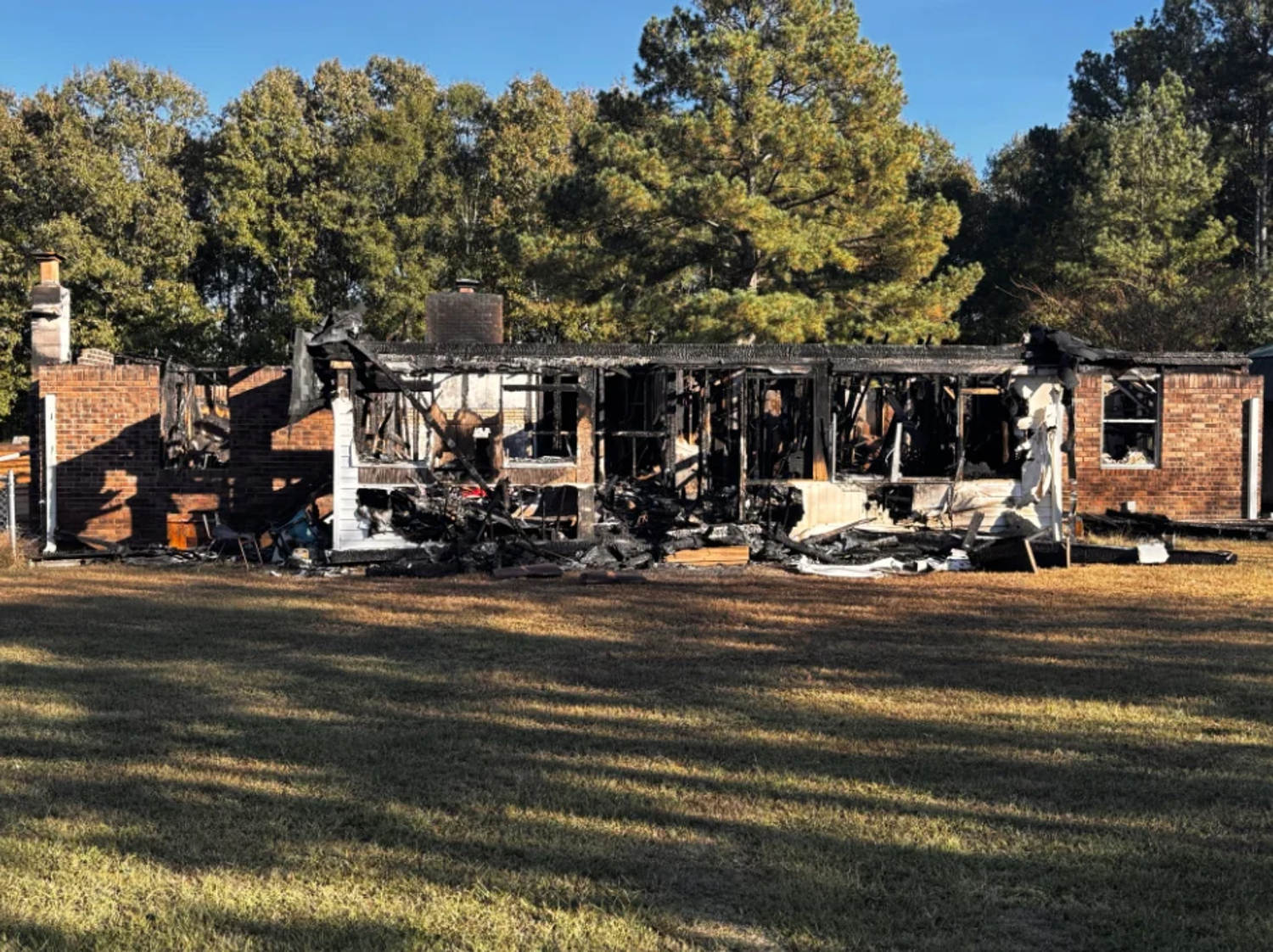
When a motorist was led astray by a faulty GPS route in rural Georgia, the detour dropped them right in front of an active house fire. Inside, a family of fourteen was fast asleep, completely unaware that their roof was burning above their heads. Instead of backing out and finding the main road, the driver slammed on the brakes, ran up to the porch, and pounded on the door until every single person—including multiple children—made it out alive.
People love sharing this story as a cute bit of cosmic fate. "The universe put them there," the social media comments say. Honestly, calling it pure luck misses the real story. If you look closely at what happened on that Georgia road, it exposes a massive blind spot in how we rely on navigation software, why residential house fires turn lethal in minutes, and what actually happens when a bystander steps into an emergency without training.
Why GPS Detours Happen More Often Than You Think
We treat mapping apps like infallible digital gods. They aren't.
Navigation platforms rely on a patchwork of municipal GIS data, satellite imagery, commercial fleet telemetry, and crowdsourced map edits. When a rural county updates a road closure, renumbers a highway spur, or leaves an unmaintained cut-through in its public database, routing algorithms still treat that road as a valid shortcut. If the algorithm calculates that a narrow residential street shaves forty seconds off your trip around traffic, it will send you straight down it.
In Georgia's sprawling suburban and rural counties, this happens constantly. Long stretches of unlit two-lane roads connect subdivisions with minimal signage. When a driver takes a wrong turn late at night, they aren't cruising past busy storefronts or streetlights. They're driving past quiet, dark homes where everyone is asleep.
That specific combination—a late-night routing error and an isolated residential street—is what put that motorist in front of the burning house before any neighbor or passing patrol car could spot the flames. Had the GPS worked properly, the driver would have stayed on the highway half a mile away. Nobody would have seen the fire until the roof collapsed.
The Three-Minute Window That Decides Everything
Here is the terrifying reality about modern house fires that most homeowners ignore. You don't have fifteen minutes to grab your keys and walk out the front door.
According to research from the UL Fire Safety Research Institute (FSRI), the average time to "flashover" in a modern home has dropped from nearly thirty minutes decades ago to less than three to five minutes today. Flashover is the point where every combustible surface in a room ignites simultaneously from radiant heat. Once a fire hits that stage, survival inside that room is nearly impossible.
Why did fires get so much faster? Synthetic materials.
Older homes were filled with solid wood furniture, cotton upholstery, and wool rugs. Those materials burn slowly. Today's living rooms are packed with polyurethane foam cushions, polyester fabrics, engineered wood, and plastics. Those materials are basically solid gasoline. When they catch fire, they generate thick, toxic black smoke loaded with hydrogen cyanide and carbon monoxide long before flames ever burst through a window.
Now picture a house with fourteen people sleeping inside.
Large multi-generational households or families hosting relatives face a compounding risk during an overnight fire. More people means more closed bedroom doors, heavier foot traffic in hallways, and slower evacuation times—especially when young children or elderly relatives need help getting out. If a fire starts in an attic, garage, or exterior wall while everyone is in deep REM sleep, smoke alarms inside might not trigger until the blaze has already eaten through the ceiling joists.
In the Georgia rescue, the fire was visible from the exterior before the sleeping family realized they were in danger. That exterior visibility gave the passing motorist a tiny, critical head start over the clock.
What Actually Happens When a Stranger Approaches a Burning House
It's easy to sit on your couch and imagine yourself kicking down a door like an action movie hero. Real emergencies are chaotic, disorienting, and loud.
When you pull up to a burning structure at night, your brain doesn't immediately register what you're seeing. Smoke looks like fog in headlights. Flames behind siding or under eaves can look like a bright porch light from a distance. The first hurdle any bystander faces isn't bravery—it's recognition. Recognizing that a house is actually on fire and deciding to stop takes precious seconds.
Once the Georgia motorist realized what was happening, their actions followed the exact sequence fire safety instructors teach for bystander intervention:
- Immediate physical alert: Pounding on doors and windows to break through deep sleep cycles. Voice alone rarely wakes someone behind insulated exterior walls.
- Staying outside the smoke layer: Keeping the alert focused at the threshold rather than charging blindly into an unventilated interior.
- Accounting for everyone: Making sure the evacuation didn't stop after the first two or three people stumbled onto the lawn.
When fourteen people are asleep in one house, getting three people outside isn't a rescue. People panic, lose track of kids in dark hallways, or try to run back inside for phones, shoes, or pets. Fire departments repeatedly warn that secondary re-entry is one of the leading causes of residential fire fatalities. Keeping everyone outside and accounted for until fire crews arrive is just as important as waking them up.
Why Smoke Alarms Alone Aren't Enough for Overnight Fires
You might think a house with working smoke detectors doesn't need a passing stranger to save it. That's a dangerous assumption.
The National Fire Protection Association (NFPA) consistently reports that roughly three out of five home fire deaths happen in properties without working smoke alarms—either because batteries were removed or the units were expired. Even when alarms do work, they have blind spots.
Standard ionization alarms are great at detecting fast-flaming fires, like grease on a stove, but they can be slow to react to smoldering fires inside walls or attics. Photoelectric alarms catch smoldering smoke much faster, yet most homes only install one type. Worse, if a fire starts on an exterior deck, in an attached garage, or in the roof trusses from an electrical fault or lightning strike, the fire can grow massive before enough smoke penetrates the living space to trip a hallway detector.
There is also the human factor. Deep sleepers, young children, and older adults with high-frequency hearing loss often sleep right through the standard 3,000 Hz beep of a residential smoke alarm. Studies on pediatric awakening have shown that children frequently don't wake up to high-pitched alarm tones at all, requiring an adult to physically shake them awake.
That's why the motorist's aggressive banging on the doors and windows mattered so much. Loud, low-frequency thudding on solid wood and glass travels through structures differently than a high-pitched piezo buzzer, jarring people awake when electronics fail.
The Real Lesson Behind the Georgia Detour
Stories like the Georgia GPS rescue go viral because they feel like miracles. A glitch in a smartphone app turns into a life-saving intervention for fourteen people. It restores a little faith in human decency, reminding us that plenty of strangers will still risk their own safety to pound on a burning house's door in the middle of the night.
Still, you can't build a family safety plan around a lost driver stumbling onto your street at 2 AM.
If you live in a house—especially if you have a large family, multiple floors, or relatives staying over—you have to close the gaps that made this rescue necessary in the first place.
Check your smoke alarms this week, not next month. Make sure you have interconnected alarms—meaning when the garage or attic alarm goes off, every alarm in every bedroom sounds simultaneously. If you rely on standalone battery units, an attic fire can burn unchecked while your bedroom stays completely silent.
Look at your sleeping habits too. Close every bedroom door before you go to sleep. Fire safety engineers at UL have demonstrated repeatedly that a closed hollow-core door can keep room temperatures below 100 degrees Fahrenheit while the hallway outside reaches over 1,000 degrees. It buys you the exact minutes you need if you aren't lucky enough to have a lost driver outside your window.
Finally, if you're ever the driver on the wrong road late at night and something looks off—orange light under a roofline, heavy smoke banking low across a yard, an alarm chirping from an empty porch—don't second-guess yourself and keep driving. Pull over, call 911 with the closest cross street or mailbox number, and make noise until someone answers. Being wrong costs you two minutes of embarrassment. Being right saves fourteen lives.