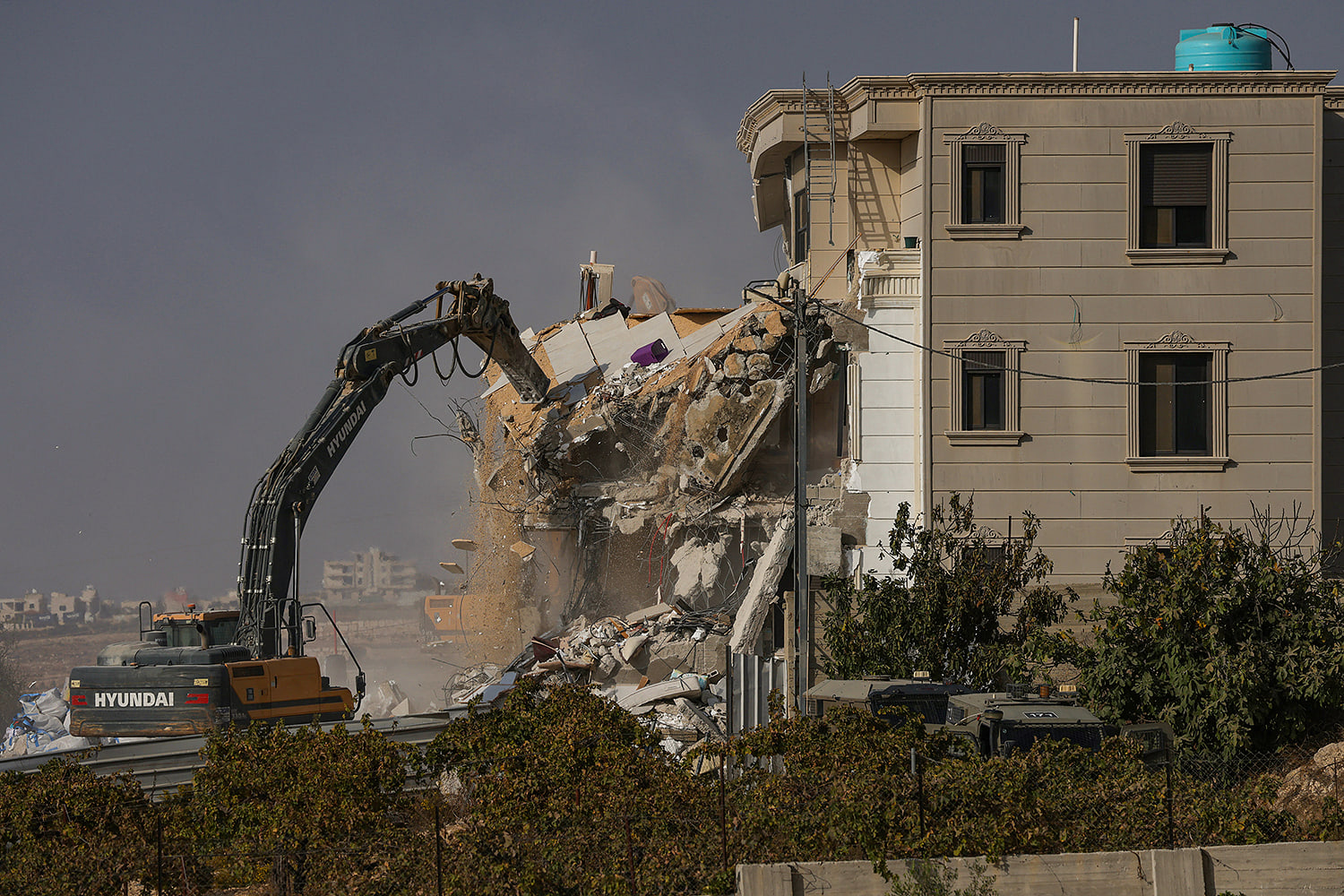
You see the footage on the evening news, and it usually looks the same. Armored bulldozers roll into a dusty West Bank village at dawn, families scramble to pull mattresses and kitchenware out of concrete houses, and within a few hours, a family home is reduced to twisted rebar and rubble.
Most coverage stops right there. News outlets treat West Bank home demolitions like isolated security flare-ups or sudden military reactions to localized unrest.
That framing misses the entire point.
When Israeli bulldozers tear down homes during a West Bank crackdown, it's rarely a spontaneous military move. It's the visible tip of a decades-old administrative, legal, and military system that operates across the occupied territory every single week. If you want to understand what's actually happening on the ground in the West Bank, you have to look past the immediate headline and examine the machinery behind the bulldozers.
The Three Different Reasons Israel Demolishes Homes
If you read casual commentary online, people often lump every demolition together into one bucket. That's a massive mistake. Under Israeli military and civil administration in the West Bank, demolitions fall into three distinct categories, and each serves a totally different purpose.
Administrative Demolitions and the Permit Trap
The vast majority of structures destroyed in the West Bank aren't targeted because someone threw a stone or joined a militant group. They're torn down because they lack a building permit.
Sounds straightforward, right? Follow the zoning laws, get a permit, build your house.
Except in Area C—which makes up roughly 60% of the West Bank and remains under full Israeli civil and military control under the 1993 Oslo Accords—getting a building permit as a Palestinian is practically impossible. According to data compiled by the United Nations Office for the Coordination of Humanitarian Affairs (OCHA) and Israeli human rights group B'Tselem, the Israeli Civil Administration rejects over 98% of Palestinian building permit applications in Area C.
Families grow. Kids get married and need places to live. When your options are to build without a piece of paper you'll never be granted or leave your ancestral land entirely, you pour the concrete and hope the Civil Administration inspectors don't issue a stop-work order. Often, those orders sit dormant for years until a broader crackdown sweeps through the region and the bulldozers arrive.
Punitive Demolitions as Collective Deterrence
Then there are punitive demolitions. These are the ones that grab international headlines during major security crackdowns.
When a Palestinian carries out—or is accused of carrying out—a deadly attack against Israelis, the Israeli military frequently moves to seal or demolish the family home of the suspect. The Israeli government argues this policy deters future attackers who might hesitate if they know their parents and siblings will lose their roof.
Human rights organizations, including Amnesty International and B'Tselem, call this illegal collective punishment under Article 33 of the Fourth Geneva Convention, which explicitly prohibits punishing protected persons for an offense they didn't personally commit. Even within the Israeli defense establishment, the policy has been fiercely debated. Back in 2005, an internal Israel Defense Forces (IDF) committee led by Major General Udi Shani actually recommended halting punitive demolitions, concluding that the diplomatic damage and the rage generated among Palestinians outweighed any proven deterrent effect. Israel paused the practice for several years before bringing it back in 2014.
Military and Clearing Operations
The third category happens during active raids, particularly in dense urban refugee camps like Jenin, Tulkarm, and Nur Shams.
During large-scale military operations, armored D9 bulldozers aren't just knocking down a single house. They're ripping up paved roads, severing water mains, tearing down exterior walls, and flattening structures that the military claims conceal improvised explosive devices (IEDs) or sniper positions. For residents, the result is identical—unlivable neighborhoods and displaced families—even though the IDF classifies it as tactical combat engineering rather than an administrative or punitive order.
Why Crackdowns Have Escalated So Dramatically
To understand why these scenes have become relentless, you have to look at the structural shifts happening in the West Bank over the last few years.
Since late 2023, Israeli military raids across the northern West Bank have shifted from brief, targeted night arrests to multi-day operations involving heavy armor, airstrikes, and widespread infrastructure destruction. Alongside these raids, OCHA documented a sharp spike in administrative demolitions across Area C and East Jerusalem.
There's also a political reality you can't ignore. The governing coalition in Israel has placed hardline pro-settlement figures directly in charge of the Civil Administration and West Bank policy. Decisions that used to require sign-off from military commanders focused on maintaining quiet on the ground are now heavily shaped by ministers who openly advocate for expanding Israeli settlements and restricting Palestinian construction across Area C.
Meanwhile, settler violence in rural herding communities has surged. In dozens of small hamlets across the South Hebron Hills and the Jordan Valley, intimidation from armed settlers combined with the constant threat of Civil Administration bulldozers has forced entire Palestinian communities to pack up their tents and leave. When families abandon an area because they can't legally build a water cistern or a sheep pen, the land often gets declared state land or a military firing zone shortly afterward.
What Happens to a Family the Morning After
News reports move on to the next crisis within 24 hours. The families left standing in the dust don't get that luxury.
When a demolition order is executed, soldiers typically surround the perimeter early in the morning. Sometimes families get fifteen minutes to grab documents, medication, and clothes. Other times, especially during punitive raids or urgent military operations, they walk out with nothing on their backs.
And here's a detail almost nobody outside the region knows: in many administrative demolition cases, the Israeli authorities actually bill the Palestinian homeowner for the cost of the demolition crew, the heavy machinery, and the security detail. To avoid paying tens of thousands of shekels to the state for destroying their own property, some families take sledgehammers and demolish their own homes by hand before the deadline expires.
Think about that for a second. Imagine tearing down the walls you built for your own children just to save yourself from bankruptcy.
Once the rubble settles, rebuilding on the same spot is illegal. Putting up a donated tent or a prefabricated caravan from an international aid agency usually triggers another confiscation order within days. Under European Union and UN tracking, hundreds of donor-funded humanitarian structures—including solar panels, classrooms, and emergency shelters—have been seized or demolished by Israeli forces in Area C.
The Legal Maze Nobody Escapes
If you've never looked closely at West Bank land law, it sounds completely surreal. It's a patchwork of Ottoman-era land codes from the 1850s, British Mandate emergency regulations from 1945, Jordanian laws from before 1967, and thousands of Israeli military orders issued since the occupation began.
The 1945 British Emergency Regulations
When Israel carries out a punitive demolition, it relies on Regulation 119 of the Defense (Emergency) Regulations enacted by the British Mandate authorities in 1945 to crush Jewish and Arab insurgencies. Ironically, Jewish leaders in pre-state Palestine fiercely denounced those exact British regulations as tyrannical and undemocratic. Yet the legal framework stayed on the books, and Israel's High Court of Justice has repeatedly upheld the military's authority to use Regulation 119, occasionally stepping in only to limit a demolition to a single floor rather than an entire multi-story apartment building.
Fighting Orders in Israeli Courts
Palestinians who receive an administrative demolition order can appeal to the Israeli Civil Administration's planning committees or petition the High Court of Justice. In practice, lawyers who handle these cases—like those working with HaMoked or the Society of St. Yves—will tell you that legal appeals mostly buy time rather than save homes.
Courts rarely overturn demolition orders if a structure lacks a permit, even when the court acknowledges that the state hasn't approved a master zoning plan for the Palestinian village in decades. Once temporary injunctions expire, the bulldozers get the green light.
How to Read News About West Bank Crackdowns Critically
Because coverage of the Israeli-Palestinian conflict is polarized and fast-moving, it's easy to get lost in competing press releases. The next time you read a breaking story about bulldozers rolling into a West Bank town, check for four specific details to see if the reporting is giving you the full picture.
- Check the zone. Is the demolition happening in Area A (nominally under Palestinian Authority control), Area B, or Area C? Knowing the zone tells you whether you're looking at a military raid or a Civil Administration zoning enforcement action.
- Look for the stated legal basis. Did the military cite Regulation 119 (punitive), a lack of building permits (administrative), or operational security needs? Each carries totally different political and legal implications.
- Separate the suspect from the displaced. In punitive demolitions, verify how many people actually lived in the building. Frequently, a single suspect's actions result in extended families—including elderly grandparents and young children—losing their apartments.
- Follow the primary data trackers. Don't rely solely on brief wire summaries. Cross-reference reports against the live demolition databases maintained by UN OCHA and B'Tselem, as well as official statements from the IDF Spokesperson's Unit and COGAT (Coordination of Government Activities in the Territories) to see how both sides document the exact same event.
Understanding the mechanics behind the bulldozers won't make the footage any easier to watch, but it stops you from treating a deeply entrenched administrative and military policy like a random headline.