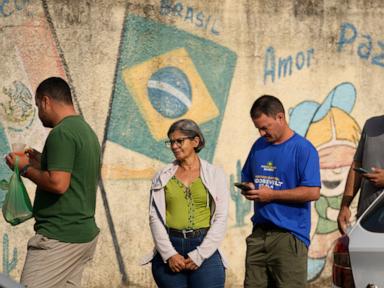
When photo galleries hit the wires on October 4, 2026, showing Brazilians lining up in Rocinha, São Paulo, and Brasília, most international outlets framed the story as a straightforward rerun of 2022. An aging leftist icon against a Bolsonaro. Familiar colors, familiar anger, familiar streets carpeted in discarded paper leaflets outside Rio de Janeiro polling stations.
That framing completely missed what was actually happening on the ground.
Brazil's 2026 presidential race between incumbent Luiz Inácio Lula da Silva and Senator Flávio Bolsonaro wasn't a predictable sequel. It shattered a four-decade electoral rule that had held steady since Brazil returned to democracy in 1985. For the first time in modern Brazilian history, the candidate who lost the first round of voting came back to win the runoff.
And the aftermath was even weirder than the campaign.
How the First Round Fooled Almost Everyone
If you only looked at the early October snapshots, you'd think Flávio Bolsonaro had already locked down the presidency. On October 4, the 45-year-old Rio de Janeiro senator and eldest son of former President Jair Bolsonaro finished ahead in the first round. Markets reacted positively. Most defeated candidates quickly lined up behind him for the runoff.
Lula, campaigning weeks shy of his 81st birthday in his old union stronghold of São Bernardo do Campo, looked boxed in. His first-round campaign had struggled to spark genuine excitement. He trailed by roughly 2.2 million votes, and in Brazil, first-round deficits don't get erased. Never had—not in 1989, not in 2002, not in 2022.
Except three weeks is a lifetime in Brazilian politics.
Between October 4 and the October 25 runoff, the race flipped upside down. While Flávio Bolsonaro's polling numbers froze, a wave of grassroots mobilization—driven heavily by university students, civil society groups, and an aggressive digital push—rebuilt Lula's momentum from the bottom up.
By the time the Superior Electoral Court (TSE) finished counting ballots on October 25, Lula had pulled off an upset that rewrote the country's electoral playbook.
- First-round deficit: Lula trailed by over 2.2 million votes on October 4.
- Runoff surge: Nearly 3 million additional voters turned out in the second round compared to the first, dropping voter abstention to 19.21%—the lowest rate in a Brazilian presidential runoff since 2006.
- Final margin: Lula secured a fourth non-consecutive term, overturning his first-round loss by more than 4.4 million votes.
Even Brazilians over age 70, for whom voting is legally optional, showed up in noticeable numbers alongside younger relatives to cast ballots. You don't see that kind of late surge in a sleepy rerun.
Why Flávio Bolsonaro Was Different From His Father
Wire captions routinely tagged Flávio Bolsonaro simply as a "Trump ally" and the stand-in for his father. Both labels are true, yet neither explains why he nearly won—or why he ultimately stalled.
Jair Bolsonaro couldn't run in 2026. The 71-year-old former president is serving a 27-year sentence under house arrest following his conviction over the attempted coup after his 2022 loss. Barred from making public comments, Jair left the family's political machine to his eldest son.
Flávio brought a softer, more polished delivery than his father's scorched-earth style, while keeping the core right-wing platform intact. On the campaign trail in São Paulo and Rio de Janeiro, he leaned hard into public security—a massive concern across Brazilian cities. He promised an "iron fist" crackdown on crime, proposing five mega-prisons modeled after El Salvador's Nayib Bukele alongside chemical castration for convicted rapists.
For millions of frustrated voters, that pitch landed.
Yet Flávio carried heavy baggage of his own. Throughout the runoff, voters were reminded that the senator remained the target of two federal police investigations involving allegations of corruption and money laundering. For undecided moderates who disliked Lula's economic approach but feared returning the Bolsonaro clan to the Planalto Palace, those investigations proved to be a ceiling Flávio couldn't break through.
The U.S. Angle and the Sovereignty Clash
If you followed this race from North America, you probably noticed how loudly Washington echoed through Brazilian rallies.
During the runoff, Lula turned foreign alignment into a central wedge issue. With Donald Trump back in the White House and right-wing candidates having won seven consecutive presidential elections across Latin America since the start of Trump's second term, political scientist Helcimara de Souza Telles noted that many Brazilian academics and voters viewed Brazil as one of the last major holdouts in the region.
Lula framed the runoff around national sovereignty. At closing rallies and in debates, he argued that a Flávio Bolsonaro presidency would subordinate Brazilian interests to Washington. "This country will not accept being anyone's backyard," Lula told supporters, tapping into a deep vein of Brazilian nationalism that stretches well beyond the traditional left.
Meanwhile, the Bolsonaro family's ties to U.S. conservative circles weren't exactly subtle. Flávio's younger brother, former lawmaker Eduardo Bolsonaro, had already relocated to Texas in 2025 to lobby U.S. lawmakers and Trump allies on his father's behalf—a move that later led to Eduardo's conviction in absentia in Brazil and a warrant for his arrest.
Chaos at Poll Closing and a Flight to Florida
Photo essays captured the voting lines on October 4, but the real drama on October 25 happened minutes before polls closed.
Due to severe weather and public transportation disruptions in parts of the country, both Lula's campaign and Flávio Bolsonaro's campaign formally asked the electoral court to extend voting hours. Just three minutes before the scheduled close, a Supreme Court justice granted the request, delaying vote tallying by two hours. Because the ruling came down at the last second, some precincts had already shut their doors while others stayed open.
Once the numbers showed Lula ahead, Flávio Bolsonaro refused to concede—even though his own camp had requested the hour extension. He called the move unprecedented and demanded the election results be annulled.
Then came the twist that stunned even veteran observers in Brasília.
Ordered to surrender his passports amid his ongoing federal investigations, Flávio Bolsonaro left Brazil with his family two days after the vote. Traveling a circuitous route through Ecuador and Argentina, he landed in South Florida on Wednesday, October 28—mirroring his father's post-election exit to Florida after losing in 2022. Shortly after arriving in the United States, Flávio posted a statement online claiming he was the true elected president of Brazil before quickly editing the post to call himself the "real leader of Brazil". By early November, he was speaking at a conservative conference at Mar-a-Lago.
Lula called the departure "shameful".
Why the Bolsonaro Movement Isn't Going Anywhere
Here's the mistake most outside observers make when reading headlines about Flávio Bolsonaro decamping to Miami. They assume Bolsonarismo is dead.
It isn't. Not even close.
Look at what happened down-ballot in October 2026. Five members of the Bolsonaro family ran for public office this cycle, and four of them won:
- Michelle Bolsonaro won a seat in the Brazilian Senate.
- Carlos Bolsonaro also secured a Senate seat.
- Jair Renan Bolsonaro, Jair's 28-year-old son, won election to Brazil's lower house.
- Renato Bolsonaro, Jair's younger brother and a retired Army captain, likewise won a seat in the lower house.
Only Jair's ex-wife Rogéria Bolsonaro lost her congressional bid.
Even with Jair under house arrest, Eduardo wanted on a warrant in Texas, and Flávio in Florida, the Bolsonaro family enters 2027 holding serious institutional power inside Brazil's National Congress. Add to that the nearly 60 million Brazilians who voted for Flávio in the runoff, and you're looking at a deeply entrenched conservative bloc that can stall legislation, launch congressional inquiries, and shape national politics every single day.
What to Watch Before Lula's January 5 Inauguration
Lula takes the oath of office for his fourth term on January 5, 2027, at age 81. He has already signaled this will likely be the final term of a career that stretched from 1970s metalworker strikes to four presidential victories.
If you want to understand where South America's largest economy goes from here, skip the recycled campaign photos and track three concrete pressure points over the next few months:
- Congressional gridlock in Brasília: Watch how Lula negotiates budget and tax bills with a National Congress where four Bolsonaro family members and a fortified Liberal Party bloc hold direct legislative leverage.
- U.S.–Brazil diplomatic friction: Keep an eye on how the Trump administration handles Flávio and Eduardo Bolsonaro's presence on U.S. soil, especially if Brazilian courts press forward with extradition or passport enforcement requests.
- Left-wing succession planning: Because Lula cannot run again in 2030, watch which cabinet ministers or governors the Workers' Party elevates early in 2027 to avoid the exact first-round enthusiasm gap that nearly cost them the presidency in October.
Check Superior Electoral Court (TSE) official data for certified state-by-state runoff breakdowns, and follow ongoing reporting from AP News and The Guardian as Brasília prepares for the January handover.
For a closer look at how voters across Brasília, São Paulo, and Rio de Janeiro experienced the historic second-round vote on the ground, watch LIVE: Brazilians Vote In Presidential Election Runoff.