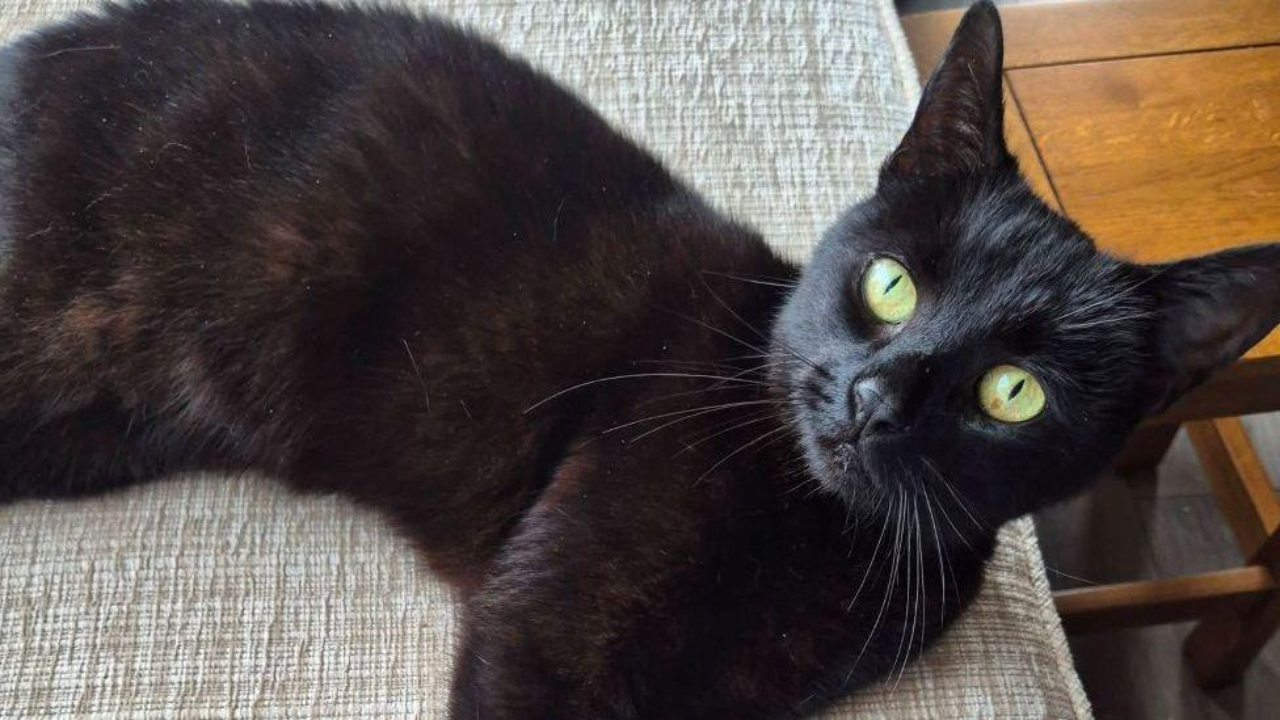
Most people treat pet microchipping like a checkbox at a routine vet visit, and then they forget about it until disaster hits. That's a massive mistake.
When a cat vanishes in a 2020 crash and six years later a microchip brings her home, the internet loves the heartwarming headline. People share the reunion photo, cry a little, and scroll past. What almost nobody talks about is the boring, unglamorous infrastructure that actually made that six-year miracle possible—and why millions of microchipped pets still never make it back to their owners. Expanding on this theme, you can find more in: The Quiet Arithmetic of Loving Someone Across a Map.
Let's get straight to the point. A microchip isn't a GPS tracker. It doesn't ping a satellite, it has no battery, and it can't tell you where your cat is hiding right now. Instead, it's a passive radio-frequency identification (RFID) transponder about the size of a grain of rice, tucked just under the skin between your pet's shoulder blades. Because it has no moving parts and no power source to die, it lasts for the entire lifespan of your animal. Six years? Ten years? Fifteen? The chip doesn't care. It sits dormant until a scanner passes over it, wakes it up with a low-frequency radio wave, and reads a unique 9-, 10-, or 15-digit identification number.
That permanence is why long-term reunions happen. Collars break. Tags rust, fall off, or get chewed away. A scared cat bolting from a wrecked car on a highway isn't going to keep a breakaway collar on for six weeks, let alone six years. The chip stays put. Observers at Cosmopolitan have shared their thoughts on this situation.
What Actually Happens When a Cat Disappears in a Crash
Car accidents are arguably the worst-case scenario for pet recovery. When a vehicle rolls or collides on a busy road, doors pop open, windows shatter, and carriers burst. Even the calmest indoor cat goes into pure survival mode.
Here's what veterinarians and animal control officers see in these situations. An indoor cat thrown into an unfamiliar environment doesn't act like a lost dog. Dogs often run, cover miles, and approach humans for food or comfort. Cats do the exact opposite. They freeze, wedge themselves into the tightest dark space within fifty yards of the crash site, and go completely silent.
They won't answer when you call their name. Not on day one. Not on week two.
If the crash happened hours away from your home—say, during a holiday road trip or a cross-country move—you can't easily come back every evening to set humane traps. Eventually, life forces you to go home. You put up flyers, post in local lost-pet groups, check shelter websites for a few months, and slowly accept the worst.
Meanwhile, the cat survives. Sometimes they find a barn, an industrial park, or a neighborhood colony where a kind resident leaves kibble on a porch. Years pass. The cat becomes a "community cat" or gets informally adopted by someone who assumes she was always a stray. The only reason that story changes six years later is if someone finally brings her to a vet clinic or a shelter where a technician waves a universal scanner over her shoulders.
The Numbers Behind Microchip Reunions Nobody Mentions
If you want proof that microchips aren't just feel-good hype, look at the actual shelter data. A landmark study conducted by researchers at Ohio State University's College of Veterinary Medicine tracked over 7,700 stray animals across 53 shelters nationwide.
The gap between chipped and unchipped cats was staggering.
Unchipped stray cats were returned to their owners less than 2% of the time. Think about that number for a second. Out of a hundred lost cats without a chip, ninety-eight never went home. When cats had a registered microchip, the return-to-owner rate jumped to 38.5%. That's more than twenty times higher.
So why didn't the other 61.5% of microchipped cats make it home?
I've spent years talking to shelter intake coordinators and veterinary technicians, and the answer almost always comes down to human error, not hardware failure. In that same Ohio State study, researchers found that for the microchipped animals who weren't returned, the single biggest reason was incorrect or disconnected owner contact information in the registry database.
People move. They change cell phone numbers. They switch email providers. Or worse, they adopt a pet from a shelter, assume the shelter registered the chip in their name, and never verify it. When a vet scans that cat six years after a car crash, the database spits out a dead landline from 2019 or the contact info of the breeder who sold the kitten years earlier.
Why Universal Scanners Used to Fail (And What Changed)
If you've heard stories about microchips "not working," you're probably hearing echoes from fifteen or twenty years ago. Back then, the pet microchip industry in the United States was a messy patchwork of competing frequencies.
Some companies used 125 kHz chips. Others used 128 kHz. Meanwhile, the rest of the world standardized on the International Organization for Standardization (ISO) frequency of 134.2 kHz. If a shelter only had a scanner tuned to one frequency, it would completely miss a chip operating on another. You could scan a cat three times, get zero beeps, and declare her unchipped.
Today, that problem is mostly solved, though you still need to be smart about it. Modern shelters and veterinary clinics use universal forward-and-backward-reading scanners capable of detecting all three frequencies (125 kHz, 128 kHz, and 134.2 kHz).
Still, scanning technique matters. A lot.
Microchips can migrate over time. Gravity and muscle movement sometimes shift a chip from between the shoulder blades down toward the chest, behind an elbow, or along the side of the neck. A rushed intake worker who does one quick swipe down the spine can easily miss a migrated chip. Good veterinary technicians scan in a slow, deliberate S-pattern from the head all the way down to the tail, and down both front legs.
The Registry Trap That Ruins Happy Endings
Here is something the microchip manufacturers won't advertise on their brochures. Buying and implanting the chip is only half the system. The other half is a private database.
When a vet scans your pet, the scanner doesn't display your name and phone number. It displays a string of numbers, like 985112004567890. The vet then has to type that number into a lookup tool—like the AAHA Universal Pet Microchip Lookup Tool—to see which company manufactured or registered that specific number sequence.
Once they know the registry, they contact that company, and the company contacts you (or gives the vet your info, depending on privacy settings).
And here is where things get messy:
- Multiple registries exist. You don't have to use the registry printed on the paperwork your vet handed you. In fact, some registries charge annual subscription fees just to keep your information active or to let you update your phone number.
- Free registries work just as well. As long as a registry participates in the AAHA lookup network, any shelter or vet in North America can find your record without you paying a recurring $20-a-year fee.
- Unregistered chips are useless. Hundreds of thousands of pets walking around right now have a functioning microchip under their skin that points to literally nothing. If you never created an account and linked the chip number to your phone number, the scanner just reads a serial number into a void.
How to Audit Your Pet's Microchip Today
Don't wait for a car crash, a house fire, or an open front door to test whether your pet's safety net actually works. You can audit the entire setup in about ten minutes without spending a dime.
First, find your paperwork and locate the 9-, 10-, or 15-digit microchip number. If you lost the paperwork years ago, don't stress. At your next routine vet visit, ask the technician to scan your pet and write down the exact number on your invoice. Ask them to scan slowly across the shoulders, neck, and chest so you also know if the chip has migrated.
Second, go straight to the AAHA Universal Pet Microchip Lookup website and type in that number. This is the exact same search engine shelters use. Look at which registry pops up. If the site says "No registry found," your pet's chip isn't registered anywhere, even if your vet implanted it.
Third, log into that specific registry (or create a free account on a participating registry like Free Pet Chip Registry or 24PetWatch's basic tier) and check every single field. Make sure your current mobile number is listed first. Add a backup contact—a parent, sibling, or close friend who doesn't live with you and rarely changes their phone number. If you're ever incapacitated in a car accident yourself, having a secondary contact on that chip record is the only way a shelter will reach someone who knows you.
Finally, put your pet in a crash-tested carrier whenever you drive. A loose cat in a car becomes a projectile during a collision, and an unlatched cardboard or cheap plastic carrier will pop open on impact. Securing the carrier with a seatbelt keeps your cat inside the vehicle if an accident happens, so a microchip stays a backup plan rather than your only hope.