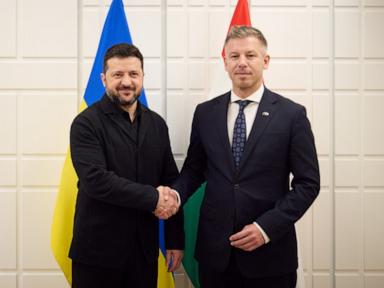
Diplomacy rarely changes overnight. Yet when Hungary’s main opposition leader, Péter Magyar, announced plans to visit Ukraine, it sent a jolt through Central European politics.
For years, Budapest and Kyiv have been locked in an exhausting, bitter standoff. Prime Minister Viktor Orbán’s government repeatedly blocked European Union aid packages, stalled Ukraine's EU accession talks, and accused Kyiv of trampling the rights of ethnic Hungarians in western Ukraine. So when Magyar—leader of the Tisza Party and Orbán’s fiercest domestic challenger—signaled his intent to travel to Ukraine to mend relations, people paid attention.
Is this just a clever political stunt to embarrass Orbán, or the start of a genuine reset? Let's break down what's actually happening behind the headlines.
Why Hungary and Ukraine Fell Out in the First Place
You can't understand why Magyar's trip matters without looking at the mess he's trying to clean up. The friction between Budapest and Kyiv didn't start with Russia's full-scale invasion in 2022. It goes back years.
The core dispute centers on Zakarpattia, a region in western Ukraine bordering Hungary that is home to roughly 150,000 ethnic Hungarians. In 2017, Ukraine passed an education law requiring secondary schools to teach primarily in Ukrainian. Budapest was furious. Orbán's government argued the law stripped ethnic Hungarians of their right to learn in their native tongue.
Then came the war. While nearly every other EU and NATO member rushed weapons and cash to Kyiv, Hungary refused to send lethal aid or even allow weapons shipments across its border. Orbán framed himself as a champion of peace, criticizing Western sanctions against Moscow and maintaining cozy ties with Russian President Vladimir Putin.
Kyiv saw this as a betrayal. Budapest saw Kyiv as ungrateful and stubborn. That toxic dynamic turned Hungary into the black sheep of the European Union whenever Ukraine came up on the agenda.
Who Is Péter Magyar and Why Should You Care
If you haven't followed Hungarian politics closely, Péter Magyar’s rise looks almost unbelievable. Until early 2024, he was a relatively obscure insider within Orbán’s Fidesz party—and the ex-husband of former Justice Minister Judit Varga.
Everything changed in February 2024 after a presidential pardon scandal rocked the Hungarian government. Magyar publicly broke ranks with Fidesz, accused Orbán’s inner circle of systemic corruption, and launched a political movement that quickly hijacked the Tisza (Respect and Freedom) Party.
By the June 2024 European Parliament elections, Magyar's fledgling party pulled in nearly 30% of the vote. Suddenly, Orbán faced a legitimate threat for the first time in over a decade. Magyar’s appeal isn't rooted in traditional left-wing ideology; he presents himself as a pragmatic, center-right reformer who wants to end corruption, fix Hungary’s battered economy, and restore the country's standing in Brussels.
And that brings us straight back to Ukraine.
What Magyar’s Visit to Ukraine Actually Signals
When Magyar announced his intention to visit Kyiv—and previously organized humanitarian aid deliveries to children's hospitals in Ukraine following Russian missile strikes—he was sending three distinct messages.
First, he's telling Brussels and Washington that Hungary isn't a monolith. For years, Western diplomats equated Hungary's foreign policy entirely with Viktor Orbán. By stepping onto Ukrainian soil, Magyar is positioning himself as a reliable European partner who respects NATO and EU consensus.
Second, he's exposing a glaring contradiction in Orbán’s rhetoric. Fidesz propaganda constantly paints the Hungarian opposition as "pro-war" radicals eager to drag Hungarian men into the trenches of Ukraine. Magyar flips that script. He argues that real peace requires talking to your neighbors, supporting humanitarian relief, and advocating for the ethnic Hungarians living in Zakarpattia through constructive diplomacy rather than constant vetoes.
Third, he's testing Kyiv's willingness to engage with Hungary's political future. Ukrainian President Volodymyr Zelenskyy has spent years trying to find common ground with Orbán, even visiting Kyiv and Budapest channels with minimal success. Welcoming Magyar gives Kyiv an opportunity to build bridges with the man who could very well be Hungary's next prime minister.
The Tightrope Magyar Has to Walk
Don't mistake this trip for an unconditional embrace of every policy coming out of Kyiv. Magyar isn't naive. He knows Hungarian voters are deeply skeptical of getting pulled deeper into the conflict, and the minority rights issue in Zakarpattia remains emotionally charged across the Hungarian political spectrum.
If Magyar goes to Kyiv and simply nods along to everything Ukrainian officials say, Orbán’s massive state-aligned media machine will tear him apart. They'll label him a puppet of Brussels and Kyiv who abandoned ethnic Hungarians.
To pull this off, Magyar has to strike a delicate balance:
- Acknowledge Ukraine’s sovereignty and condemn Russian aggression unambiguously.
- Press Kyiv firmly on restoring full minority language and education rights for Hungarians in Zakarpattia.
- Maintain Hungary's stance against sending Hungarian troops or bilateral weapons shipments, which remains unpopular at home.
Honestly, it's a brutal tightrope walk. One misstep in front of the cameras gives Fidesz ammunition for months.
How Orbán’s Camp Is Reacting
Fidesz didn't sit quietly while Magyar planned his outreach. Pro-government commentators immediately dismissed the move as political theater designed to please Western leaders ahead of Hungary's 2026 parliamentary elections.
Their argument is predictable. They claim Magyar is trading away Hungary’s national sovereignty and cheap Russian energy imports just to win applause in Brussels. Orbán himself has consistently argued that Hungary's economic survival depends on pragmatic trade with Russia and that Western military aid only prolongs the bloodshed.
Yet behind the bravado, Magyar's international outreach clearly irritates the ruling party. For fourteen years, Orbán owned the stage as Hungary's sole international voice. Having an opposition leader meet foreign heads of state, join the European People's Party in the EU Parliament, and build direct ties with Kyiv breaks that monopoly.
What This Means for the Zakarpattia Minority
Lost in all the geopolitical chess are the actual people living in western Ukraine. Many ethnic Hungarians in Zakarpattia feel caught between a rock and a hard place.
On one hand, they rely on financial and cultural support funded by Budapest. On the other, Orbán's constant clashes with Zelenskyy make their daily lives in Ukraine harder, fueling suspicion among some Ukrainian nationalists. Meanwhile, thousands of ethnic Hungarian men from Zakarpattia have been drafted into the Ukrainian military, fighting and dying against Russian forces.
In late 2023, Ukraine's parliament actually passed amendments to its national minorities law to satisfy EU accession requirements, rolling back several of the strictest 2017 restrictions on minority-language education. Budapest claimed the changes didn't go far enough.
If Magyar can use his visit to advocate for practical, on-the-ground protections for these communities—without blocking EU aid to Kyiv in the process—he could achieve something Orbán’s confrontational strategy never did.
How to Track the Real Impact of Magyar’s Diplomacy
Talk is cheap in Central European politics. If you want to know whether Magyar’s visit to Ukraine actually moves the needle or fades into another news cycle, watch for three concrete indicators over the coming months:
- Direct meetings with senior Ukrainian officials. A photo-op at the border means very little. Watch whether Magyar secures sit-downs with key figures in Zelenskyy’s administration or parliamentary leadership in Kyiv.
- Shifts in Tisza Party polling at home. Pay attention to independent Hungarian pollsters like Medián or 21 Research Center. If Magyar’s numbers hold steady or climb after visiting Kyiv, it proves Orbán’s "pro-war" smear campaign is losing its bite.
- Tangible progress on Zakarpattia minority rights. Look for joint statements or concrete policy commitments from Kyiv regarding Hungarian-language schools and cultural institutions in western Ukraine.
Watch those three signals closely, because they will tell you immediately whether Hungary's political landscape is truly shifting before the next election.