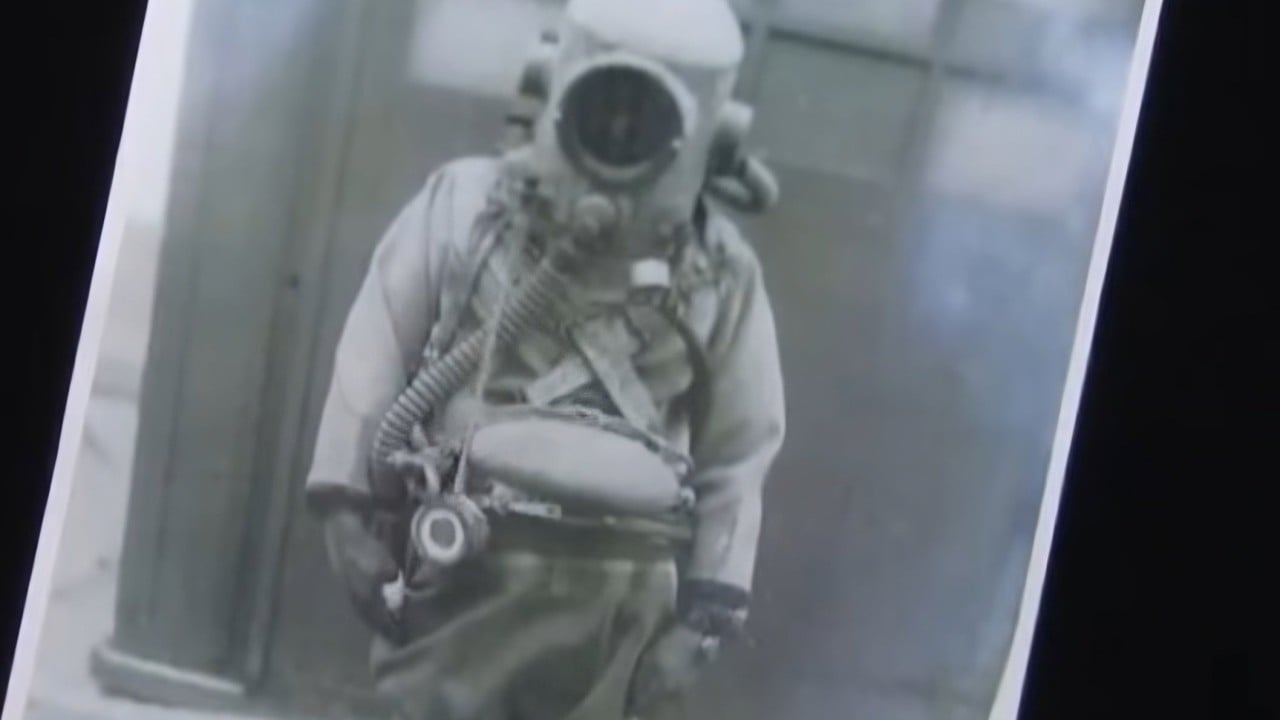
History loves its final acts. It prefers the dramatic punctuation mark of a mushroom cloud, the shattered hulls of battleships settling into the silt of Ironbottom Sound, and the desperate scramble of the vanishing empire. But the most revealing chapters of total war are frequently found among the weapons that rusted in dockyards, the blueprints that never left the drafting tables, and the phantom armadas that dissolved alongside the governments that commissioned them.
The Imperial Japanese Navy at the twilight of the Second World War was a masterclass in this industrial ghost-making. Cornered by relentless American manufacturing and strangled by a strangulating oil embargo, Tokyo did not merely prepare for an amphibious slaughter on the home islands. It invested its remaining national capital in weapons designed to rewrite the laws of naval combat through sheer psychological and physical extremity. Among these were the unbuilt, unexecuted suicide dive programs intended to pilot modified interceptors, manned torpedoes, and explosive craft against the approaching allied invasion fleet.
To understand these phantom weapons is to understand the terrifying logic of national desperation. When an empire realizes it cannot win through conventional attrition, the boundary between engineering and fanaticism erodes completely.
The Architectural Logic of Despair
By the autumn of 1944, the conventional surface fleet of the Imperial Japanese Navy was effectively a spent force. The catastrophic losses at the Battle of the Philippine Sea and Leyte Gulf stripped the fleet of its carrier aviation arm. What remained was a collection of fuel-starved dreadnoughts and destroyers that could no longer project maritime dominance across the Pacific.
In response, the military leadership pivoted from tactical doctrine to total sacrifice. The human body was re-engineered in military planning documents not as an operator of a machine, but as the final, irreplaceable guidance system of the machine itself.
The Kaiten manned torpedoes and the Shinyo suicide motorboats transitioned from paper concepts into operational reality with horrifying speed. But these were frontline expedients. The more ambitious designs—the projects that never quite reached mass deployment or were canceled by the sudden intervention of the August surrender—revealed a military apparatus attempting to substitute industrial output with absolute devotion.
Engineers were tasked with creating simplified, expendable airframes built from low-grade plywood, canvas, and bamboo. These materials were chosen deliberately. Strategic metals like duraluminium and high-grade steel were reserved for elite conventional fighters that could no longer be manufactured in sufficient volume. The suicide divers and pilots assigned to these later, unfulfilled programs were slated to fly aircraft that lacked landing gear entirely. Once airborne, the gear was jettisoned to save weight and improve aerodynamic performance, sealing the pilot's fate long before enemy contact was made.
This was not merely a tactical modification. It was a complete inversion of military aviation philosophy. For four decades, military designers spent millions of man-hours protecting the pilot, designing armor plating, self-sealing fuel tanks, and egress systems. The late-war Japanese paradigm treated the pilot as an integrated structural component designed to be consumed upon impact.
The Bottlenecks of Industrial Collapse
Popular mythology often portrays the late-war Japanese war machine as a monolithic engine of suicidal fanaticism, churning out weaponized despair without hesitation. The historical reality is far more chaotic, plagued by severe industrial bottlenecks, bureaucratic infighting, and catastrophic resource scarcity.
The phantom divers and specialized suicide units never reached their intended scale because the Japanese industrial base had fractured entirely under strategic bombing and submarine interdiction. While aircraft factories could manage the crude assembly of wooden airframes, the high-precision components required for guidance, propulsion, and detonation were chronically short.
Consider the engine supply chain. High-performance radial engines required specialized metallurgy and precision machining that could not be sustained under continuous B-29 bombardment. Many of the suicide craft designs slated for production in the Kanto plain were forced to rely on obsolete, salvaged trainer engines or poorly manufactured substitutes. These powerplants lacked reliability, meaning a significant percentage of the suicide units would have suffered catastrophic mechanical failure before ever sighting an allied carrier task force.
Furthermore, fuel stocks had fallen past the critical threshold. By mid-1945, aviation gasoline was virtually exhausted in the home islands. The training protocols for these specialized units were curtailed drastically. Pilots were expected to master basic flight controls in a matter of hours, often practicing in crude gliders before stepping into explosives-laden aircraft.
The irony of the situation was absolute. The military command structure demanded total sacrifice, yet the state lacked the basic logistical capacity to fuel the aircraft required to deliver that sacrifice. The armadas remained anchored in hangars, caves, and assembly sheds, rendered inert not by enemy fire, but by the systemic exhaustion of the nation that built them.
The Psychological Aftershocks of the Unflown Mission
For the surviving veterans of these specialized units, the abrupt termination of the war in August 1945 triggered a profound psychological crisis. In the military culture of the Imperial forces, survival after volunteering for a suicide mission was often viewed through a lens of profound social alienation.
Those who had completed rigorous training regimens, written their final farewell letters, and donned the ceremonial white headbands found themselves cast into an occupied Japan that viewed their intended sacrifice with a mixture of horror, pity, and institutional indifference. The narrative surrounding these units shifted rapidly in the postwar decades. In the West, they were frequently reduced to exoticized symbols of fanatical orientalism. In domestic Japanese historiography, they became tragic emblems of a militarist regime that squandered the lives of its youth on impossible tactical fantasies.
Yet the technological trajectory established during this period cast a long shadow over modern warfare. The conceptual leap from a human-guided explosive motorboat to modern anti-ship cruise missiles and unmanned loitering munitions is direct. When military planners strip away the requirement for operator survival, the efficiency of the weapon increases exponentially.
The tragic legacy of these unbuilt armadas lies in their terrifying modernity. They were the grotesque precursors to automated warfare, where the human element is systematically minimized in the pursuit of terminal accuracy.
The suicide divers and pilots Japan never sent to war did not vanish into history because their cause lost its fervor. They dissolved because the physical reality of industrial industrialization finally overwhelmed the ideology of total sacrifice. The factories ran out of metal, the skies ran out of fuel, and the empire ran out of time. What remained in the damp caves and hidden assembly plants was only the silence of machines that were never asked to kill, and men who were never asked to die.