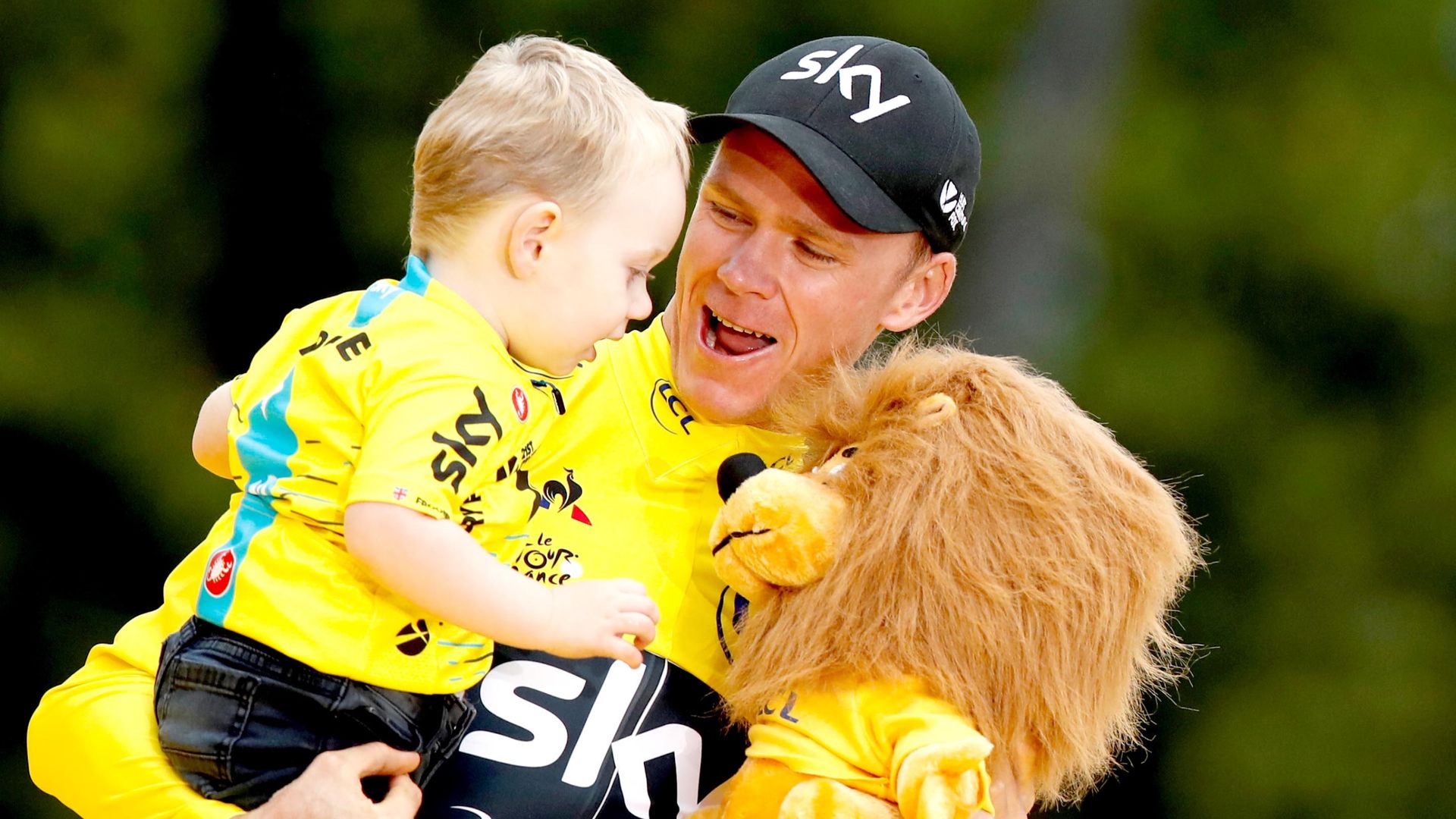
Chris Froome’s official retirement from professional cycling ends an era defined by a highly calculated, systems-driven approach to stage racing. Between 2011 and 2018, Froome accumulated seven Grand Tour victories, including four Tour de France titles, by exploiting marginal gains in aerodynamic efficiency, power-to-weight optimization, and aggressive pacing strategies.
His sudden departure from the sport’s elite tier was not a standard, age-related deceleration, but rather a direct consequence of two distinct phases of catastrophic kinetic trauma compounded by biological aging. Analyzing his career trajectory requires examining the exact physiological mechanisms that govern elite endurance performance, the structural limits of human recovery, and the economic reality of late-career athletic contracts. Expanding on this idea, you can find more in: Why the Portugal and Croatia Offside Game Will Define the 2026 World Cup Knockouts.
The Aerobic Optimization Framework
To understand the magnitude of Froome's physiological decline, it is necessary to establish the baseline mechanics of his peak performance era. Elite Grand Tour contenders rely on a highly specific configuration of physiological variables that maximize energy production while minimizing metabolic waste.
- VO2 Max and Aerobic Ceiling: At his peak, Froome possessed an estimated maximal oxygen uptake ($\text{VO2 Max}$) exceeding $85 \text{ mL/kg/min}$. This metric defines the absolute upper limit of an athlete's aerobic energy production system.
- Functional Threshold Power (FTP): Crucially, Froome could sustain an exceptionally high percentage of his $\text{VO2 Max}$—often between $88%$ and $92%$—at his functional threshold power. For a rider weighing approximately $66 \text{ kg}$, an estimated threshold power of $410\text{–}420 \text{ Watts}$ yielded a power-to-weight ratio exceeding $6.2 \text{ W/kg}$ for sustained 40-minute climbs.
- The Sky Train Pacing Strategy: Under Team Sky, this physiological engine was leveraged via a strict control-based tactical model. Rather than responding to erratic, anaerobic accelerations from competitors, Froome’s teams utilized precise power-meter data to set a relentless, high-cadence pace ($95\text{–}100 \text{ rpm}$). This minimized glycogen depletion, suppressed lactic accumulation, and effectively neutralized the explosive surges of lighter climbing specialists.
Phase One Trauma: The 2019 Dauphiné Crash
The inflection point of Froome’s physical regression occurred during a high-speed time-trial reconnaissance at the 2019 Critérium du Dauphiné. A gust of wind deflected his front wheel at approximately $60 \text{ km/h}$, resulting in a violent impact against a wall. The acute structural damage included a fractured right femur, an elbow fracture, broken ribs, and a fractured sternum, alongside a blood loss of approximately two liters. Experts at FOX Sports have shared their thoughts on this matter.
This structural devastation triggered a complex cascade of physiological limitations that permanently altered his biomechanical output.
Kinetic Imbalance and Muscular Atrophy
The fixation of a fractured femur requires prolonged immobilization and major surgical intervention. This caused profound muscle asymmetry between his left and right quadriceps and gluteal groups. Despite intensive neuromuscular rehabilitation, a persistent deficit in unilateral force production alters pedaling economy. In elite cycling, a minor $2\text{–}3%$ imbalance in power distribution significantly increases the metabolic cost of transport over a three-week Grand Tour.
Respiratory Capacity Reduction
Fractures to the sternum and ribs lead to localized pleural scarring and diminished chest wall compliance. For an athlete whose performance relies entirely on maximizing tidal volume and minute ventilation during peak exertion, any restriction in the expansion of the thoracic cavity introduces an upper limit on oxygen intake. This directly depresses the athlete's sustainable $\text{VO2 Max}$.
Phase Two Trauma: The Ageing Bottleneck and the 2025 Crash
Following his departure from Team Sky/INEOS, Israel-Premier Tech signed Froome to a five-year contract starting in 2021. The signing was an economic bet on a full physiological resurrection. The team aimed to leverage his grand-tour experience while banking on his ability to return to a baseline threshold of $5.8\text{–}6.0 \text{ W/kg}$—a level sufficient to compete for top-10 finishes or high-profile breakaway victories, such as his third-place finish on Alpe d'Huez in 2022.
However, this strategy collided with the inescapable realities of biological aging, which were then compounded by a second catastrophic accident.
The Biological Reality of the Masters Athlete
Between the ages of 35 and 41, endurance athletes face a non-linear decline in maximum heart rate ($HR_{\max}$) and a gradual reduction in skeletal muscle capillary density. The body’s capacity to repair cellular micro-tears and recover from consecutive 5-hour stages diminishes. While a younger rider can bounce back from acute training loads within a 14-hour overnight window, a veteran rider experiences prolonged systemic inflammation, slowing down adaptation.
The Decisive 2025 Collision
The final structural blow occurred in August 2025 during a training session. A high-energy collision with a motor vehicle resulted in a collapsed lung, five broken ribs, a lower spine fracture, and a pericardial rupture—a life-threatening tear to the sac surrounding the heart.
The cardiac trauma from a pericardial rupture introduces myocardial scarring and potential alterations in stroke volume. Combined with a secondary instance of severe pulmonary trauma (the collapsed lung), Froome's oxygen transport system sustained irreversible damage. When his contract with Israel-Premier Tech expired at the end of 2025, the physical data made it clear that returning to professional peloton speeds was no longer biologically viable.
The Strategic Shift in Professional Cycling
Froome’s formal retirement ahead of the 2026 Tour de France highlights a major generational shift in Grand Tour racing. The tactical paradigm he mastered—characterized by strict, data-driven pacing and defensive mountain trains—has been systematically dismantled by a new vanguard of multi-disciplinary riders.
Contemporary Grand Tour racing relies on explosive, long-range tactical aggression executed at high fractions of anaerobic capacity. Modern champions combine elite cyclocross or classic-style short-duration power profiles with world-class climbing metrics. They routinely produce devastating surges that break the steady-state rhythms that Team Sky once used to control the peloton.
Froome’s transition to an ambassadorial role marks the definitive end of the pure steady-state, high-cadence specialization era. The sport has moved toward an organic, highly unpredictable racing style where biological limits are tested not by sustained, metronomic thresholds, but by repeated, high-intensity anaerobic efforts.


