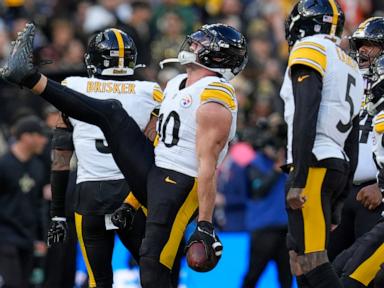
The Pittsburgh Steelers are banking early-season wins against inferior and banged-up opponents because their defensive front creates extra possessions and their offense avoids catastrophic turnovers. That formula builds a comfortable September and October cushion, yet it masks an offensive ceiling that historically collapses when the schedule shifts toward AFC heavyweights in December and January.
Walk into the South Side facility on any Tuesday morning, and the mood is always the same when the record sits above .500. Coaches preach complementary football. Veterans talk about stacking wins. Nobody apologizes for beating the teams placed in front of them, and in a league built on razor-thin margins, they shouldn't. Still, anyone who has covered the AFC North for more than a decade recognizes the exact scent of this trajectory. Beating sub-.500 rosters, backup quarterbacks, and rebuilding franchises keeps a coaching staff out of the crosshairs, right up until the winter winds blow off the Allegheny and the margin for error vanishes completely. You might also find this similar story useful: The Impossible Inheritance Inside Ann Arbor.
The Anatomy of a Safe Formula
Modern NFL roster construction usually forces a front office to pick a lane. You either pay for an elite, high-variance passing attack that can survive defensive lapses, or you pour resources into the trenches and play a suffocating brand of field-position football. Pittsburgh has doubled down on the latter for years, operating under the assumption that if you win the turnover battle and limit explosive plays, you will beat seventy percent of the league simply by waiting for the other sideline to blink first.
It works against bad football teams. Bad teams commit false starts on third-and-two. They force throws into bracket coverage when the pocket collapses after two and a half seconds. They miss forty-seven-yard field goals in swirling stadium winds. When the Steelers play opponents operating with thin depth charts or inexperienced signal-callers, their defensive pressure turns minor offensive mistakes into short fields and seven-point swings. As discussed in detailed articles by ESPN, the effects are notable.
Look at how those victories are actually constructed on film. Rarely is Pittsburgh blowing the doors off an opponent by twenty-four points before halftime. Instead, the games remain tight well into the third quarter. The offense leans heavily on early-down runs, conservative play-action concepts, and low-risk throws near the sidelines. The goal isn't to overwhelm a defense with schematic creativity; it is to avoid putting the defense back on the field in a compromised spot.
There is real value in that discipline. Over the last twenty years under Mike Tomlin, Pittsburgh has built an institutional identity around never beating itself against inferior competition—mostly. While occasional trap-game stumbles remain part of franchise lore, the broader trend is undeniable. The Steelers routinely harvest wins against the bottom third of the NFL, turning what should be coin-flip road games into methodical, ugly, six-point victories.
Why Early Wins Create Dangerous Illusions
The danger of stacking wins against vulnerable rosters is not the wins themselves. Every victory counts identically in the standings, whether it comes against a Super Bowl favorite or a franchise auditioning its third-string tackle. The real problem is how those results distort internal evaluation.
When a conservative offense escapes with a 20-16 win because the defense forced three fumbles, film sessions naturally highlight execution and resilience. Coaches point to third-down conversions in the fourth quarter and red-zone stops as proof of concept. What gets buried in the glow of a winning streak is the glaring inability to generate easy yards when the opposing defense simply loads the box and dares the quarterback to win outside the numbers.
Consider a hypothetical scenario that plays out every autumn in Pittsburgh. Suppose the Steelers face a two-win opponent missing its starting left tackle and top cornerback. Pittsburgh dominates time of possession, kicks four field goals, scores one touchdown off a short field, and wins by a touchdown. On Monday morning, the box score looks tidy. The turnover differential is plus-two. The rushing total clears one hundred and thirty yards.
Now take that exact same offensive output and drop it into a January wild-card matchup in Buffalo, Baltimore, or Kansas City. Four field goals against an elite quarterback isn't a blueprint for survival; it is a slow-motion surrender. When the opposing offense scores touchdowns on thirty percent of its drives instead of punting from its own twenty-yard line, kicking three points after stalling at the opponent's nineteen feels like a turnover.
The Structural Ceiling of Ball-Control Football
To understand why the Steelers keep hitting the same postseason wall, you have to look past the win-loss column and examine efficiency metrics that strip away opponent quality. Success rate—a metric measuring whether an offense stays ahead of the chains on each down—often tells a starkly different story than final scores during a soft stretch of the schedule.
An offense can look competent while averaging 4.8 yards per play if it never turns the ball over and benefits from pristine starting field position. Yet over a full seventeen-game slate, yards per play and explosive play rate (runs of ten-plus yards and passes of twenty-plus yards) remain the truest indicators of whether a team can trade punches with championship contenders. You cannot reliably string together twelve-play, seventy-five-yard drives against disciplined playoff defenses without eventually encountering a holding penalty, a dropped pass, or a disguised blitz that kills the possession.
Championship offenses manufacture cheap yardage. They use pre-snap motion to force defensive communication errors, create natural rubs in the secondary, and attack the middle of the field between the hashes. Pittsburgh's offensive architecture has spent years treating the middle of the field like restricted airspace. By prioritizing ball security above all else, the passing game shrinks horizontally and vertically, allowing safeties to creep toward the line of scrimmage and suffocate the run game.
The Defensive Tax
There is also a hidden physical cost to playing forty minutes of high-stress, one-score football every Sunday. When the offense cannot put games out of reach in the third quarter, the defensive front has to play maximum-effort snaps right up to the final whistle.
Pass rushers take a beating over five months. Asking edge defenders to pin their ears back on thirty-five obvious passing downs every single week because the scoreboard never stretches beyond a single possession accelerates wear and tear. By Week 14, the explosive first step that wrecked games in September looks a fraction slower. Soft-tissue injuries pile up in the secondary. Tackling angles widen by six inches. What looked like an invincible defensive unit early in the year suddenly starts surrendering fourth-quarter drives when it matters most.
What History Tells Us About the AFC North Gauntlet
The NFL schedule maker rarely does the AFC North any favors down the stretch. Divisional games are clustered heavily in November and December, turning the final six weeks of the season into a war of attrition against familiar, physical rivals who know every tendancy on your call sheet.
History offers plenty of warnings about fast starts built on soft schedules. Look back at the 2020 Steelers, who roared out to an 11-0 record behind an opportunistic defense and a quick-game passing attack that masked an aging offensive line and a nonexistent ground game. Once opposing defensive coordinators gathered enough tape to squat on short routes—and once the schedule stiffened—the bottom fell out. Pittsburgh lost five of its final six games, culminating in an embarrassing wild-card exit at home against Cleveland.
Even seasons without a dramatic collapse have followed a remarkably similar script over the past decade. The Steelers routinely finish with nine, ten, or eleven wins, securing a playoff berth or hovering on the bubble until Week 18. Yet they haven't won a postseason game since the 2016 season. That drought isn't bad luck. It is the mathematical consequence of building a roster designed to floor-raise rather than ceiling-raise.
Floor-raising teams beat the teams they are supposed to beat. They take advantage of inferior coaching, capitalize on sloppy ball handling, and lean on superior physical toughness to grind out ugly wins. Ceiling-raising teams possess schematic and personnel advantages that force even elite defenses into impossible choices. Until Pittsburgh proves it can consistently threaten defenses vertically and sustain explosive scoring drives without relying on defensive takeaways, early wins will remain an appetizer rather than proof of a contender.
The Real Evaluation Begins When the Margin Disappears
Nobody inside the Steelers locker room should apologize for taking care of business early in the season. Banked wins provide tiebreaker leverage, keep morale intact through the mid-season grind, and buy time for younger players to adjust to NFL speed. In a conference where a single slip-up against a bottom-feeder can cost you a wild-card spot in January, beating the teams you are supposed to beat is an essential baseline requirement.
Still, evaluating this team requires separating scoreboard results from sustainable process. Can the offensive line generate movement on third-and-short against top-ten defensive fronts without needing trickery? Can the passing game punish single-high safety looks when an opponent sells out to stop the run? Does the secondary hold up when the pass rush gets chipped and neutralized by elite quarterbacks who release the ball in under two seconds?
Those questions don't get answered against struggling franchises in October. They get answered in freezing temperatures against division rivals and MVP candidates who refuse to hand over free possessions—and until the Steelers prove they can win when the opponent doesn't beat itself, every early victory comes with an asterisk written in pencil.