The blue light hits your retina at 3:14 in the morning. It is a cold, flat illumination, the exact color of an operating room floor. You did not mean to open the screen. Your thumb simply performed the motion, a twitch-muscle memory rehearsed four hundred times a day, slipping past the lock screen with the casual grace of an old habit.
Three hours evaporate. Your neck aches. Your eyes burn. Your brain feels stuffed with dry cotton and fragments of videos about sourdough bread, geopolitics, and algorithmically generated cats.
You put the phone down, but the phantom vibration lingers in your thigh.
We live trapped inside a glass architecture designed by committees of psychologists whose sole metric of success is the monetization of human attention. Every notification is a tiny, engineered electric shock. Every infinite scroll is a slot machine that never runs out of coins. We know the cost. We feel the frayed edges of our attention spans, the persistent low-grade anxiety humming beneath our ribs, the quiet grief of evenings lost to glowing rectangles. We wanted an escape hatch.
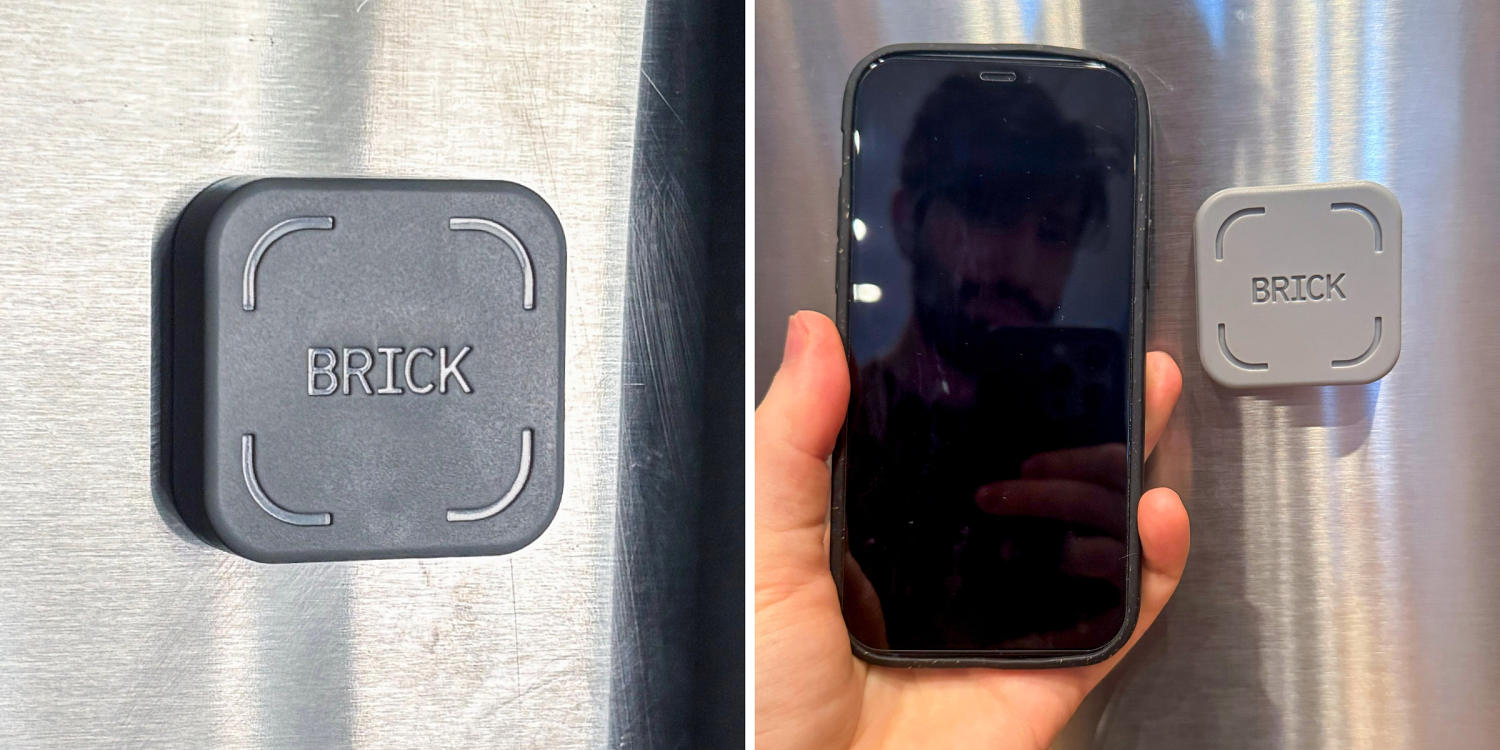
Then came a small aluminum square called the Brick.
It promised a physical wall between human consciousness and the digital void. The pitch was simple: tap your phone to the Brick to lock out your chosen apps. Tap it again to unlock them. By adding friction, by forcing a deliberate, physical action to access the distraction machine, the device claims it can break the spell.
I decided to live with it. Not as a detached reviewer sitting in a sterile testing lab, but as a person whose brain has been thoroughly colonized by the notification bell.
The Weight of Friction
The first thing you notice about the Brick is its physical presence. It is heavy, cold, and unapologetically analog. Setting it up requires downloading an app, granting permissions, and deciding which digital doorways you want to seal shut.
I chose the heavy artillery. Social media. News feeds. Email after five o'clock.
On Tuesday morning, the compulsion struck. A sudden, hollow itch behind my sternum. I reached into my pocket, pulled out the phone, and tapped the screen. Nothing happened. A minimalist black-and-white interface blocked my path, demanding physical contact with the hardware sitting on my kitchen counter.
I had to walk across the room.
That eight-foot walk felt remarkably long. It felt ridiculous. It felt like walking across a room just to turn off a light switch I could have reached from bed, except this switch was guarding the gates of my own dopamine supply. I tapped the phone against the Brick. The apps unlocked.
And in that moment of forced transit, something strange happened.
I paused. I looked out the window. A gray finch was balancing on the edge of a rusty gutter, shaking rain off its feathers. I had missed that bird three seconds prior because my eyes were glued to a loading wheel.
Behavioral psychologists call this friction. For the past twenty years, software designers have spent billions of dollars ruthlessly stripping every ounce of friction out of our digital environments. They made swiping frictionless. They made purchasing frictionless. They made consuming frictionless because ease equals engagement, and engagement equals profit.
The Brick attempts to reverse engineer this nightmare by reintroducing friction into the physical world. It weaponizes inconvenience against addiction.
The Anatomy of a Loop
To understand why the Brick works—and why it sometimes fails miserably—you have to understand what happens to a human brain under the steady drip of intermittent reinforcement.
Think of a pigeon in a Skinner box. When the pigeon pecks a lever and receives a pellet every single time, it pecks when it is hungry. But when the pellet drops at random, unpredictable intervals, the pigeon loses its mind. It pecks the lever thousands of times an hour until it collapses from exhaustion.
Our phones are the ultimate random pellet dispensers. Every time you refresh a feed, you might see a message from an old friend, or you might see an ad for orthopedic shoes. That unpredictability triggers a spike in dopamine, the neurotransmitter of anticipation, not satisfaction.
When you place your phone on the Brick and lock those apps away, you are cutting off the pellet dispenser.
The initial reaction is not calm enlightenment. It is panic.
By hour four of my experiment, my hand reached for my empty pocket nine separate times. Each time, my nervous system braced for a hit that wasn't there. My thumb twitched against my palm, searching for glass to stroke. It was an embarrassing demonstration of modern dependency. I felt restless, irritable, and strangely phantom-limbed, as though a part of my nervous system had been amputated and left vibrating in the other room.
This is the hidden cost of our hyper-connected era. We are never fully in our own bodies anymore. Part of our consciousness is permanently outsourced to a server farm in Ohio or a data center in Dublin, tracking likes, comments, and breaking news alerts.
The Hypocrisy of the Hardware
Can a piece of metal actually fix this?
Let us be entirely honest about the limitations. The Brick is not a magical talisman. It is a piece of NFC technology paired with a software restriction profile. If you have enough willpower, you do not need a Brick; you can simply turn your phone off, put it in a drawer, or use built-in operating system features like Apple’s Screen Time or Android's Focus Mode.
Critics often point this out with a smug sense of finality. Why buy a gadget to stop you from using gadgets?
They are missing the entire point of human psychology.
Willpower is not a permanent reservoir; it is a muscle that fatigues. By the end of a grueling workday, when your boss has micro-managed your patience and your energy is entirely depleted, your willpower is sitting near absolute zero. At 8:00 PM, staring at a screen requires zero energy. Resisting that screen requires an iron fortress of self-discipline.
The Brick does not create willpower out of thin air. It acts as an externalized prosthetic for your executive function. When your brain is too tired to say no, the physical barrier says it for you. You have to get up. You have to find the square. You have to tap it.
Those ten seconds of physical effort give your rational prefrontal cortex just enough time to override your impulsive limbic system.
Do I really want to spend forty minutes reading comment sections about a political scandal that happened three thousand miles away?
Sometimes the answer is still yes. You get up, you tap the Brick, you dive back into the stream. The device cannot save you from yourself if you are utterly determined to drown. But it changes the nature of the choice. It transforms an unconscious reflex into a conscious decision.
And consciousness is the one thing the attention economy fears most.
The Quiet Aftermath
By the end of the second week, the physical urge began to subside.
The phantom vibrations in my thigh stopped. Evening hours stretched out, wide and terrifyingly empty. Without the continuous background noise of breaking news and algorithmic outrage, I was left alone with my own thoughts, which can be an uncomfortable place after years of acoustic wallpaper.
I read an entire physical book in three nights. A real book with paper pages that smelled of glue and wood pulp. My sleep deepened. The abrasive edge of my daily anxiety softened into something manageable, like a bruise healing under a loose bandage.
The Brick did not revolutionize my life. It did not turn me into a meditative monk living off the grid. It simply built a speed bump on the highway to distraction.
We cannot un-invent the digital age. The algorithms will only grow more persuasive, the interfaces more seamless, the pull of the glass more hypnotic. We cannot permanently escape the modern world without retreating to a cabin in the woods, and very few of us are willing to trade indoor plumbing for inner peace.
So we have to fight on the micro-level. We have to reclaim our attention one awkward, friction-filled second at a time.
The screen goes dark. The room is quiet. The finch is gone from the gutter, but the rain has stopped, and the evening air smells faintly of wet asphalt and pine. You reach for your pocket, find nothing, and for the first time in a very long time, you look up.


:format(jpg)/f.elconfidencial.com%2Foriginal%2F5ea%2Fcd3%2F24d%2F5eacd324dfa70e3ad0e2939fda05b186.jpg)
