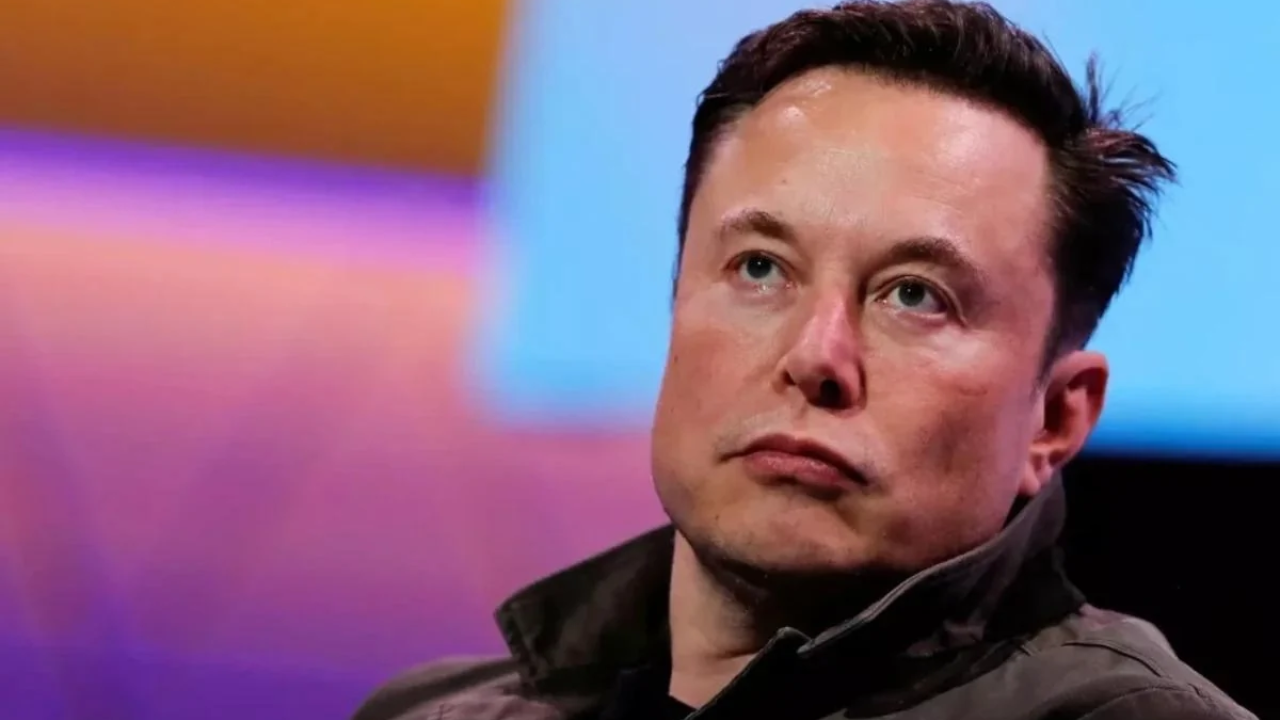
Spending hundreds of millions of dollars on midterm campaigns fails when concentrated donor cash amplifies voter resentment rather than persuading swing voters. Following the 2026 United States midterm elections, Elon Musk stated that he felt "pretty foolish" after pouring vast sums into backing Republican candidates and declared that he is "not MAGA". Coverage of his remark typically treats the episode as a personal confession of regret or a simple headline about a billionaire losing a political bet. That framing misses the structural mechanics of high-dollar political intervention. Treating elections like a capital deployment problem exposes why raw spending hits diminishing returns, how high-profile donor visibility can turn into a campaign liability, and how regulatory and legislative blowback alters the risk profile of Musk's commercial portfolio.
Deconstructing the Standard Coverage Logic
Typical reporting on Musk's post-election remarks centers on a straightforward narrative arc: a major donor spends record money, backed candidates lose, and the donor publicly questions the expenditure. In these accounts, the core tension is presented as a contrast between extreme wealth and electoral limits. Musk's observation that elections are not solely about money is often quoted as the moral of the story, paired with anecdotes about political distance, social media posts, or impending congressional scrutiny.
This approach leaves three analytical gaps:
- Conflating volume with marginal persuasion: Treating hundreds of millions of dollars as a direct lever on vote share ignores ad saturation and voter fatigue.
- Treating donor identity as neutral: Assuming money is fungible overlooks how a prominent executive's public brand can become part of the ballot argument itself.
- Separating campaign outcomes from institutional risk: Viewing losses solely through missed seats obscures how political alignment reshapes oversight, regulatory enforcement, and commercial friction after Election Day.
A rigorous strategic analysis separates campaign mechanics from corporate risk management. Rather than asking whether Musk "regrets" the outlay, the sharper question is what return profile mega-donor spending actually generates in modern midterm elections.
The Cost Function of Mega-Donor Campaigns
In commercial operations, capital allocation follows a marginal return curve: early units of investment capture high-value opportunities, while later units yield progressively smaller gains as markets saturate. Political advertising and turnout operations face a similar ceiling. Once voters in competitive districts have been targeted repeatedly by television spots, digital ads, and mailers, additional spending often buys repetition rather than new persuasion.
Reporting on the 2026 cycle shows Musk becoming the largest known donor, with tallies placing his political outlays in the hundreds of millions—including hundreds of millions directed to America PAC and major Republican super PACs such as the Senate Leadership Fund and Congressional Leadership Fund. Rather than treating that figure as a lump sum that should have guaranteed victory, analysts can break the expenditure into functional buckets:
- Mass persuasion and airwaves: Broad media buys aimed at undecided or persuadable voters, where repetition can harden existing preferences or trigger tuning out.
- Turnout and ground operations: Field mobilization and voter contact designed to lift base participation in low-turnout midterm environments.
- Narrative framing: Messaging that defines opponents or elevates specific cultural and economic themes.
The first limitation of mega-donor capital is that money cannot manufacture an elastic persuadable electorate where none exists. In polarized environments, heavy spending frequently serves to mobilize the donor's own side or energize opposition turnout rather than convert skeptical voters. A second bottleneck arises when spending is concentrated late or relies on repetitive messaging. When voters feel bombarded by identical appeals, incremental dollars face steep diminishing returns.
This creates a distinct cause-and-effect dynamic often missed in surface commentary. High spending does not fail merely because "money doesn't matter"; it underperforms when marginal ad impressions hit audience saturation while structural factors—such as local candidate strength, economic frustration, or voter sentiment toward incumbent power—carry heavier weight.
When High-Visibility Backing Becomes a Liability
Standard political commentary often assumes that an influential benefactor's visibility acts as a force multiplier. In practice, high-profile backing carries a double-edged signaling effect. When a prominent business leader becomes closely identified with a party or slate, opponents can reframe the contest around concentrated wealth and corporate influence.
During the 2026 midterms, opponents in states like Texas explicitly cast races as everyday voters versus billionaires and entrenched power, pointing directly to Musk's financial role. That framing illustrates a crucial mechanism: visibility converts an anonymous financial contribution into a tangible symbol for critics. Instead of remaining in the background as a funding source, the donor becomes part of the opposition's case.
Consider a stylized example of how this dynamic plays out in a competitive district. Suppose a challenger trails on name recognition and fundraising. If a high-profile outside spender enters with massive backing, the challenger gains a clear focal point—arguing that outside wealth is trying to buy local representation. Even if the outside spender's ads reach thousands of households, the counter-narrative can mobilize voters who might otherwise stay home.
Musk's post-election statement that he is "not MAGA" and his comment that he would have spent less if he could rewind the clock reflect an effort to reset political positioning after a costly cycle. Yet public brand distance announced after ballots are cast cannot retroactively alter how voters perceived the alignment during the campaign. In reputation management, alignment is sticky during active contests, while disaffiliation afterward often reads as damage control.
Institutional Blowback and Commercial Risk Exposure
The sharpest omission in conventional coverage is the link between campaign spending and post-election institutional exposure. For an executive leading capital-intensive enterprises—including companies tied to government contracts, regulatory approvals, and industrial policy—political alignment is never purely expressive. It alters counterparty dynamics across branches of government.
Following the 2026 midterms, Democratic lawmakers signaled plans for aggressive congressional investigations and oversight into the administration and Musk's prior work leading the "department of government efficiency" (Doge), alongside scrutiny of federal funding and potential corporate transactions. Lawmakers also moved to introduce legislation targeting campaign finance loopholes associated with large individual political outlays. Meanwhile, state-level political shifts in places where Musk's companies operate—such as Texas—raise the prospect of tougher local and state-level scrutiny.
This points to a clear cause-and-effect chain:
- Pre-election alignment: Heavy financial and public backing ties a business leader closely to a specific political movement and governing agenda.
- Electoral shift: When backed candidates lose or legislative control shifts, political adversaries gain subpoena power, committee leadership, and legislative leverage.
- Operational friction: Investigations, regulatory reviews, and public disputes consume executive bandwidth and introduce uncertainty around contracts, approvals, or mergers.
A critical distinction is warranted here between verified developments and educated hypotheses. It is a known fact that Musk spent hundreds of millions of dollars across the cycle, called his midterm spending "foolish" and said he is "not MAGA", and faces calls for oversight and legislative pushback from Democrats. By contrast, any claim about the exact financial drag on specific companies—such as how much a potential merger or future federal contract might be delayed or altered—is an analytical projection based on institutional incentives rather than a settled outcome.
Known Facts Versus Analytical Hypotheses
Separating confirmed events from strategic inference keeps analysis disciplined when numbers and future impacts remain fluid:
- Confirmed facts: Musk spent hundreds of millions of dollars supporting Republican efforts in the 2026 cycle, stated afterward that he felt "pretty foolish" about the spending and is "not MAGA," and became a target of criticism and planned oversight from Democratic officials.
- Analytical hypotheses: High-dollar spending likely ran into diminishing returns in saturated battlegrounds, high-profile donor visibility likely helped opponents frame races around concentrated wealth, and partisan shifts in legislatures increase near-term oversight and regulatory friction for aligned corporate leaders.
Recognizing where hard evidence ends and structural modeling begins prevents overclaiming. Even when exact dollar-for-vote conversion rates are impossible to isolate cleanly, the underlying incentives in campaign finance and legislative oversight are well established.
An Operating Framework for High-Stakes Political Capital
Anyone evaluating or managing large-scale political spending—whether a donor, a corporate board, or a political strategist—can apply a disciplined four-step framework before committing capital:
- Map marginal elasticity first: Estimate how many genuinely persuadable voters remain in target districts and how saturated media markets already are before scaling budgets into the hundreds of millions.
- Stress-test donor salience: Model how opponents will use the donor's public persona, business footprint, or past government roles to frame the race. If the benefactor's name becomes an attack line, weigh the cost of visibility against the value of the funds.
- Price in asymmetric downside risk: Evaluate how a loss or shift in legislative control could trigger investigations, rulemaking delays, or legislative responses affecting core business interests. Treat political spending as a high-variance bet with potential non-financial liabilities, not a standard media buy.
- Decouple corporate governance from personal politics: Establish clear boundaries between an executive's political activity and corporate operations so commercial entities are not unnecessarily exposed to partisan retaliation or brand polarization.
This framework has clear limitations. Political outcomes depend on macroeconomic conditions, candidate quality, turnout shifts, and unforeseen events that no pre-election model can control. Furthermore, staying on the sidelines carries its own risks if policies affecting a sector are decided without input. There is no risk-free play in high-stakes politics.
Strategic Play for Capital Allocators
Treat massive political spending in midterm elections as a low-efficiency persuasion tool and a high-exposure governance event, and shift future resources away from late-stage mega-spending toward early structural positioning, targeted issue advocacy, and rigorous corporate risk insulation before campaigns peak.
Elon Musk says he feels 'foolish' after spending hundreds of millions backing Republicans
This video provides context on Musk's post-midterm remarks regarding his campaign spending and political alignment.