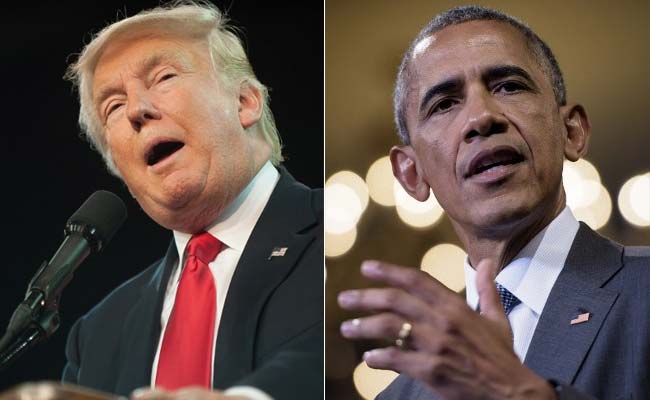
The strain of the White House does not end when the moving trucks pull away from Pennsylvania Avenue. While the public often views the post-presidency as a period of lucrative book deals and serene kite-surfing vacations, the reality for Barack and Michelle Obama involved a difficult reckoning with the emotional debt accumulated over eight years of extreme scrutiny. The tension within their marriage, fueled by the rise of Donald Trump and the systematic dismantling of the Obama legacy, was not a secret kept for the sake of gossip, but a reflection of how political volatility bleeds into the domestic sphere.
Barack Obama admitted that the shift in the American political climate during and after 2016 forced a confrontation within his household. It was a friction born from two distinct ways of processing a national identity crisis. For Michelle, the exhaustion was visceral. For Barack, the instinct was to remain the analytical, detached professor. When these two temperaments collided against the backdrop of a successor who campaigned on the erasure of their work, the "genuine tension" he described became an inevitability.
The Weight of the Symbolic Union
Every presidential couple functions as a Rorschach test for the nation. We project our hopes, our traditionalism, or our progressivism onto them. The Obamas carried a heavier burden than most because they represented a historical breakthrough. They had to be perfect. Any crack in the facade would be weaponized by a nascent birther movement and a media apparatus hungry for a narrative of dysfunction.
Inside the residence, this pressure creates a specialized kind of isolation. Friends who have spent time with the couple describe a dynamic where the "Primary" (the President) is constantly shielded by a bubble of briefing books and security details, while the "Principal" (the First Spouse) often bears the brunt of the emotional labor required to keep a family grounded. Michelle Obama has been candid about her resentment during the early years in Washington, but the post-2016 era introduced a new variable: the feeling that the sacrifice might have been for nothing.
Trump and the Fragility of Progress
The election of Donald Trump acted as a catalyst for suppressed frustrations. It is one thing to hand over the keys to a successor who disagrees with your tax policy. It is quite another to hand them to a man who spent years questioning your citizenship and your basic right to hold the office.
For Barack Obama, the response was a characteristic, almost frustrating, stoicism. He believed in the "long arc of the moral universe." He viewed the Trump presidency as a temporary deviation, a "zigzag" in the path of progress. Michelle did not have the luxury of that detachment. To her, the rhetoric coming from the new administration was a direct assault on the values she had tried to instill in her daughters and the country.
This creates a specific type of marital discord. One partner wants to analyze the data; the other wants to acknowledge the pain. When the person you live with responds to a national emergency with a lecture on historical cycles, the "tension" isn't about who forgot to do the dishes. It is about whether your partner truly understands the stakes of the moment.
The Ten Year Gap
Michelle Obama famously noted that there was a ten-year period where she "couldn't stand" her husband. This timeline largely overlaps with their rise to national prominence and their first term in the White House. While some critics viewed this as a betrayal of the "power couple" brand, seasoned analysts saw it as a rare moment of honesty in an industry defined by curated perfection.
The "tension" Barack referenced in his more recent reflections is the sequel to those difficult years. It represents the "re-entry" phase of a high-pressure life. In a normal marriage, you negotiate space and time. In a political marriage, you negotiate legacies.
The Industry of the Post-Presidency
We must look at the business ventures the couple entered after 2017. The Higher Ground Productions deal with Netflix and the massive multi-book contracts with Penguin Random House were not just about wealth. They were about reclaiming the narrative. However, working together as business partners after decades of one person's career taking absolute precedence is a recipe for conflict.
In the White House, there is a clear hierarchy. The West Wing runs the world; the East Wing manages the platform. In their private life in Kalorama and beyond, that hierarchy dissolved. Michelle emerged as a more popular, more relatable figure than her husband. Her memoir, Becoming, outperformed his in several metrics of cultural resonance. Navigating that shift—where the spouse becomes the primary cultural force—requires an ego check that most world leaders are not equipped to handle.
The Psychological Toll of the Counter-Revolution
Political analysts often ignore the psychological impact of seeing your life’s work dismantled in real-time. From the Paris Agreement to the Affordable Care Act, the Trump administration made a sport of undoing the Obama era.
Imagine spending eight years in a high-stress environment, sacrificing your privacy and your family's normalcy to build something, only to watch the next guy set it on fire while half the country cheers. Barack Obama’s internal struggle to remain the "adult in the room" while this happened placed a massive burden on his marriage. He had to maintain a public silence to respect the tradition of the office, but that silence often meant he couldn't be the vocal protector his family might have needed.
The "tension" was a byproduct of this forced neutrality. Michelle was free to be angry. Barack felt he was not. That emotional disparity creates a wall between two people that no amount of shared history can easily scale.
Lessons from the Glass House
The Obama marriage survived this period not because they were special, but because they eventually stopped pretending the pressure didn't exist. The lesson for anyone observing the intersection of power and private life is that no one is immune to the corrosive effects of a toxic political environment.
The struggle they faced is a microcosm of the current American condition. We are a country divided by how we perceive reality, just as they were a couple divided by how they processed the loss of their political project. The "tension" wasn't a sign of failure; it was a sign of a functioning conscience.
In the end, the Obamas moved through the friction by diversifying their interests. They stopped being a "political unit" and started being two distinct individuals with overlapping goals. Michelle leaned into the role of a cultural mentor, while Barack focused on the long-term work of the Obama Foundation. By stepping out of each other's professional shadows, they managed to salvage the partnership.
The reality of the Trump era's impact on the Obamas serves as a reminder that the cost of leadership is never fully paid during the term of service. It is extracted in the quiet moments afterward, in the arguments behind closed doors, and in the long process of remembering who you were before the world told you who you had to be.
If a couple with every resource at their disposal struggles to maintain a baseline of peace during a shift in national leadership, it highlights the extreme fragility of our social fabric. Politics isn't just about policy; it's about the emotional health of the people who live within its borders.
Stop looking for the "perfect" marriage in the headlines. It doesn't exist. What exists is the constant, grueling work of staying aligned when the world is trying to pull you apart. Use the Obama revelation not as a piece of celebrity gossip, but as a blueprint for acknowledging the stress that external chaos places on your own house.
The work of a post-presidency isn't just building a library. It's rebuilding a home.