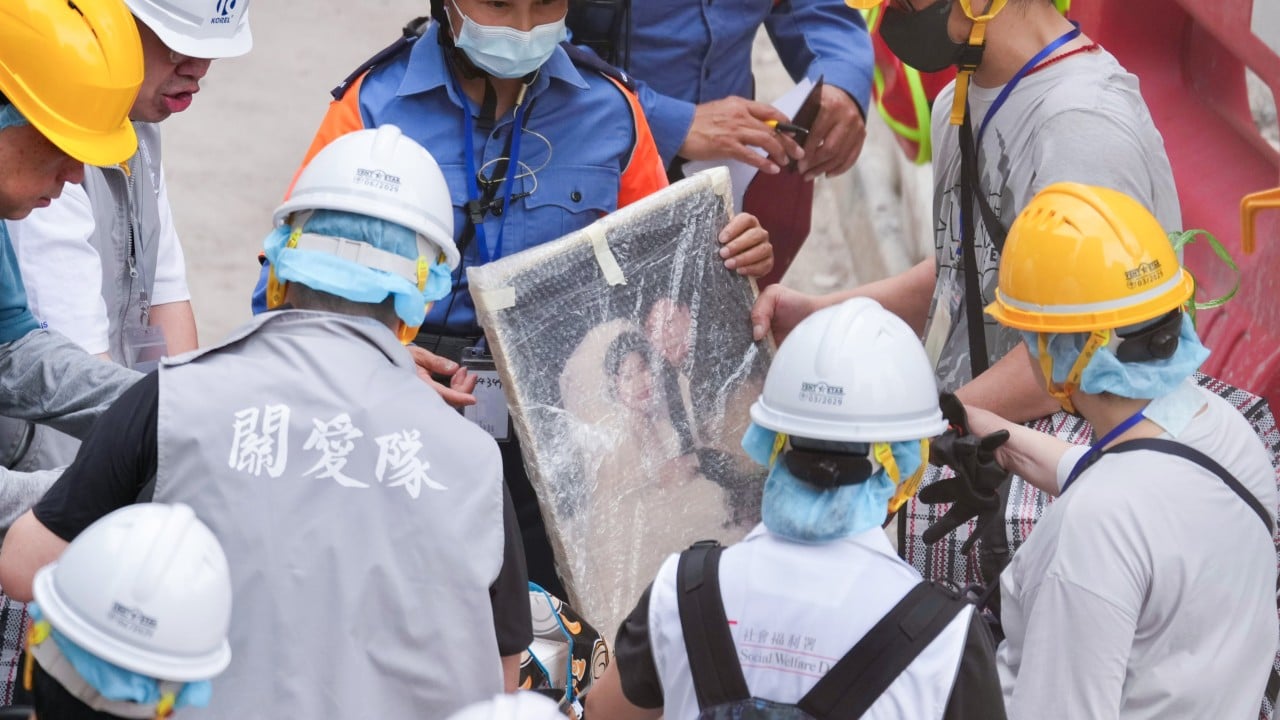
The physical return of 600 families to the Tai Po residential complex following a critical infrastructure failure or localized disaster represents a high-stakes transition from emergency management to long-term structural stabilization. This re-entry process is not merely a logistical migration; it is a stress test of the building’s lifecycle integrity and the psychological threshold of its inhabitants. While media accounts focus on the sentiment of "coming home," a strategic analysis reveals a complex interplay between engineering verification, vertical transportation bottlenecks, and the degradation of trust in shared urban infrastructure.
The Triad of Re Entry Friction
The restoration of occupancy at Wang Fuk Court is governed by three distinct friction points that determine the success of the transition.
- Technical Validation Lag: Before any resident crosses the threshold, the mechanical, electrical, and plumbing (MEP) systems must undergo a sequence of re-commissioning. In high-rise residential towers, a sudden cessation and restart of water pressure or electrical load can trigger secondary failures in aged piping or localized grid surges.
- Vertical Logistics Throughput: High-density towers rely entirely on elevator capacity. When 600 families attempt to move personal belongings or conduct "second visits" to assess damage simultaneously, the elevator cycle time increases exponentially. This creates a physical bottleneck that dictates the speed of the entire recovery operation.
- The Information Asymmetry Gap: Residents returning to a "worst-hit" site operate under a deficit of data. Their primary concern is structural safety, yet the data confirming that safety—often technical reports from surveyors or government engineers—is rarely translated into accessible formats.
Engineering Integrity and the Latent Risk Profile
The classification of a specific tower as "worst-hit" suggests that the structural or environmental damage exceeded the baseline of surrounding units. This status necessitates a more rigorous inspection protocol than standard biennial maintenance.
Structural integrity in the wake of a localized disaster depends on the building’s ability to handle static and dynamic loads. If the "hit" involved fire, the primary concern is the calcination of concrete and the loss of tensile strength in steel reinforcements. If the damage was water-related, the risk shifts to internal corrosion and electrical shorts within the conduit systems hidden behind drywall.
The mechanism of "second visits" serves as a crucial feedback loop. The first visit typically involves immediate damage assessment (the "triage" phase). The second visit allows for a more granular identification of latent defects—cracks that have widened since the event, or mold blooms that have developed in unventilated spaces. This stage is where the true cost of restoration is quantified.
Quantifying the Logistics of Mass Return
The movement of 600 families back into a single vertical tower is a complex queuing problem. If we assume an average of 3.2 individuals per household, approximately 1,920 people must be integrated back into the building’s ecosystem.
The primary constraint is the Lift Service Ratio (LSR). In many older Hong Kong residential blocks, the LSR was calculated based on 1980s or 90s occupancy standards. During a mass re-entry, the demand on these lifts far exceeds the designed peak-hour traffic.
- Load Balancing: Management must stagger return times by floor to prevent terminal congestion in the lobby.
- Energy Spikes: Simultaneous activation of air conditioning units and water heaters across 600 units creates a sharp demand curve on the building’s sub-station. A failure to phase these activations can lead to localized brownouts.
- Waste Management Volume: The disposal of contaminated furniture or renovation debris from 600 units creates a secondary logistics crisis. The building’s standard refuse handling system is likely unequipped for this volume, requiring external hauling contracts and designated staging areas that do not impede emergency access.
The Psychological Infrastructure of Shared Spaces
The return to Wang Fuk Court is as much about social cohesion as it is about masonry and wiring. In a high-density environment, the perception of safety is communal. If one resident observes a hairline crack in a common corridor, the anxiety propagates through the entire resident network.
This phenomenon is exacerbated by the "worst-hit" designation. This label creates a permanent stigma that can affect property valuation and the willingness of residents to invest in long-term maintenance. To mitigate this, the management entity must move from a posture of "incident response" to "systemic transparency." This involves publishing real-time data on air quality, water purity, and elevator uptime to rebuild the residents' mental model of a safe environment.
Economic Implications of the Worst Hit Designation
The financial recovery of Wang Fuk Court hinges on the insurance claims process and the potential for a collective litigation or government subsidy path.
Capital Expenditure (CapEx) vs. Operating Expense (OpEx):
The repairs required for the worst-hit tower often blur the line between standard maintenance and emergency restoration. If the building’s sinking fund was already underfunded—a common issue in older estates—the residents face the prospect of "Special Levies." These are one-time, high-value payments required to cover the gap between insurance payouts and actual restoration costs.
For the 600 families, the second visit is often the point at which they must decide whether to commit to these costs or exit the property. A high rate of "exit" (selling at a loss) leads to a rapid turnover in the social fabric, potentially lowering the overall standard of the estate as transient renters replace long-term owners.
Systemic Vulnerabilities in High Rise Urban Planning
The situation at Wang Fuk Court serves as a case study for the broader vulnerabilities of the Hong Kong residential model. High-rise living offers efficiency but lacks "graceful degradation." When one system fails, the entire vertical community is paralyzed.
- Centralization Risk: Dependence on a single water pump or a primary electrical riser means there is no redundancy.
- Density Multiplier: The impact of a disaster is multiplied by the number of people per square meter. A single-family home disaster affects 4 people; a tower disaster affects 2,000.
- Aging Stock: Much of the high-rise residential infrastructure is entering a phase of its lifecycle where the frequency of critical failures will increase.
Optimization of the Restoration Timeline
To move from "damaged" back to "fully operational," the following sequence of operations provides the most efficient path for the 600 families:
- Environmental Remediation: Professional grade dehumidification and air filtration must precede the return of furniture to prevent secondary biological hazards.
- Point of Entry Testing: Each unit’s individual electrical breaker and water meter must be verified by a certified technician before the resident assumes responsibility.
- Communication Synchronization: A digital dashboard or centralized bulletin must provide daily updates on the status of common area repairs to manage expectations and reduce the volume of individual inquiries to management.
The return to Wang Fuk Court is a transition from a state of emergency to a state of heightened surveillance. The residents are no longer just inhabitants; they are the primary monitors of the building's health. Their "second visits" are the final stage of a distributed inspection process that will determine if the tower remains a viable residential asset.
The strategic priority now shifts from physical repair to the stabilization of the community's internal economy. Management must secure a long-term maintenance contract that specifically addresses the vulnerabilities exposed by this incident. Failure to do so will result in a "slow-motion abandonment" where the building remains standing but its market value and social utility enter a terminal decline. The objective is to convert this crisis into a baseline for a "hardened" infrastructure that can withstand the next inevitable environmental or mechanical shock.