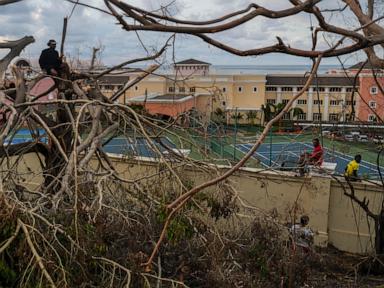
One year after Hurricane Melissa made landfall on October 28, 2025, as a record-tying 190-mph Category 5 storm, Jamaica recorded roughly 3 million visitor arrivals and more than US$3 billion in tourism earnings. On the surface, that figure looks like a rapid rebound. Beneath the aggregate total sits a structural divergence: resort corridors reopened quickly, while physical capital stock, agricultural supply chains, and household shelter across western parishes remain severely impaired.
Standard post-disaster coverage treats recovery as a linear race between physical repair and traveler sentiment. That framing misses how a small, open tourism economy actually absorbs a shock equal to roughly 56.7 percent of its 2024 GDP. A destination can restore 70 percent of its hotel room inventory within seven weeks of a Category 5 strike and still enter peak winter season with depressed yields, fragmented domestic supply chains, and unresolved housing deficits. Don't miss our earlier post on this related article.
Deconstructing the Surface Narrative
Conventional reporting on post-hurricane tourism usually compresses the story into three familiar moves: a headline number of damaged rooms, an upbeat reopening milestone, and a general worry about whether visitors will return before winter. That structure treats tourism as an isolated retail storefront rather than an interconnected production system.
When a storm inflicts an estimated US$12.2 billion (J$1.95 trillion) in total damage and losses, damages approximately 150,000 structures—including roof loss on roughly 120,000 buildings—and leaves roughly 43 percent of hotel room stock initially forced to close, headline arrival counts measure throughput, not equilibrium. Arrivals can recover faster than profitability or community stability because fixed-cost operators discount rates, redirect demand toward intact properties, and rely on cruise volume to keep occupancy numbers optically high. To read more about the background here, The Motley Fool offers an excellent breakdown.
In the twelve months following Melissa, roughly 900,000 of Jamaica's 3 million visitors came via cruise ships. Cruise passengers generate port fees, shore-excursion revenue, and localized retail spend, but they do not fill hotel rooms, absorb fixed resort overhead, or sustain year-round hospitality payrolls at pre-storm levels. Treating total arrivals as equivalent to full sector restoration conflates foot traffic with net economic surplus.
The Four-Layer Recovery Architecture
To evaluate whether Jamaica is genuinely ready for peak winter demand, the recovery must be separated into four interacting layers: physical infrastructure, accommodation capacity, backward linkages, and fiscal-institutional bandwidth.
Layer 1: Physical Infrastructure and Spatial Asymmetry
Hurricane Melissa concentrated severe destruction across western and southwestern parishes—including Westmoreland, St. Elizabeth, St. James, St. Ann, Trelawny, and Manchester. In communities such as Black River and Gutters, hollow structures, downed lines, and incomplete roof repairs remained visible a full year after landfall.
Yet international air gateways—Sangster International Airport in Montego Bay, Norman Manley International Airport in Kingston, and Ian Fleming International Airport near Ocho Rios—restored full passenger and cargo operations. That asymmetry creates a two-speed geography. Gateway infrastructure and flagship resort enclaves can operate at near-normal service standards while surrounding residential neighborhoods, secondary roads, and local utilities operate under degraded capacity.
From an operational standpoint, aviation restoration is a necessary condition for peak season, not a sufficient one. A resort can run backup power, treated water systems, and imported logistics, but its workforce still commutes through damaged corridors and lives inside a housing stock where tens of thousands of homes suffered structural or roof damage. Labor friction shows up not as an immediate closure, but as higher turnover, absenteeism, overtime premiums, and service-quality variance during high-occupancy weeks.
Layer 2: Room Inventory and Staggered Reopening Dynamics
Roughly 40 to 50 percent of hotel properties suffered damage, with about 43 percent of room stock initially forced offline. Reaching roughly 70 percent available room inventory by December 15, 2025—seven weeks after impact—was an unusually fast operational stabilization compared with historical Category 5 benchmarks.
Even so, a 30 percent capacity gap at peak season carries sharp microeconomic consequences:
- Revenue per available room (RevPAR) distortion: Properties that reopened early captured displaced demand, while properties undergoing multi-month rebuilds forfeited high-margin winter ADR (average daily rate) windows.
- Staggered return schedules: Major properties continued phasing back online into late 2026 and the 2026–2027 winter season—such as Sandals Jamaica South Coast scheduling a November 18, 2026 reopening with upgraded amenities, followed by Sandals Montego Bay and Sandals Caribbean Cay in December.
- Capital expenditure crowding: Restoration budgets often bundle repairs with product upgrades (such as Sandals' reported US$200 million renovation program). Upgrading during reconstruction improves long-term product competitiveness, but it lengthens downtime and ties up liquidity that might otherwise buffer working capital.
Layer 3: Backward Linkages and the Agriculture–Tourism Feedback Loop
The most underappreciated mechanism in post-Melissa recovery is the bidirectional shock between tourism and agriculture. Melissa inflicted roughly J$30 billion in agricultural losses across more than 70,000 farmers and over 41,000 hectares of farmland.
In input-output economics, tourism relies on domestic backward linkages to retain foreign exchange inside the local economy. When hotel closures hit immediately after the storm, farmers lost their highest-margin institutional buyer. When farms were washed out or stripped of crops, reopening hotels lost reliable domestic produce, poultry, and livestock supply.
Force-multiplying effects emerge when that loop breaks:
- Hotels substitute imported food inputs to maintain menu consistency and food-safety standards.
- Foreign exchange earned from tourist arrivals leaks outward to pay for imported provisions rather than circulating through rural parishes.
- Rural household incomes stay depressed, slowing local construction demand and increasing reliance on public transfers or diaspora remittances.
Rebuilding hotel kitchens faster than farm output creates a structural import dependency that persists well into the second year after a hurricane.
Layer 4: Fiscal Slippage and Execution Bottlenecks
A shock equal to 56.7 percent of 2024 GDP forces an immediate fiscal trade-off. Planning Institute of Jamaica estimates pointed to a roughly 3.6 percentage point reduction in fiscal-year GDP growth and a projected fiscal deficit near 3.5 percent of GDP, reversing a previously targeted balanced budget as tax revenues contracted and emergency outlays expanded.
When public balance sheets tighten at the exact moment reconstruction demand spikes, procurement friction intensifies. Public officials have acknowledged bureaucratic and financial constraints slowing housing and school restoration—where roughly 450 schools, nearly two-thirds of institutions nationwide, reported significant damage. In tourism-dependent economies, slow public-sector disbursement outside resort zones creates a visible legitimacy gap: visitors see freshly renovated beachfront properties, while residents in nearby parishes still live under tarps or incomplete roofs.
Known Facts Versus Analytical Hypotheses
Separating verified post-Melissa data from forward-looking operational hypotheses prevents over-interpreting early tourism numbers:
- Verified facts: Melissa struck Jamaica on October 28, 2025, with 190-mph sustained winds; total damage and losses reached an estimated US$12.2 billion (J$1.95 trillion); roughly 43 percent of hotel rooms initially closed before reaching roughly 70 percent availability by December 15, 2025; Jamaica recorded approximately 3 million visitors and over US$3 billion in tourism earnings in the following year, including roughly 900,000 cruise visitors; and major resorts continue reopening through late 2026.
- Educated hypotheses: Even with late-2026 resort reopenings lifting room supply closer to pre-storm baselines, net tourism retention (the share of each tourism dollar kept domestically) is likely lower than pre-Melissa norms until domestic agricultural supply chains normalize. Similarly, workforce housing strain in western parishes is likely to keep operating expense ratios elevated across hospitality operators through at least the first half of the peak winter season.
Limitations of Standard Recovery Playbooks
Tourism ministries and hotel groups typically rely on three standard levers after a major storm: rapid gateway PR, phased resort reopenings, and philanthropic or community-linked visitor programs. Each lever has hard boundaries.
First, marketing campaigns can restore intent to book faster than supply chains can restore local inputs. Telling travelers that Jamaica is open solves demand perception, not crop yields or roof-truss shortages. Second, private-sector philanthropy—such as resort foundations rebuilding schools or pack-for-a-purpose logistics—stabilizes targeted community assets, but philanthropic capital cannot substitute for sovereign fiscal capacity across 150,000 damaged structures. Third, public health vigilance—such as intensified Ministry of Health surveillance for post-flood waterborne and vector-borne risks like leptospirosis outside resort enclaves—protects visitor safety, yet localized advisories still cap independent inland touring.
Tactical Execution Blueprint for Peak Season
Operators, policymakers, and capital allocators managing exposure to Jamaica's peak season should treat the next 120 days as a capacity-synchronization problem rather than a pure sales push.
- Audit workforce logistics before occupancy peaks. Map employee commute routes, housing stability, and backup transport across affected western parishes. Buffer staffing rosters by 10 to 15 percent on high-turn days to absorb utility or transit disruptions without degrading front-of-house execution.
- Contract forward with surviving agricultural clusters. Replace ad-hoc spot purchasing with forward-purchase agreements with farmers in less-damaged interior pockets and recovering parishes. Guaranteed off-take gives growers the cash-flow certainty required to replant short-cycle crops, while locking in domestic supply for hotels.
- Segment demand between stayover yield and cruise throughput. Avoid using cruise arrival growth as a proxy for macroeconomic recovery. Track net foreign-exchange retention, average length of stay, and per-visitor inland spend separately from headcount.
- Ring-fence resilience capex inside every refurbishment. Where properties are still completing post-Melissa rebuilds, prioritize roof-to-foundation load paths, elevated mechanicals, and redundant water/power isolation over purely cosmetic finishes.
The decisive test for Jamaica over the coming peak season is not whether arrivals approach pre-Melissa volume—phased reopenings and pent-up winter demand make high headcounts plausible. The real strategic play is converting a fast hotel reopening into closed-loop domestic value capture by pairing resort occupancy with deliberate agricultural procurement and workforce stabilization before the next storm cycle begins.