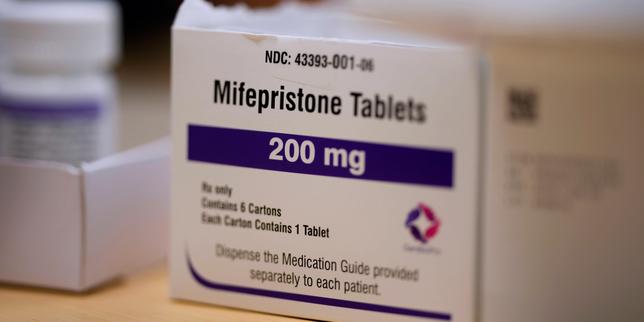
The media is obsessed with the administrative plumbing of the Fifth Circuit Court of Appeals. They treat every stay and every procedural hiccup like a final judgment on the soul of the country. If you read the mainstream coverage of the recent federal rulings on mifepristone, you’d think the mail-order pharmacy system was the only thing standing between the status quo and a total healthcare blackout.
They are wrong.
The focus on the "postal ban" misses the underlying reality of how power and medicine actually function in a post-Dobbs world. Most analysts are stuck in 1973, thinking a court order is a physical barrier. It isn't. In the age of digital decentralization and state-level shield laws, a federal court arguing over the Comstock Act of 1873 is less a legal landmark and more a historical reenactment.
The Comstock Fallacy
The current legal friction centers on the Comstock Act—a Victorian-era "chastity" law that hasn't been meaningfully enforced in half a century. Activists and certain appellate judges want to use it to criminalize the mailing of medication. The "lazy consensus" says that if the courts revive Comstock, the supply chain dies.
That is a failure of imagination.
In the real world, supply chains are like water; they find the cracks. When the Fifth Circuit suggests that the FDA overstepped by allowing mail-order access, they are trying to put a physical padlock on a digital door. I have watched industries from fintech to pharma navigate regulatory crackdowns for two decades. The result is always the same: the more you squeeze the official channels, the faster the "gray market" becomes the primary market.
By focusing on the mail, the courts are fighting a war against the delivery truck instead of the cargo. Even if a federal ruling survives the Supreme Court, it ignores the existence of "shield laws" in states like Massachusetts or New York. These laws explicitly protect providers who ship to restrictive states. You can’t "ban" the mail without effectively dismantling the USPS—a logistical impossibility that no one in Washington actually wants to touch.
Safety Is a Red Herring
The opposition’s core argument rests on the idea that the FDA rushed its 2016 and 2021 expansions, ignoring "adverse events." This is statistically illiterate.
Mifepristone has a safety profile superior to Tylenol and Viagra. The push to reinstate the requirement for three in-person doctor visits isn't about patient safety; it’s about increasing the "friction cost" of healthcare.
Imagine a scenario where we treated every medication with this level of scrutiny. If the standard for "safety" being applied to mifepristone were applied to common NSAIDs or even high-dose caffeine supplements, our pharmacies would be empty. The legal argument isn't based on biology; it’s based on a selective application of the precautionary principle.
When a court decides it knows more about clinical trials than a federal agency with a thousand scientists, we aren't seeing a "return to the rule of law." We are seeing the death of specialized expertise. This creates a massive risk for the entire pharmaceutical industry—one that CEOs are terrified to talk about publicly. If one judge in Texas or a panel in New Orleans can invalidate an FDA approval from twenty years ago, then no drug is safe. Not your heart medication, not your insulin, not your vaccines.
The Shield Law Counter-Revolution
While the headlines focus on federal judges, the real action is happening in state legislatures. This is the nuance the "postal ban" articles miss.
States are passing legislation that forbids local law enforcement or courts from cooperating with out-of-state investigations into legally prescribed medication. This creates a legal "dead zone" for federal enforcement. If a doctor in a protected state sends a pill to a restrictive state, the restrictive state has no mechanism to extradite that doctor or seize their assets.
The federal courts are trying to control the center, but the center no longer holds. We are moving toward a "Medication Borderlands" where your access to healthcare depends entirely on your ability to use a VPN and a mailbox. The competitor’s focus on "suspending the mail" assumes the mail is a single, controllable entity. It’s not. It’s a distributed network.
The Market Always Wins
Let’s talk about the economics. The abortion pill accounts for more than half of the procedures in the US. This is a massive market. Whenever you have high demand and a political attempt to restrict supply, you create an "arbitrage of legality."
We saw this with the early days of telemedicine. Regulators tried to stop it, but the convenience and cost-savings were too powerful. The same thing is happening here. By trying to force patients back into clinics for a pill they can take at home, the courts are fighting the strongest force in the modern world: the consumer’s desire for efficiency.
The contrarian truth? These court rulings are making the "gray market" more robust. By making official channels more difficult, they are training the public on how to use decentralized networks, international pharmacies, and community-based distribution. They are effectively "disrupting" the very system they claim to be protecting.
The High Cost of Winning
If the proponents of the postal ban actually win at the Supreme Court, they will face a Pyrrhic victory.
- Institutional Erosion: The FDA’s authority will be permanently compromised, leading to a decade of litigation over every controversial drug.
- Economic Volatility: Pharma stocks will trade with a "judicial risk premium," slowing down innovation.
- The Rise of Underground Pharma: We will see a surge in unregulated, imported versions of these drugs that actually do pose a safety risk, unlike the FDA-approved versions.
The media wants to frame this as a moral or constitutional debate. It’s actually a logistical and economic one. You cannot govern a 21st-century chemical reality with a 19th-century postal law.
The courts are playing checkers. The providers are playing 3D chess. And the patients? They’ve already moved on to a world where a judge’s signature doesn't change the chemistry of a pill or the reality of a delivery truck.
Stop watching the gavel. Start watching the supply chain.