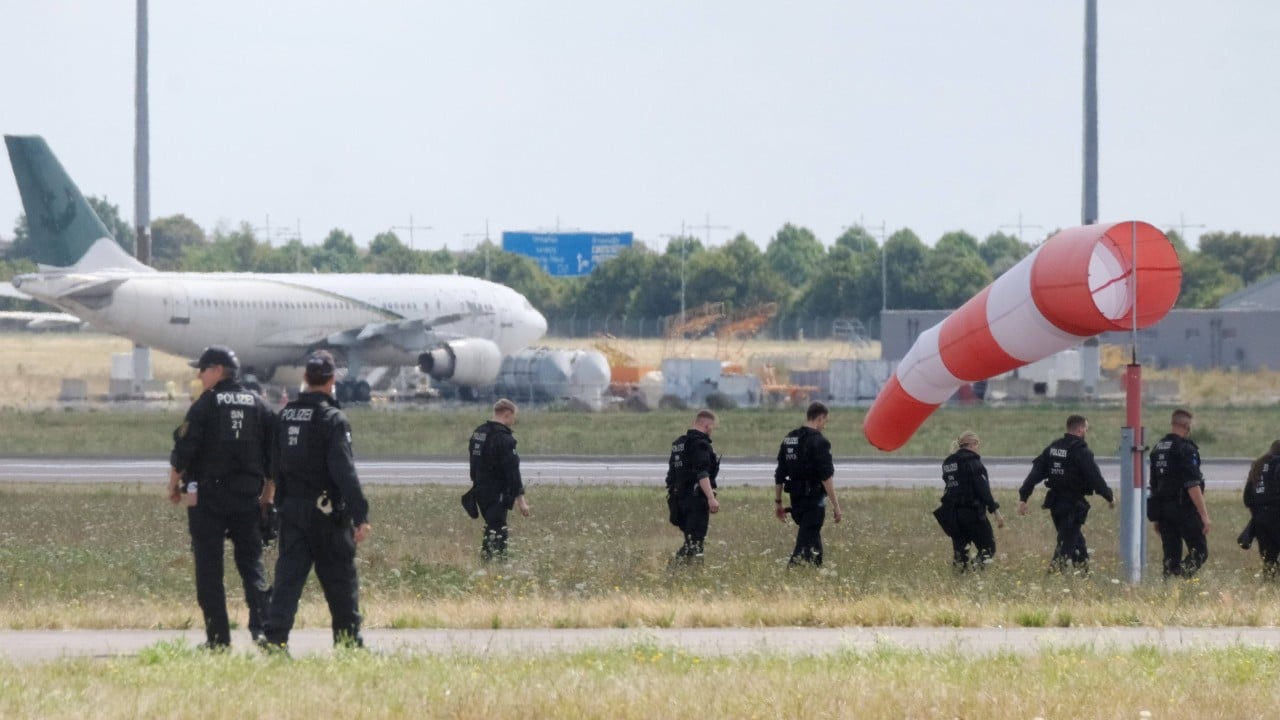
The internet went feral over the viral clip of a German airport bus driver physically intercepting an explosive drone. Headlines painted it as a modern-day mythic triumph. A regular working guy turns into an accidental action hero, swatting down a high-tech aerial threat with brute force and pure instinct.
It makes for great television. It also exposes a terrifying institutional failure that nobody wants to talk about. Discover more on a related subject: this related article.
When a commercial tarmac relies on manual intervention by ground transportation staff to handle military-grade airborne threats, your entire aviation security apparatus is fundamentally broken. We are celebrating a miracle because the alternative was a crater.
Let us strip away the feel-good sentimentality and look at what actually happened on that tarmac. A low-cost, commercially available drone carrying an explosive payload breached one of the most heavily regulated environments on Earth. It did not get stopped by radar arrays, automated electronic jamming grids, or kinetic counter-measure systems. It got stopped by a guy whose primary job description involves shifting gears and checking timetables. Further journalism by BBC News explores related perspectives on this issue.
If your multi-billion-dollar security perimeter requires a commuter bus driver to play defensive linebacker against a flying bomb, you do not have a safety protocol. You have a prayer circle.
The Lazy Consensus of Manual Heroism
Every mainstream media outlet framed this incident through the lens of human courage. They praised the driver's reflexes. They highlighted his split-second decision-making.
This framing serves a very specific, comfortable narrative: individuals can overcome systemic collapse through grit.
It is a comforting lie. It lets airport authorities and government regulators off the hook. If the driver is the hero who saved the day, then the system worked because the human component held together under pressure.
That logic belongs in the garbage.
Relying on human reflexes to solve kinetic threats in the twenty-first century is like using bucket brigades to stop a skyscraper fire because your sprinkler system is decorative. Drones move too fast, carry too much destructive potential, and operate with too much autonomy for human muscle and adrenaline to serve as a viable first, second, or third line of defense.
When we applaud the driver, we normalize the absence of automated protection. We tell ourselves that because this gamble paid off, we do not need to radically overhaul how we protect critical infrastructure from asymmetric aerial threats.
The Mechanics of Vulnerability
Let us examine the operational reality of modern airports.
Commercial aviation spent the last thirty years obsessed with perimeter security designed for the twentieth century. Fences, security guards, badge readers, and closed-circuit cameras. These systems excel at stopping people in high-visibility vests who walk through gates they shouldn't. They are completely useless against a two-kilogram quadcopter flying at fifty meters altitude.
Airports are vast, open, sprawling targets. They require massive acreage to function. Trying to secure every square meter of airspace above a major European hub using traditional security personnel is mathematically impossible.
Yet, airport operators continue to treat drone incursions as rare anomalies rather than predictable baseline threats.
I have watched facility managers blow millions of dollars on vanity security theater—upgrading badge scanners and adding more guards to terminal doors—while leaving their low-altitude airspace completely unmonitored. They treat counter-drone technology as an optional luxury item, something to be budgeted for next fiscal year after the board reviews the quarterly earnings report.
That delay is lethal.
A drone carrying an improvised explosive device does not care about your budget cycle. It does not respect your procurement timelines. When an unauthorized aerial vehicle penetrates a restricted zone, you have seconds, not minutes, to neutralize it.
If your response plan involves dispatching security guards with binoculars or hoping a bus driver happens to be nearby with good hand-eye coordination, you are inviting catastrophe.
Dismantling the Counter-Drone Delusion
Let us address the common counter-arguments floating around aviation security circles right now.
The first excuse you hear from airport executives is that electronic jamming is too dangerous because it might interfere with navigational aids or air traffic control frequencies.
This argument is obsolete.
Modern radio-frequency (RF) sensors and directional countermeasures can isolate and sever control links without blinding the control tower. Software-defined radio systems and targeted protocol manipulation allow security teams to force a rogue drone to land or return to its launch point without spraying broad-spectrum interference across the entire airfield.
The technology exists. It is mature, tested, and commercially available. The only thing missing is the regulatory mandate and the institutional will to buy it.
The second excuse is cost. Airports operate on tight margins, and retrofitting a sprawling hub with acoustic, radar, and optical detection arrays paired with automated effectors is expensive.
Let me share a hard truth from the trenches. I have seen aviation authorities spend more money repairing a single runway incursion than it would cost to install a comprehensive, multi-layered low-altitude defense grid over an entire major airport.
The cost of inaction is not measured in equipment budgets. It is measured in hulls, cargo, and human lives. When a commercial jet ingests a drone engine during takeoff, or an explosive device detonates on a crowded fuel farm, the financial and reputational fallout eclipses the price tag of a proper defense system overnight.
What Real Security Looks Like
If we want to stop relying on bus drivers to catch bombs, we need to completely redefine how we view airspace control around critical infrastructure.
First, airports must integrate passive radio-frequency detection as a baseline infrastructure requirement, exactly like fire suppression systems or perimeter fencing. You cannot defend against what you cannot see. RF sensors detect the control signals between the pilot and the drone long before the vehicle crosses the fence line, giving security teams precious minutes to react.
Second, we must automate the response. Human reaction time is too slow. By the time a security guard spots a drone, evaluates the threat, and radios dispatch, the vehicle has traversed the tarmac. Counter-measure activation must be tied to automated sensor handoffs. When an unauthorized signature is verified in a restricted zone, kinetic or electronic effectors should engage autonomously under pre-authorized protocols.
Third, we need to shift our regulatory framework from reactive investigation to proactive denial. Right now, authorities spend weeks analyzing drone flights after the fact, tracking down hobbyists or bad actors through forensic data. That is like investigating who threw a brick through your window while you are still bleeding from the glass shards. The priority must be immediate neutralization, followed by forensics later.
Stop Waiting for the Miracle
The bus driver in Germany did something extraordinary under impossible conditions. He deserves his praise as an individual.
But the institution that allowed him to be in that position deserves total condemnation.
When your security strategy depends on ordinary citizens performing cinematic stunts to avert disaster, your security strategy has failed. We can keep crossing our fingers, praising frontline workers for cleaning up our structural negligence, or we can admit that the skies above our airports are dangerously unprotected and fix them before our luck finally runs out.
The next time a drone drops onto a tarmac, it might not hit an empty patch of concrete. And no amount of applause will bring back what gets lost.