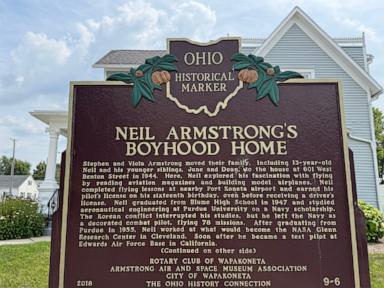
Historical preservation relies heavily on private capital and philanthropic intervention when public funding mechanisms fail to prioritize cultural assets. The acquisition of Neil Armstrong's boyhood home in Wapakoneta, Ohio, by a local historical society facilitated by a retired commercial airline pilot illustrates a classic private-sector capital mobilization model. Deconstructing this transaction reveals the underlying economic mechanics, logistical hurdles, and structural strategies required to transition residential real estate into a public historical monument.
The Capital Architecture of Philanthropic Real Estate Acquisition
Acquiring a residential property for historical preservation requires navigating a complex financial matrix. Unlike commercial real estate transactions driven by net operating income or residential purchases dictated by lifestyle utility, historical acquisition functions under a deficit-preservation model.
The primary economic variable is the asset valuation gap. A modest, mid-20th-century suburban or small-town home possesses a low baseline market value compared to commercial properties. However, its scarcity value is artificially inflated by association with a globally significant historical figure. When a property enters the market, the purchasing entity faces several financial vectors:
- Acquisition Cost: The fair market value established by local real estate comps, often subject to competitive bidding if media attention precedes the sale.
- Capital Reserves for Stabilization: Immediate expenditures required to halt structural degradation, address code compliance, and ensure structural integrity.
- Endowment for Long-Term Maintenance: Ongoing operational costs, including climate control, security, insurance, and facility management.
In the case of the Armstrong boyhood home, the intervention of an individual donor—the retired pilot—bypassed the traditional public bond issuance or bureaucratic grant-seeking timeline. Philanthropic seed capital eliminates the friction of public sector approval processes, allowing for rapid execution when an asset becomes available.
Operationalizing Residential Assets for Public Interpretation
Transforming a private dwelling into a functional museum or historical site demands a rigorous operational pivot. Residential zoning does not inherently permit public assembly, commercial ticketing, or high-volume foot traffic.
The regulatory framework requires navigating municipal zoning boards, historic preservation commissions, and building code enforcement agencies. Key operational bottlenecks include:
- Egress and ADA Compliance: Older residential structures lack wide doorways, ramps, and multi-exit configurations mandated for public buildings. Retrofitting historic homes without compromising architectural integrity creates a significant engineering challenge.
- Environmental Control Systems: Archival preservation and artifact protection require precise temperature and humidity management, systems that residential HVAC units cannot reliably provide under fluctuating visitor loads.
- Visitor Flow Management: Small footprint homes cannot accommodate unstructured crowds. Curator models must implement timed-entry ticketing, restricted pathway constraints, and digital integration to manage wear and tear on flooring and interior finishes.
The Economics of Local Economic Impact and Heritage Tourism
While local historical societies operate as non-profit cultural entities, the secondary economic impact on a municipality follows a distinct multiplier effect. Small-town economies, such as Wapakoneta, rely on niche tourism to drive hospitality, dining, and retail revenue.
The economic formula for heritage tourism can be expressed through visitor expenditure loops:
$$Total \ Economic \ Impact = (Annual \ Visitors \times Average \ Spend \ Per \ Visitor) \times Regional \ Multiplier$$
By anchoring a destination around a globally recognized icon—in this case, the first human to walk on the moon—the localized attraction pulls travelers off major transit corridors. The addition of the boyhood home to existing municipal assets, such as the Armstrong Air and Space Museum, transforms a single-site visit into a multi-day regional itinerary. This extends the average visitor duration, directly boosting local transient occupancy tax receipts and small business revenues.
Risk Management and Governance in Volunteer-Led Preservation
Non-profit historical preservation initiatives frequently encounter organizational vulnerabilities. The reliance on volunteer boards, donor-dependent cash flows, and ad-hoc operational management creates systemic risks.
To ensure long-term viability, historical acquisitions must transition from founder-dependent execution to institutional governance. This requires:
- Establishing Clear Legal Covenants: Deed restrictions or preservation easements that prevent future owners or mismanaged boards from commercializing, altering, or liquidating the asset.
- Diversifying Revenue Streams: Moving beyond initial philanthropic donations to establish membership models, educational programming partnerships with local school districts, and endowment-driven interest yields.
- Professionalizing Curation: Transitioning daily operations from uncompensated local enthusiasts to trained archivists and facility managers to safeguard the physical integrity of the structure.
The acquisition of the Armstrong home serves as a functional blueprint for grassroots preservation. By combining targeted philanthropic capital with municipal heritage assets, private donors can bypass institutional gridlock and secure culturally irreplaceable infrastructure for future study.