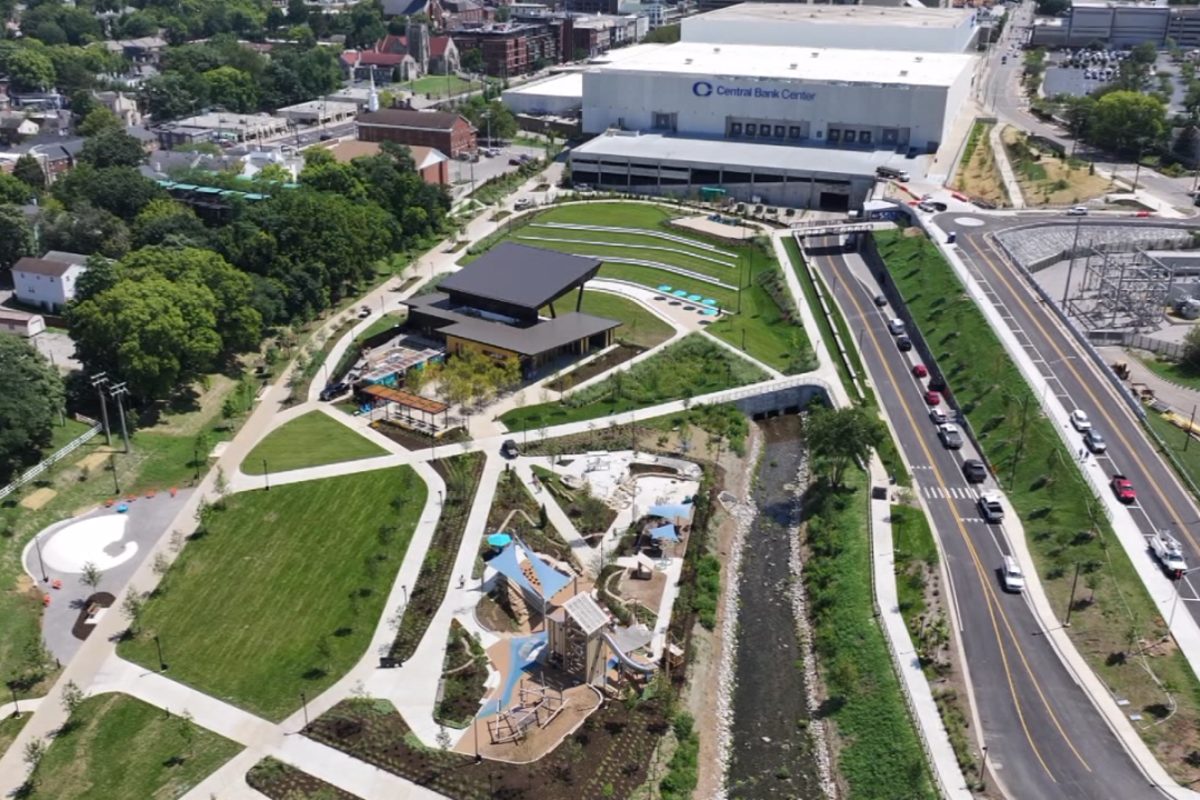
The plastic boundary markers at the edge of the sandbox are faded from three summers of relentless Kentucky sun. If you sit on the park bench near the woodchips just after five in the afternoon, you can hear the rhythmic, metallic screech of a swing set that needs oiling. It is a comforting, ordinary sound. It represents the exact kind of public peace that civic spaces are built to guarantee.
But public peace is fragile. It turns out that even the dirt beneath a slide can become a battlefield when millions of dollars, private egos, and municipal contracts collide. For a different look, consider: this related article.
A wealthy benefactor signed a check, expecting a legacy etched in stone. A local parks department took the money, looked at the fine print, and decided to chart a different course. Now, a legal battle is unfolding in Kentucky over who truly owns the identity of a place where children scrape their knees and chase stray soccer balls.
This is not just a disagreement over a brass plaque. It is a symptom of a much larger, quieter crisis happening in towns and cities across the country: the creeping privatization of our shared imagination. Further coverage on this matter has been published by BBC News.
The Hand That Signs the Check
To understand how a playground becomes a courtroom exhibit, you have to look at the anatomy of modern philanthropy. For decades, local governments have faced a tightening vice of budgetary constraints. When a town needs a new library wing, a community pool, or a state-of-the-art playground structure, the money rarely comes entirely from property taxes anymore. Municipalities rely on the extraordinary generosity of private donors.
This generosity is rarely anonymous.
Imagine a hypothetical donor named Arthur. Arthur did not build a corporate empire by accident; he understands the value of branding, equity, and permanence. When Arthur hands over a seven-figure check to a cash-strapped parks board, he is not just giving a gift. He is making an investment in perpetuity. The contract specifies that the new pavilion, the manicured gardens, and the towering climbing structures will bear his family name. For generations, every family that picnics under the pavilions will know exactly who provided the shade.
The problem arises when the public institution realizes that a name is a heavy thing to carry forever.
In the Kentucky case, the donor alleges that the park administration violated the core terms of their naming rights agreement. The money was delivered, the infrastructure was built, but the promised recognition was either altered, delayed, or obscured. To the donor, it feels like a breach of a sacred contract. To the park officials, it likely felt like a necessary adjustment to keep the park feeling like it belonged to the public, not a single estate.
When we look at the mechanics of these lawsuits, we are forced to confront a uncomfortable truth. Wealthy philanthropy is a transaction. We want to believe it is an act of pure, unblemished altruism. We want to picture a smiling benefactor dropping gold coins into a wishing well out of the goodness of their heart. The reality is codified in dense legal briefs, filled with clauses about font sizes, sightlines, and duration of display.
The Invisible Grid of Public Space
Walk into any city park. Look closely at the benches, the trash receptacles, the bricks beneath your feet. You are walking through an invisible grid of corporate and private sponsorship.
- The bronze plaque on the back of a bench commemorating a beloved grandmother.
- The corporate logo subtly embossed on the side of a recycling bin.
- The grand archway at the park entrance named after a regional banking magnate.
None of these elements are inherently evil. Without them, many of our most beautiful urban green spaces would be overgrown lots littered with broken glass. The private sector frequently rescues public joy.
Consider the alternative. A city council debates a playground budget for eighteen months. They argue over procurement, zoning, and union labor. By the time the first shovel hits the dirt, the children who originally asked for the playground are in high school. A wealthy donor cuts through that red tape with a single stroke of a pen. Speed is the great benefit of private money.
But speed comes at a cost. The true friction in the Kentucky lawsuit lies in the shift of ownership from the collective to the individual. When a space belongs to the public, it belongs to everyone and no one simultaneously. It is neutral territory. The moment a single name dominates the landscape, the psychological chemistry of the space shifts. It becomes a backyard that you are allowed to visit, rather than a community asset you inherently own.
The legal system is spectacularly ill-equipped to handle this nuance. A judge cannot easily rule on the "emotional resonance of community ownership." A judge looks at a contract. Did the defendant promise to put a twelve-inch sign on the swing set? Yes or no? Did they do it? Yes or no?
The law deals in straight lines, but human relationships with public spaces are entirely curved.
The Friction in the Fine Print
What happens when a donor’s values no longer align with the community’s values thirty years down the road? This is the ghost that haunts every municipal attorney who drafts a naming rights agreement.
If a city accepts a massive donation today from a prominent local business owner, and promises that their name will grace the main meadow forever, they are gambling on the future. If that business owner is embroiled in a massive scandal two decades later, the city find itself trapped. They are legally bound to honor a name that the community now finds repulsive.
The Kentucky lawsuit highlights the reverse of this anxiety. It shows the vulnerability of the donor who fears being erased by a changing political or cultural guard. The donor watches the park leadership change, notices the new administrators have different priorities, and feels the slow erosion of their legacy. They realize that without the blunt instrument of a lawsuit, their million-dollar immortality can be painted over with a single coat of municipal green paint.
It is a deeply human panic. We all want to leave a footprint. The exceptionally wealthy simply have the means to try and cast their footprints in concrete and steel.
But concrete cracks. Steel rusts. Public memory is short, and it is notoriously stubborn. You can bolt a brass sign to a brick wall, but you cannot force a teenager to call the park by its official, three-barreled corporate name. They will call it "the park with the good basketball hoops," or "the place by the creek." The vernacular of the street always outlasts the language of the deed.
The Quiet Sandbox
The sun dips lower over the Kentucky horizon, casting long, distorted shadows across the disputed playground. A parent catches a toddler at the bottom of the plastic slide. They are entirely unaware of the litigation filing numbers, the billable hours mounting in a Lexington law office, or the existential debate over the text on the entrance gate.
They just care that the woodchips are deep enough to cushion a fall.
We are entering an era where the public square must constantly justify its existence on a balance sheet. The more we rely on private fortunes to fund our public life, the more we will see the courtrooms of America filled with wealthy individuals fighting cities for control over the names of our childhood memories.
The tragedy is not that the lawsuit is happening. The tragedy is that we have arrived at a point where a place of play must be mediated by a writ of summons.
A child climbs to the top of the jungle gym, reaches for the highest bar, and looks out over the neighborhood. They do not look down to read the donor plaque at the base of the structure. They look up at the sky, entirely convinced that this patch of earth belongs to them, if only for the hour. The courts will eventually decide whose name belongs on the title, but the true ownership of the park remains stubbornly non-negotiable, held entirely in the messy, joyful keeping of the people who actually use it.