The mirror in the executive suite does not merely reflect a face; it reflects a mandate.
Imagine standing before a bank of high-definition lenses, knowing that every stray hair, every fatigued shadow beneath the eye, and every shifting line of expression will be dissected by millions before the morning paper even dries. In modern politics, the aesthetic is not a vanity. It is armor. It is a calculated signal sent across television screens and digital feeds to millions of citizens who are deciding, often in a fraction of a second, whether to trust the person steering the ship of state.
Yet, when the ledger is opened and the public catches a glimpse of the arithmetic behind that armor, the reaction is sharp, visceral, and immediate.
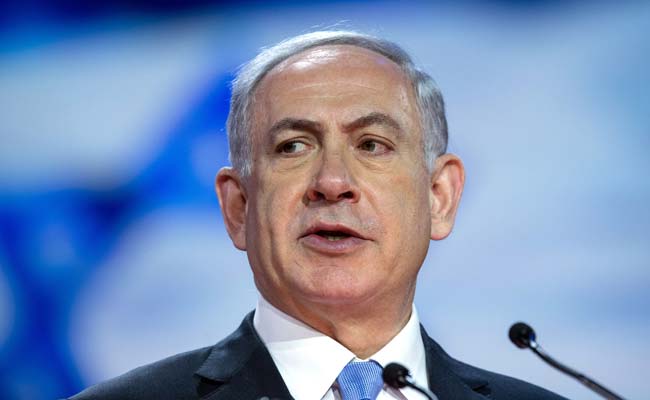
Reports detailing a staggering expenditure of approximately 44,900,000 rupees—roughly two million Israeli shekels—allocated toward the hair, makeup, and styling needs of Israel's prime ministers and their families since 2019, hit the public consciousness like a cold splash of water. In a climate where households wrestle with the relentless creep of inflation, utility bills, and the sheer cost of daily survival, the sheer scale of beauty budgets for leaders feels jarring. It forces a collision between two vastly different realities: the austere, anxiety-ridden world of the average citizen, and the hyper-curated, hermetically sealed universe of high office.
To understand this expenditure, one must step away from the abstract column of numbers and examine the machinery of political performance.
For decades, political communication has evolved from the spoken word to the visual medium. When John F. Kennedy bested Richard Nixon in the seminal 1960 presidential debate, it was not necessarily because of superior policy, but because television rendered Nixon's five-o'clock shadow a liability. Ever since, leaders have operated under a brutal optical contract. They are expected to look steady during national crises, resilient through sleepless nights of negotiation, and eternally youthful in an aging world.
The styling teams responsible for these transformations do not simply apply powder and gel. They manage perception. They are tasked with the impossible: making human beings look superhuman.
Consider the logistical footprint required to maintain this illusion. Prime ministers do not merely walk into a local salon. They require discreet, on-call professionals who can travel at a moment's notice, secure venues, adhere to stringent security clearances, and stand by through grueling sixteen-hour days of international summits, press conferences, and memorial ceremonies. The costs accumulate quietly—hourly retainers, travel expenses, specialized products, and round-the-clock availability. Over the course of five years, across shifting administrations and turbulent political seasons, those cumulative line items swell into millions.
And yet, numbers of this magnitude inevitably invite a profound question of proportion.
When public funds are deployed to maintain the sheen of executive leadership, every single rupee or shekel carries a symbolic weight. Every stroke of the brush is paid for by the public treasury, funded by taxes collected from citizens who may be balancing their own checkbooks with trembling hands. This is where the narrative shifts from mere logistics to ethics. Is a flawless complexion or an impeccably managed coiffure a legitimate tool of statecraft, or does it represent an unacceptable detachment from the everyday struggles of the electorate?
Public fury over political grooming budgets is rarely just about vanity. It is about empathy.
When leaders appear untouched by the wear and tear of governance, citizens can begin to feel invisible. If the leader never looks tired, stressed, or worn down by the same economic pressures facing the nation, a psychological chasm opens between the governed and the governor. The polished exterior becomes a barrier rather than a bridge. It suggests a world apart, where the consequences of policy do not touch the architects of those policies.
Throughout modern history, leaders have navigated this optical tightrope in wildly divergent ways. Some lean into the polish, recognizing television as the primary battleground of political survival. Others deliberately cultivate a rugged, unvarnished aesthetic, signaling through their unkempt hair or rumpled suits that they are too busy working for the people to care about vanity. Yet, even the unkempt look is often a carefully constructed performance—authenticity manufactured in a boardroom.
The recent disclosures regarding Israel's leadership styling expenses remind us that power is an aesthetic enterprise. Every uniform, every backdrop, every haircut is weighed against the political fallout it might generate.
When the bill finally arrives, the true cost is measured not just in currency, but in trust. The mirror reflects back whatever we choose to look at. For the politician, it shows an image meant to project strength and stability to the world. For the citizen, looking closely at the bottom line, it asks a much harder question: how much are we willing to pay for the illusion of perfection?
The lights in the studio eventually dim. The cameras power down. The makeup is washed away at the end of the night, leaving only the quiet reality of the room, the unedited face, and the enduring ledger of choices made under the gaze of history.