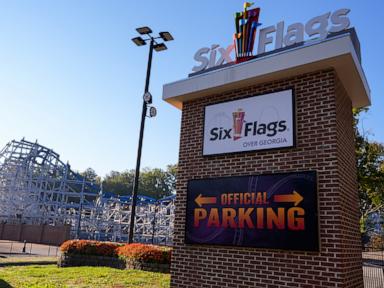
The restraint clicks shut with a sound like a vault door locking in a submarine.
I remember that sound from the summer I turned sixteen, sitting in the front car of a steel monster that looked like a bleached spine bent against a bruised July sky. Around me, strangers were laughing, adjusting baseball caps, holding up phones to record the climb. Then the chain caught. Click-clack, click-clack, click-clack. Every link pulled us higher away from the smell of funnel cake and hot asphalt, higher above the painted lines of the queue, until the park below shrank into a miniature model of human joy. Discover more on a similar topic: this related article.
At the crest, there is always a fraction of a second where the world holds its breath. Your stomach lifts. Your fingers tighten around a padded bar that feels, in that suspended instant, thinner than a thread. Then comes the drop, and with it, the intoxicating lie that physics has temporarily forgiven you.
We love that lie. We pay for it every summer. We line up for hours in ninety-degree heat just to be thrown sideways, upside down, and backward at speeds that make our vision blur at the edges. Park operators market height, steepness, acceleration, and airtime the way automakers once marketed horsepower, turning raw kinetic energy into a badge of courage. Further analysis by Reuters highlights comparable views on the subject.
Yet every time a rider dies on a roller coaster, the celebration stops dead. The music cuts out in our heads. The steel track suddenly stops looking like a playground and starts looking like an equation with a missing variable.
A single tragedy forces a reckoning that brochure copy tries to outrun: as rides climb higher, pull harder, and push human bodies closer to their physiological limits, how much margin for error are we really leaving?
When Thrill Becomes a Stress Test
To understand what happens when an extreme ride goes wrong, it helps to step away from headlines and look at the invisible forces at play. A modern hypercoaster or launch coaster does not merely roll downhill under gravity. It uses linear synchronous motors to hurl trains forward faster than many sports cars can accelerate, sends them over camelback hills that briefly turn riders into weightless projectiles, and whips them through tight turns that press blood downward toward the feet or rush it toward the head.
Those forces are measured in Gs, and they are engineered with remarkable precision. Restraints are tested through thousands of cycles. Welds are inspected. Sensors monitor train positions and braking zones.
Still, engineering on paper is not the same thing as engineering for real human bodies in motion.
Consider a hypothetical scenario to picture the hidden vulnerability inside high-G thrills. Suppose a 42-year-old visitor—let's call her Maya—steps onto a new record-breaking coaster on a humid afternoon. She is healthy by every outward measure, excited to share the rush with her teenagers. The ride features a steep, sustained positive-G helix followed by a sudden snap into negative Gs at the crest of an airtime hill. The steel and bearings perform flawlessly. The restraint locks within tolerance. Yet inside Maya's body, rapid shifts in blood pressure, an undiagnosed vascular quirk, or a slight slip of posture during an unexpected lateral jolt creates a storm that no computer simulation of a steel track can fully predict.
Even when a machine obeys every law of mechanical design, a human being is not a crash-test dummy made of uniform rubber and aluminum. We come in every shape, size, height, and medical history. Some of us carry silent heart conditions or neck vulnerabilities we have never had a reason to suspect. Some of us slouch in our seats as the train crest-drops, creating an extra inch of space between our hips and a lap bar that was calibrated for an upright posture.
And there is another factor we rarely talk about until tragedy strikes: human weariness.
Park seasons stretch long and hot. Operations teams manage hundreds of cycles an hour, thousands in a day. Ride attendants check harnesses hundreds of times before lunch, relying on muscle memory, visual cues, and interlocking sensors to catch anything out of place. Most days, those overlapping layers of redundancy work quietly and invisibly. When something slips through—a misaligned sensor, a rushed check, a rider seated awkwardly—the consequences of high speed leave very little time for recovery.
The Arms Race of Escalation
Why do coasters keep getting taller, faster, and more violent in their transitions?
Because novelty is the lifeblood of the amusement industry. A ride that felt revolutionary twenty years ago can feel tame to a generation raised on high-definition screens, viral stunt videos, and relentless sensory stimulation. If a park wants repeat visitors and national press, "fun" rarely makes the headline. "World's tallest," "steepest drop," "fastest launch," or "most inversions" does.
I admit something unsettling here: as a rider, I have felt that pull myself. There is a strange pride in walking off a ride that leaves your legs shaking and your voice hoarse. You want the bragging rights. You want the feeling of having stared down something bigger than your fear.
But escalation changes the stakes in ways that aren't always obvious from the midway.
Think of the human body like a suspension bridge. A bridge designed for moderate traffic has generous safety factors built into every cable and girder. Push heavier loads across it day after day, subject it to sharper wind shear and harsher vibrations, and every tiny imperfection—a microscopic flaw in steel, a loose bolt, a moment of fatigue—carries a heavier price if it fails.
Coasters are not bridges, of course; that comparison is a metaphor for stress and load margins, not a claim that rides are structurally fragile. Modern amusement rides have strong safety records compared to many everyday activities, from driving on the highway to swimming in open water. Statistics routinely show that the odds of dying on a theme park ride in a given year are astronomically low.
Numbers, though, are cold comfort to a family waiting for a loved one who never walked back through the exit gate.
Low probability does not mean zero consequence. When a failure or medical crisis occurs on a ride moving at seventy or ninety miles an hour, the energy involved is immense. There is no gentle fender-bender at eighty miles an hour. There is no casual trip and fall when a harness fails at the apex of a ninety-degree drop.
Who Watches the Watchers?
One of the hardest truths in ride safety is how uneven oversight can be depending on where you stand.
In some places, amusement rides are inspected by dedicated state or national safety boards with rigorous engineering standards, unannounced audits, and strict reporting rules for injuries and mechanical faults. In other jurisdictions, oversight is fragmented, underfunded, or reliant on third-party inspectors hired by the operators themselves.
Even where regulations are strong, definitions vary. What counts as a reportable ride injury? Does a fainting spell after stepping off a high-G coaster count, or only an injury that requires overnight hospitalization? How quickly must an operator disclose a mechanical malfunction that forced a ride to shut down mid-cycle?
When reporting rules are inconsistent, the public often sees only a fraction of the picture. A ride might experience repeated sensor faults, rough tracking, or minor restraint issues over weeks before a fatal accident draws cameras to the park gates. By then, the story is framed as a freak shock rather than a pattern anyone was looking closely enough to connect.
Let's be honest about how confusing this terrain can feel for ordinary visitors. You show up at a park trusting that someone in authority has already done the hard math and asked the tough questions. You don't carry a torque wrench or a medical textbook into the queue. You trust the sign that says You Must Be This Tall to Ride, and you assume that height requirement covers everything you need to know.
Height is a blunt instrument. It measures reach and roughly how a restraint sits against the body, not bone density, spinal health, cardiovascular resilience, or how a person reacts when terrified.
What Safety Actually Looks Like
If we want thrilling rides to remain both exhilarating and as safe as humanly possible, the answer isn't turning coasters into slow moving benches. Nobody wants a roller coaster that crawls like a garden train. The magic of the ride depends on tension, speed, and the safe illusion of danger.
Real safety lives in discipline, restraint, and honesty.
First, it means designing rides around the widest realistic range of human bodies and postures, not just idealized averages. Restraints that lock firmly without relying on a rider sitting rigidly upright, seats that support the head and neck through abrupt lateral forces, and clear, specific health advisories—not vague fine print buried on a sign nobody reads—all matter.
Second, it means treating safety culture as non-negotiable even when crowds peak and lines spill out onto the plaza. A ride operator who feels empowered to halt dispatch because a lap bar didn't click with the right sound, or because a rider looks unwell or panicked, is protecting the entire park's future. Speed should never outrank caution at the loading platform.
Third, it means transparent reporting and independent scrutiny. When rides malfunction or riders suffer serious medical emergencies on attractions, clear public data and thorough investigations help engineers learn where assumptions failed. Secrecy breeds suspicion; openness builds real trust.
Finally, it asks something of us as riders, too. Thrill-seeking doesn't require ignoring our own bodies. Skipping a ride because your neck hurts, because you're dehydrated in peak afternoon heat, or because your gut tells you to sit this one out isn't cowardice. It's basic wisdom.
The Silence After the Scream
Think back to that summer memory—the chain pulling upward, the sudden rush of wind, the roar of a dozen people screaming all at once.
Noise is what we remember most about amusement parks. The clatter of the lift hill. The whoosh of the train clearing the station. The laughter echoing off metal and fiberglass.
Silence is what comes after an accident. A sudden, heavy quiet over a stretch of track where screams usually hang in the air. In that quiet, you realize how thin the line is between sheer exhilaration and irrevocable loss, and how much care it takes to keep that line intact.
The next time you stand in line and hear that restraint click shut, listen closely. Behind that small mechanical sound sits decades of physics, hundreds of quiet checks, a human body full of fragile mysteries, and a promise that the thrill was meant to end with you walking safely back into the sun.


