The genesis of Project South did not begin with a wiretap on a drug kingpin’s phone or a grand conspiracy tracked across international borders. It started with a botched hit at a suburban home in June 2025, when masked intruders rammed a police cruiser parked in a driveway and confronted an elderly family member because the target—a senior corrections manager at the Toronto South Detention Centre—was not home. That single violent intrusion triggered an inter-agency investigation that eventually unspooled one of the most sprawling police corruption scandals in modern Canadian history.
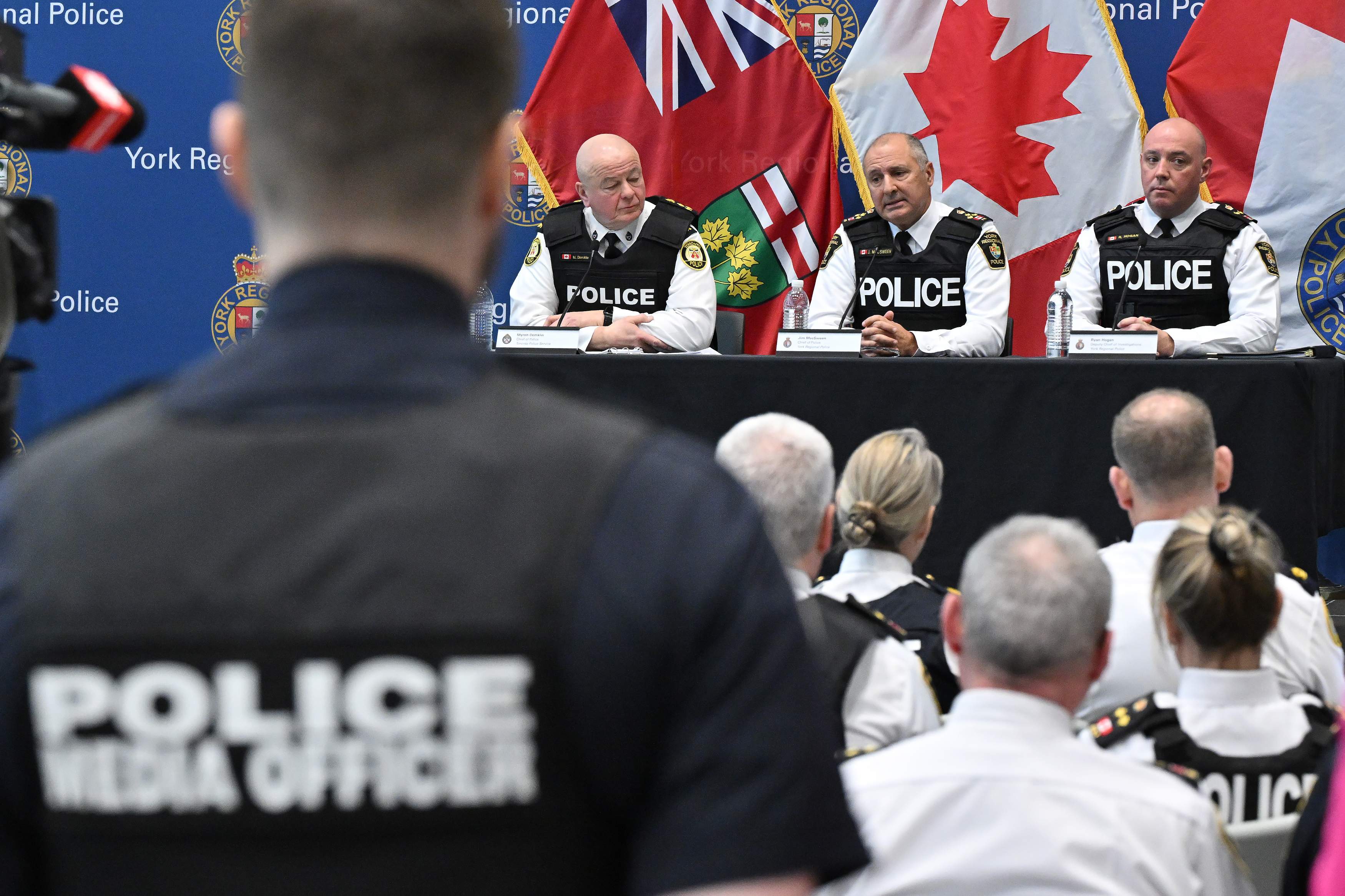
When York Regional Police, alongside the Ontario Provincial Police and the Toronto Police Service, pulled back the curtain, they found something far more corrosive than ordinary street crime. They found institutional rot. Court documents unsealed months later revealed that the attempt on the corrections manager's life was allegedly fueled by inside information. Police databases had been raided, license plates checked, addresses leaked, and operational security compromised—not by anonymous hackers, but by sworn guardians of the law.
The Anatomy of an Inside Leak
At the core of the corruption findings was a stark reality that shook public trust to its foundation: the primary suspects within the police force were operating entirely undetected until a stray bullet or a botched home invasion forced an accidental collision with reality. Investigators zeroed in on actions allegedly carried out by officers such as former Toronto police constable Timothy Barnhardt. Court records allege that Barnhardt routinely bypassed official protocols to query Ministry of Transportation databases for private personal records while off duty.
These queries were not academic. Prosecutors and investigators state that this data was channeled directly to organized crime figures, including individuals tied to commercial robberies, extortion schemes, and a series of targeted shootings across southern Ontario. The ease with which confidential information flowed from protected police servers into the hands of criminal networks highlights an alarming vulnerability in modern law enforcement infrastructure. When the shield becomes a commodity, the line separating the enforcers from the offenders ceases to exist.
Inside the Walls of Toronto South
The fallout from Project South quickly extended beyond the street-level leaks of municipal police officers, reaching deep into the cellblocks of the province's most high-profile correctional facility. The Toronto South Detention Centre became a focal point of investigative scrutiny as warrants exposed complex, unmonitored relationships forming between inmates and the guards hired to watch them.
Information to Obtain (ITO) court filings detailed extensive interactions between a corrections officer, Nishwant Dosanjh, and an inmate housed within the facility, Gurpreet Singh. Singh, facing major legal jeopardy including extradition proceedings linked to international drug trafficking networks, allegedly maintained an extraordinary degree of influence within the facility. According to police affidavits cited in court records, communications logs showed hundreds of instances of direct contact, with scheduling adjustments allegedly allowing the guard to frequently staff the unit where the inmate was housed.
Neither Dosanjh nor Singh have been criminally charged regarding the specific allegations outlined in these exploratory warrants, and legal counsel for both individuals have strenuously maintained their complete innocence. Defense representatives have emphasized that these claims represent initial investigative theories contained within search warrant applications rather than proven facts tested before a jury. Yet the public disclosure of these internal dynamics laid bare the immense friction points inherent inside high-security correctional environments, where staff navigate daily pressures, prisoner intimidation, and institutional burnout.
The Institutional Reckoning
The broader sweep of Project South resulted in criminal charges against multiple active-duty police officers, a retired constable, and dozens of civilian associates on offenses ranging from breach of trust and bribery to large-scale drug trafficking involving fentanyl and cocaine. For an oversight apparatus meant to police the police, the discovery that corruption could fester silently beneath layers of internal bureaucracy is a humbling indictment.
Courts have heard intense arguments over whether the senior manager targeted in the initial murder plot maintained an overly punitive regime behind bars, with defense attorneys raising Charter applications concerning jail conditions and strip search policies. However, investigative findings repeatedly circle back to a singular, uncomfortable truth. The safety of public officials, the integrity of criminal prosecutions, and the sanctity of police databases depend entirely on institutional filters that, in this case, failed catastrophically.
The courtroom battles and legal motions stemming from Project South will grind on for years, testing the limits of judicial oversight and accountability. The machinery of justice is currently forced to examine its own gears, searching for the precise moment the teeth began to strip.