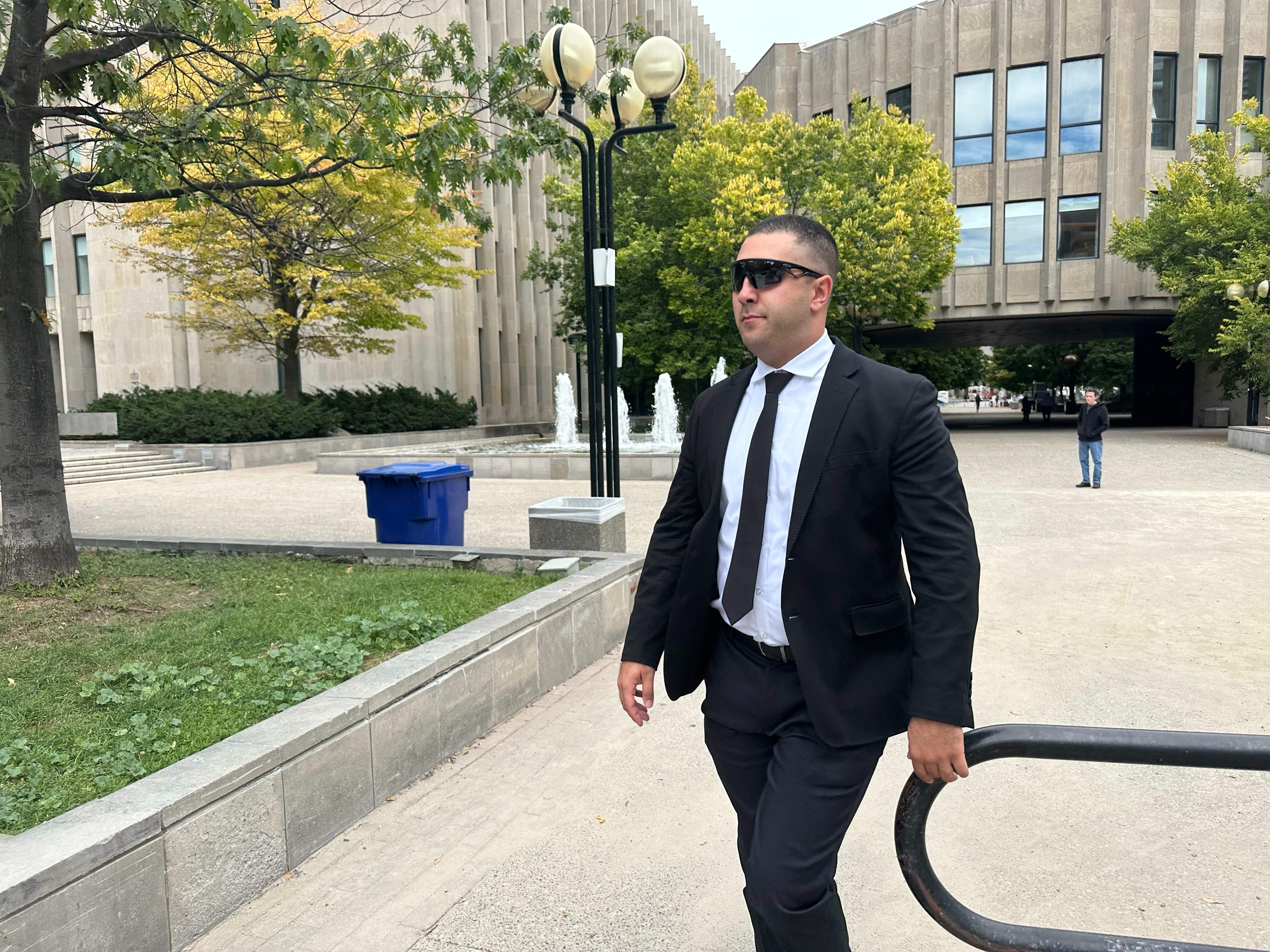
When a sweeping anti-corruption investigation like Project South rolls out its charges, the public expects a reckoning. Instead, what often follows is a quiet retreat into administrative loopholes and legal technicalities.
The recent sentencing of Toronto Police Constable Elias Mouawad—who received a conditional discharge and one year of probation after pleading guilty to unauthorized use of a computer—highlights a recurring fracture in police accountability. While high-profile probes capture headlines with promises of cleaning house, the actual mechanism of justice frequently grinds down to minor infractions, minimal penalties, and an institutional shrug.
The Mechanics of the Leak
At the core of Mouawad’s criminal case was a seemingly simple infraction: running an unauthorized licence-plate query. According to the agreed statement of facts, the search was conducted for an associate connected to a larger, more sinister web involving alleged large-scale drug trafficking.
To the defense, Mouawad was a minor player caught in the undertow of a massive, sprawling corruption file—a peripheral figure who did not realize the true gravity of the network he brushed against. Legal representation successfully argued that a criminal conviction would permanently damage his employment prospects, securing a discharge that spares him a permanent criminal record provided he completes his probation and community service.
Yet, this narrative of the "small fish" glosses over a foundational vulnerability within law enforcement agencies. Police databases are not public directories; they are heavily restricted vaults containing intimate, sensitive citizen data. When those vaults can be accessed as favors for personal acquaintances, the firewall between public service and organized crime begins to disintegrate.
The Disconnect Between Courtrooms and Public Trust
The divergence between criminal sentencing and internal police discipline remains a glaring chasm. While the court process has concluded for Mouawad with a sentence that avoids permanent criminal stigma, the institutional repercussions are deferred to a professional standards tribunal.
History shows that internal tribunals operate under entirely different weather patterns. Officers facing criminal charges frequently remain suspended with pay for months or years, navigating a bureaucratic maze that often ends with light administrative penalties rather than termination. This creates a profound institutional dissonance. Ordinary citizens facing employment termination or severe legal consequences for data breaches or administrative fraud rarely enjoy the cushion of an internal tribunal to determine if the rules applied to them quite the same way.
The defense argued during the proceedings that being prosecuted criminally for a single unauthorized database check sits at the extreme end of the punishment spectrum. But that perspective inverts the dynamic of public trust. For an armed agent of the state entrusted with exceptional coercive powers, safeguarding institutional databases is not a bureaucratic suggestion. It is a core duty. When that duty is breached to satisfy a favor, treating the resulting prosecution as "extreme" suggests that internal standards have drifted dangerously far from public expectations.
Why Sweeping Probes Fall Short
Project South was billed as an aggressive offensive against police corruption, designed to root out systemic rot. Yet, major investigative undertakings frequently suffer from structural bottlenecks. By the time cases navigate the labyrinth of pre-trial motions, delayed disclosures, and plea negotiations, the original momentum evaporates.
Charges are routinely pled down from serious breaches of trust to lesser infractions like unauthorized computer use. The headlines announce a guilty plea in a corruption probe, but the legal reality settles into a minor probation order and a sigh of relief in the courtroom.
This pattern reinforces a cynical public view: that the justice system possesses two distinct gears—one for ordinary citizens, and another designed with extensive allowances for those who wear a badge. Until internal accountability matches the rhetoric of high-stakes investigations, probes like Project South will continue to promise systemic transformation while delivering little more than procedural maintenance.
The internal disciplinary hearing will eventually render its verdict. But the broader damage to institutional credibility has already been locked in, quietly recorded in the gap between what was investigated and what was ultimately punished.
Toronto police officer receives conditional discharge in corruption investigation
This video provides additional context regarding the judicial outcome of the Project South corruption investigation involving Constable Elias Mouawad.