Standard reporting on diplomatic denials between Tehran and Riyadh reduces a multi-layered asymmetric conflict to a binary true-or-false dispute. When Iranian officials reject Saudi claims that Tehran encouraged or directed Houthi strikes while simultaneously offering to mediate between Sanaa and Riyadh, surface-level coverage treats the contradiction as mere hypocrisy. In operational reality, deniability and mediation offers function as coordinated instruments of escalation control that allow Tehran to shape regional pressure without absorbing direct kinetic retaliation.
A rigorous strategic assessment requires separating diplomatic posture from operational causality. This analysis deconstructs the reporting logic behind claims that Iran denies involvement in Houthi attacks, maps how proxy warfare operates across intelligence, logistics, and political autonomy, and outlines the structural mechanisms driving strikes on Saudi infrastructure and southern Yemeni facilities.
Deconstructing the Deniability and Mediation Loop
Conventional news dispatches typically follow a tight, symmetrical arc: a Saudi official accuses Iran of backing or encouraging escalating Houthi strikes; an Iranian foreign ministry spokesperson rejects any operational role and reiterates an offer to mediate; the report then notes recent Houthi missile or drone strikes. That structure captures the headline exchange while leaving three analytical gaps unexamined.
First, standard reporting conflates command authority with strategic alignment. Claiming that a non-state movement operates under its own strategic assessment does not mean external actors provide no material, technical, or informational inputs. Second, coverage rarely treats the offer to mediate as a tactical move rather than a benign diplomatic gesture. By positioning itself as a bridge between Sanaa and Riyadh while denying culpability, Tehran attempts to raise the political cost of Saudi retaliation and frame itself as an indispensable regional security broker. Third, short dispatches treat isolated attacks—whether against pipeline infrastructure, military complexes in southern Yemen, or maritime corridors—as discrete events rather than linked outputs of a shared targeting cycle.
Known Facts Versus Analytical Hypotheses
Separating verified reporting from analytical inference keeps risk models grounded:
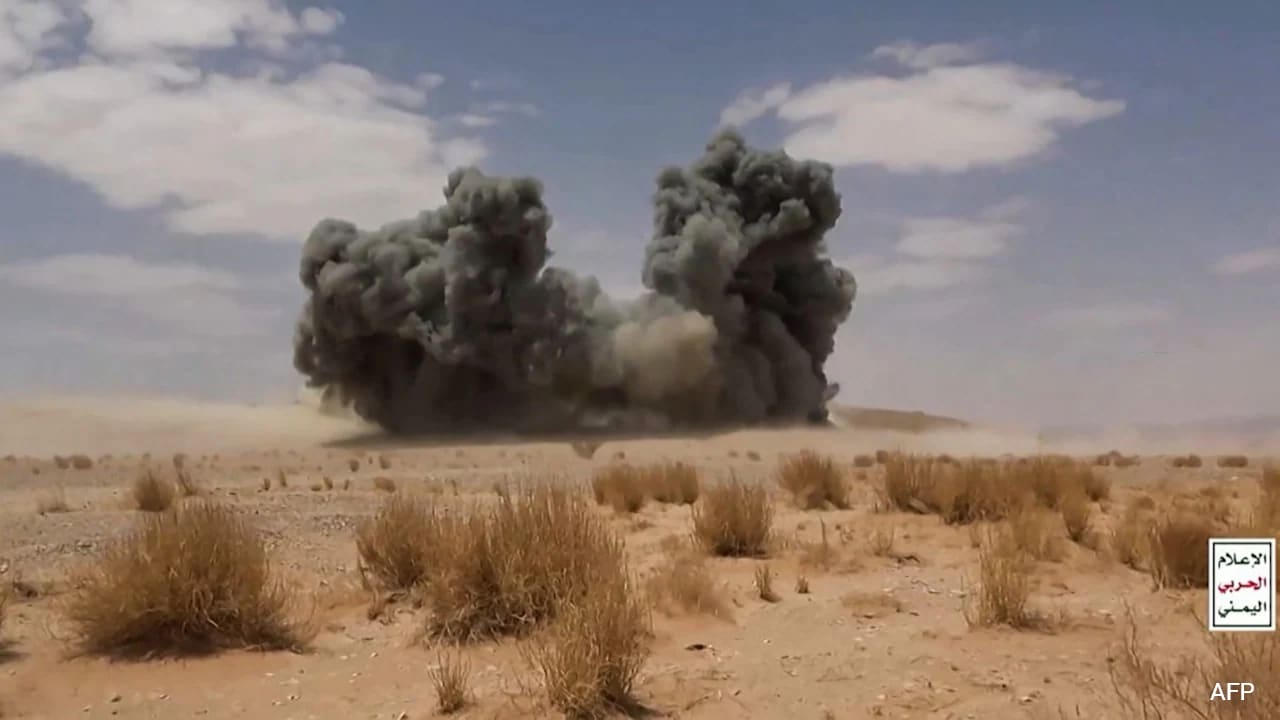
- Known diplomatic and operational facts: Saudi officials have publicly accused Iran of encouraging escalating Houthi attacks and pointed to external intelligence support for cross-border and regional strikes. Iran's foreign ministry has formally rejected involvement in Houthi operations while offering mediation. Reporting from late 2026 also documents Houthi missile and drone strikes hitting Saudi energy infrastructure, such as the East-West pipeline, as well as military and security sites in Aden and southern Yemen.
- Educated hypotheses: Analysts and intelligence assessments hypothesize that external actors—including Iranian networks and potentially foreign space-based or commercial intelligence channels—help narrow target selection or cue strike timing. A second hypothesis holds that Tehran calibrates its public denials to keep diplomatic channels open during broader regional bargaining while preserving plausible deniability if strikes provoke severe counter-measures.
The Three Pillars of Proxy Attribution
Evaluating whether an external state drives or merely enables proxy strikes works best through a three-part framework: Material and Technical Enablement, Intelligence and Targeting Cueing, and Political Autonomy and Signaling.
Material and Technical Enablement
Long-range drones and ballistic missiles require propulsion components, guidance electronics, warhead engineering, and steady resupply chains. Even when a local group fabricates or modifies systems domestically, external networks frequently supply critical subcomponents, technical training, or manufacturing know-how. The operational bottleneck is rarely launch capacity alone; it is sustaining a reliable pipeline of munitions and replacement parts under interdiction pressure.
Intelligence and Targeting Cueing
A long-range drone or missile is only as effective as its target coordinates, air-defense gap analysis, and post-strike damage assessment. High-value targets—such as export pipelines, air bases, command compounds, or maritime chokepoints—require timely geolocation and route planning. External intelligence sharing, whether through human networks, regional coordination cells, or satellite imagery, compresses the kill chain without requiring the external patron to pull the trigger.
Political Autonomy and Signaling
Proxies are not remote-controlled puppets. Groups like the Houthis possess local grievances, domestic state-building ambitions in Yemen, and independent incentives to strike rivals or assert control over territory and shipping lanes. Alignment occurs when local objectives overlap with a patron's desire to impose costs on adversaries. Friction occurs when a proxy escalates at a moment that complicates the patron's broader diplomatic or military calculations.
Cause-and-Effect Mechanics in Escalation Cycles
Surface coverage often presents diplomatic statements and kinetic strikes side by side without tracing the feedback loops between them. Several causal chains govern how these crises intensify or stall.
When strikes hit energy transport corridors such as the East-West pipeline or pressure shipping near regional chokepoints, the immediate effect is economic and operational friction rather than territorial conquest. Rerouting crude, raising maritime insurance premiums, and hardening defensive perimeters impose recurring costs on energy exporters and global trade. Those costs create pressure on Riyadh and its partners to respond militarily or seek de-escalation through backchannels.
Strikes against facilities in southern Yemen, including sites in Aden, follow a parallel logic with a different balance of forces. Targeting coalition-linked command centers, airports, or security forces disrupts rival power projection on the group's southern flank and tests local counter-offensive capacity. Each strike alters local troop deployments, which in turn shifts defensive blind spots for subsequent salvos.
Publicly denying operational control while offering to mediate lets a state claim restraint at the bargaining table while retaining asymmetric leverage on the battlefield.
Diplomatic denials feed directly into this dynamic. If Riyadh attributes an attack to Tehran, Saudi leadership faces domestic and alliance pressure to strike Iranian targets directly. Direct strikes against Iran carry high risks of wider regional escalation, retaliatory missile exchanges, and disruption to Gulf energy infrastructure. Tehran's flat denial paired with a mediation offer gives decision-makers an off-ramp to treat the flare-up as a localized Yemeni or regional security problem rather than a casus belli against the Iranian homeland.
Operational Trade-Offs for Decision-Makers
Managing proxy-driven strike campaigns requires balancing competing defense and diplomatic constraints. Every defensive measure carries a cost function that adversaries probe.
- Intercept economics: Shooting down low-cost drones and ballistic missiles with high-end interceptors drains expensive stockpiles faster than adversaries expend cheap attack systems. Over-relying on kinetic interceptors creates budget strain and magazine depletion during sustained barrages.
- Passive hardening and redundancy: Dispersing fuel stocks, adding pipeline bypasses, reinforcing perimeter walls, and hardening command nodes reduce single-point-of-failure risk. The trade-off is higher capital expenditure and slower operational throughput during maintenance or rerouting.
- Attribution thresholds: Waiting for airtight forensic proof of external intelligence or component origin avoids misdirected retaliation, yet slow attribution can project weakness and forfeit deterrence. Conversely, acting on circumstantial or contested intelligence risks widening a conflict without decisive strategic gain.
Limits of Countermeasures
No single defensive or diplomatic measure solves asymmetric proxy warfare. Air and missile defense networks have coverage gaps, sensor blind spots, and magazine limits against saturation attacks. Diplomatic outreach with a patron state can sometimes damp down specific escalatory spikes, yet it cannot eliminate local proxy incentives or guarantee compliance across decentralized command chains. Intelligence sharing and satellite monitoring improve early warning and attribution, but adversaries adapt through decoys, mobile launchers, commercial imagery workarounds, and staggered launch timing.
Tactical Framework for Tracking Escalation
Analysts and risk teams monitoring future flare-ups between Riyadh, Tehran, and Sanaa can apply a four-step verification workflow instead of reacting to headlines:
- Audit target selection shifts: Track whether strikes concentrate on economic infrastructure, military command hubs in southern Yemen, or maritime transit nodes, and note how quickly targets change after defensive adjustments.
- Separate rhetoric from posture: Compare official denials and mediation offers against force movements, air-defense alerts, and coalition retaliatory strikes to see whether de-escalation language matches actual military restraint.
- Correlate diplomatic tracks: Watch parallel regional negotiations and external pressure campaigns to spot whether strike tempo rises when talks stall or leverage is sought.
- Price second-order infrastructure costs: Measure logistics delays, insurance adjustments, and defensive deployment shifts rather than counting missile launches alone.
Strategic Recommendation
Decision-makers and risk analysts should treat Iranian denials and mediation offers as structural features of low-to-medium intensity conflict rather than evidence of non-involvement. Build security and business continuity plans around sustained, low-cost harassment and selective high-value strikes rather than assuming either a full-scale war or a durable ceasefire. Prioritize resilient energy and logistics routing, layered counter-drone and air-defense sustainability, and disciplined attribution standards that tie any retaliatory option to verified operational triggers rather than diplomatic rhetoric.