The rain in Stuttgart always tastes slightly of cold steel and wet asphalt. Stand outside a mid-sized automotive supplier at shift change, and you can hear the hum of precision machinery vibrating through the soles of your boots—a low, steady heartbeat that has kept Germany wealthy for seventy years.
Inside those brick factories, men and women in grease-stained navy coveralls calibrate fuel injectors, stamp aluminum chassis components, and wire high-voltage battery harnesses. For two generations, their livelihoods rested on an unspoken bargain. Germany engineered the machines; China bought them. It was an arrangement so lucrative, so seemingly permanent, that nobody in Berlin or Frankfurt bothered to build an exit ramp.
Until the road abruptly ended.
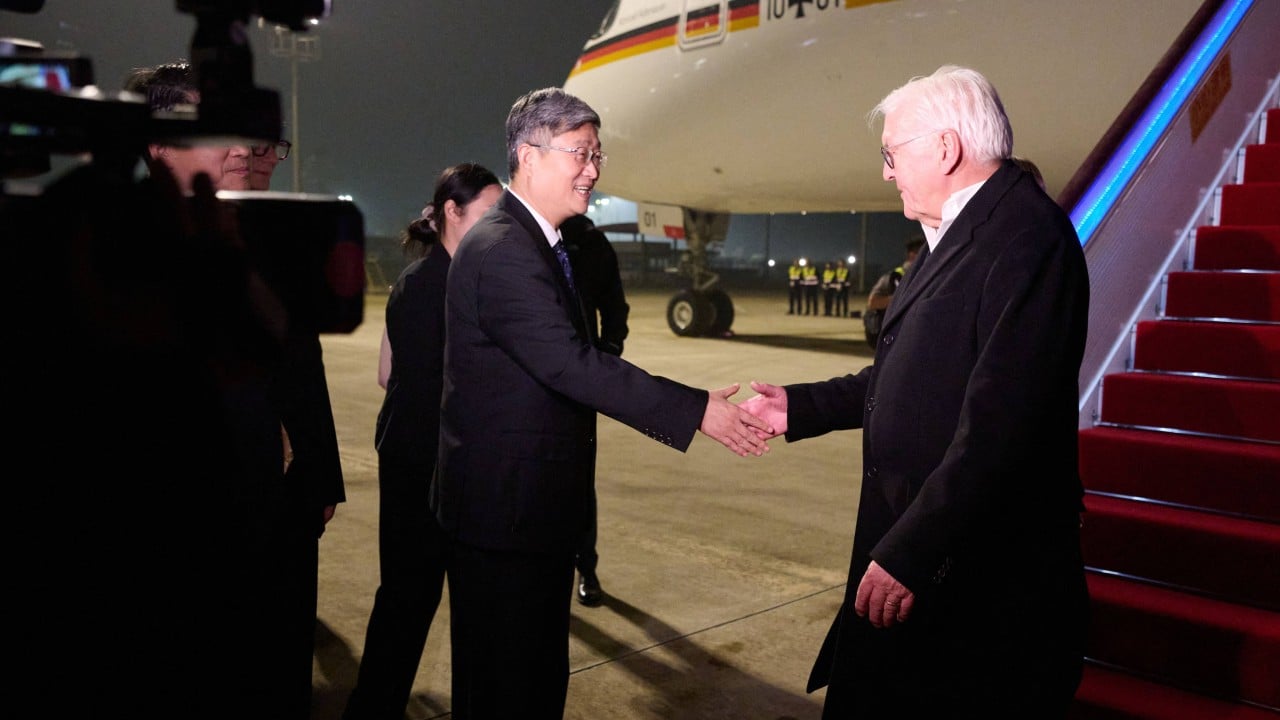
When a German Chancellor boards an Airbus bound for Beijing today, the choreography looks familiar. There are red carpets on the tarmac, handshakes in the Great Hall of the People, and a fuselage packed with chief executives from Volkswagen, Siemens, and BASF. Yet beneath the diplomatic pleasantries, the tectonic plates of global trade have shifted violently. A trip to Beijing is no longer a victory lap for German export supremacy. Instead, it has become the central nervous system of a much larger, quieter maneuver—a calculated diplomatic pivot across Asia and the Indo-Pacific designed to ensure Europe’s largest economy never again finds itself held hostage by a single customer.
The Anatomy of a Dangerous Addiction
To understand why Berlin is suddenly courting capitals from New Delhi to Tokyo with urgent intensity, consider a hypothetical factory owner—let’s call him Klaus.
Klaus runs a third-generation precision-tooling company in Baden-Württemberg employing four hundred people. Fifteen years ago, a delegation from Shanghai walked onto his shop floor and ordered twice what his largest domestic client bought in a year. They paid on time. They demanded perfection. Soon, forty percent of Klaus’s revenue flowed from the Yangtze River Delta. He expanded his floor space, took on debt to buy automated lathes, and sent his eldest daughter to learn Mandarin.
Then came the twin shocks of the early 2020s. First, supply chains snapped during the pandemic, leaving Klaus’s half-finished assemblies stranded on container ships while Shanghai locked down. Second, and far more terrifying, Klaus noticed his Chinese clients weren't just buying his tools anymore—they were reverse-engineering them, subsidizing local competitors, and undercutting his prices in European markets.
Klaus is fictional, yet his ledger mirrors the national balance sheet of the Federal Republic of Germany.
For over a decade, China reigned as Germany’s single most important trading partner, with bilateral trade volume peaking near €300 billion annually. Analysts at the German Economic Institute and foreign policy researchers at the Mercator Institute for China Studies have repeatedly documented how deeply embedded this reliance became—not merely in finished luxury sedans, but in invisible upstream bottlenecks. According to trade data compiled by Germany’s Federal Statistical Office, entire sectors of German manufacturing rely on Chinese imports for critical rare earth elements, active pharmaceutical ingredients, and solar wafers, with dependency rates exceeding seventy to ninety percent in specialized chemical and mineral categories.
Walking through the industrial corridors of the Ruhr Valley or the port of Hamburg, you feel the weight of that exposure. It is an uneasy vulnerability. When one buyer holds the keys to both your factory's revenue and your raw materials, foreign policy stops being an exercise in values and becomes a hostage negotiation.
De-Risking Without Detonating
Politicians in Berlin love a neat phrase, and the one currently echoing through the glass corridors of the Chancellery is "de-risking, not decoupling."
Think of it like this. Decoupling means tearing down the bridge between Berlin and Beijing, dropping the girders into the river, and accepting immediate economic ruin. Nobody in Germany—least of all the executives flying alongside the Chancellor—wants to blow up access to a market of 1.4 billion consumers. De-risking, by contrast, means quietly building three other bridges upstream before the main span buckles under too much weight.
Foreign policy analysts at the European Council on Foreign Relations and the German Institute for International and Security Affairs note that Berlin’s first-ever formal China Strategy, adopted by the federal government in 2023 and refined through subsequent diplomatic missions, explicitly reframed Beijing from a pure partner into a simultaneous partner, competitor, and systemic rival. That three-part formula sounds dry on paper, drafted by civil servants over lukewarm coffee. In practice, it triggered a frantic scramble across the globe.
Watch the travel itineraries of German leaders over the past twenty-four months and a pattern emerges that media headlines about Beijing often obscure. A stopover in China is almost always paired with—or immediately preceded by—high-stakes summits in India, Japan, South Korea, Singapore, or Vietnam.
When German leadership lands in Beijing, the cameras focus on trade imbalances, electric vehicle tariffs, and geopolitical friction over Russia’s war in Ukraine. Yet the real story sits in the flight plan after Beijing.
Looking Past the Dragon
If you want to see where German diplomacy is actually placing its bets, look south toward the Arabian Sea and east toward the Pacific Rim.
Consider India. For decades, German businesses viewed New Delhi as a bureaucratic maze—promising on paper, exhausting in execution. Today, German cabinet ministers hold regular intergovernmental consultations in India, pushing hard for a European Union free trade agreement and pouring capital into green hydrogen, semiconductor manufacturing, and skilled labor migration. With India’s economy expanding faster than any other major nation and its working-age population surging while China’s shrinks, Berlin sees the only market on earth with the demographic scale to eventually counterbalance its Chinese exposure.
Then there is Japan and South Korea. For years, Tokyo, Seoul, and Berlin viewed one another primarily as cutthroat rivals competing for the same global buyers of precision machinery, electronics, and automobiles. Shared anxiety over supply chain coercion has turned old competitors into reluctant allies. German defense and economic officials now hold regular security dialogues with Tokyo, conduct joint naval deployments in the Indo-Pacific, and coordinate on semiconductor resilience and critical mineral stockpiles.
Even smaller nations across Southeast Asia—Vietnam, Indonesia, Malaysia—have become vital waypoints in this diplomatic pivot. Through the European Union's Global Gateway infrastructure initiative and bilateral investment guarantees, Berlin is actively nudging mid-sized companies like our hypothetical Klaus to set up secondary production lines in Hanoi or Penang.
"China Plus One" used to be a consultant’s buzzword tossed around in boardrooms in Munich. Now, it is backed by state export credit guarantees—known as Hermes cover—which the German government deliberately capped for projects in China while sweetening terms for investments elsewhere in Asia.
The Friction Inside the Room
None of this is smooth. Anyone who tells you Germany has seamlessly pivoted away from Beijing hasn't sat in a room with automotive executives watching their market share evaporate in real time.
I remember speaking with a mid-level logistics director in Frankfurt last autumn, staring out at a rainy tarmac while waiting for a delayed flight. He rubbed his temples and admitted the brutal math keeping his board awake at night. Building a new supply network in India or Southeast Asia takes five to seven years of permits, port delays, and workforce training. Meanwhile, Chinese electric vehicle makers like BYD are rolling out sleek, software-heavy cars at price points European factories simply cannot match under current energy and labor costs.
"Berlin tells us to diversify," he said quietly, watching a ground crew haul cargo containers through puddles. "Fine. Tell me who buys the forty thousand cars we need to sell next quarter to pay our engineers in Bavaria."
That tension splits the German establishment right down the middle. On one side sit the foreign ministry hawks and security planners, haunted by how decades of cheap Russian pipeline gas left Germany paralyzed when tanks rolled into Ukraine in 2022. Having burned their fingers once on authoritarian energy dependence, they are determined not to repeat the mistake with Chinese critical minerals and digital infrastructure.
On the other side stand the industrial titans who argue that abandoning—or even antagonizing—China means starving German research labs of the very profits needed to fund the green transition at home. If Volkswagen or Mercedes-Benz loses its foothold in Shanghai, they argue, they won't become stronger in Stuttgart; they will simply shrink into regional relics.
European trade officials in Brussels add another layer of complexity. While the European Commission investigates Chinese state subsidies in electric vehicles, wind turbines, and medical devices, Berlin frequently lobbies for caution, terrified that a full-blown tariff war will provoke immediate Beijing retaliation against German carmakers and chemical plants.
What the Handshakes Really Mean
So when the images flash across evening news broadcasts—a German leader walking down an airplane staircase in Beijing, flanked by business titans and briefed by nervous diplomats—look past the gilded banquet halls.
You are watching a high-wire act without a net.
In Beijing, the German delegation must deliver blunt messages that nobody in the room wants to hear: stop flooding European markets with state-subsidized overcapacity; open public procurement to foreign firms; halt the flow of dual-use components feeding Russia’s war machine; respect international norms in the Taiwan Strait. They have to deliver those warnings firmly enough to satisfy allies in Washington and Brussels, yet carefully enough that their hosts don't slam the door on German factories the next morning.
And the moment the plane wheels lift off from Beijing Capital International Airport, the second half of the mission begins. Every trade pact signed in Tokyo, every engineering visa streamlined in Bengaluru, every battery mineral agreement inked in Canberra or Jakarta is another brick laid in a wall of economic self-defense.
Back in Stuttgart, the shift whistle blows at four in the afternoon. Workers file out into the damp twilight, turning up their collars against the wind, heading toward commuter trains and warm kitchens. Most of them will never read a single page of Germany’s Indo-Pacific guidelines or parse the diplomatic communiqués drafted in Beijing.
Yet the quiet revolution playing out across Asian capitals will decide whether those factory floors are still humming ten years from now. Germany is learning, slowly and painfully, that in a fractured century, relying on a single giant to keep your lights on isn't a business model. It's a gamble—and Berlin is finally moving its chips across the table.