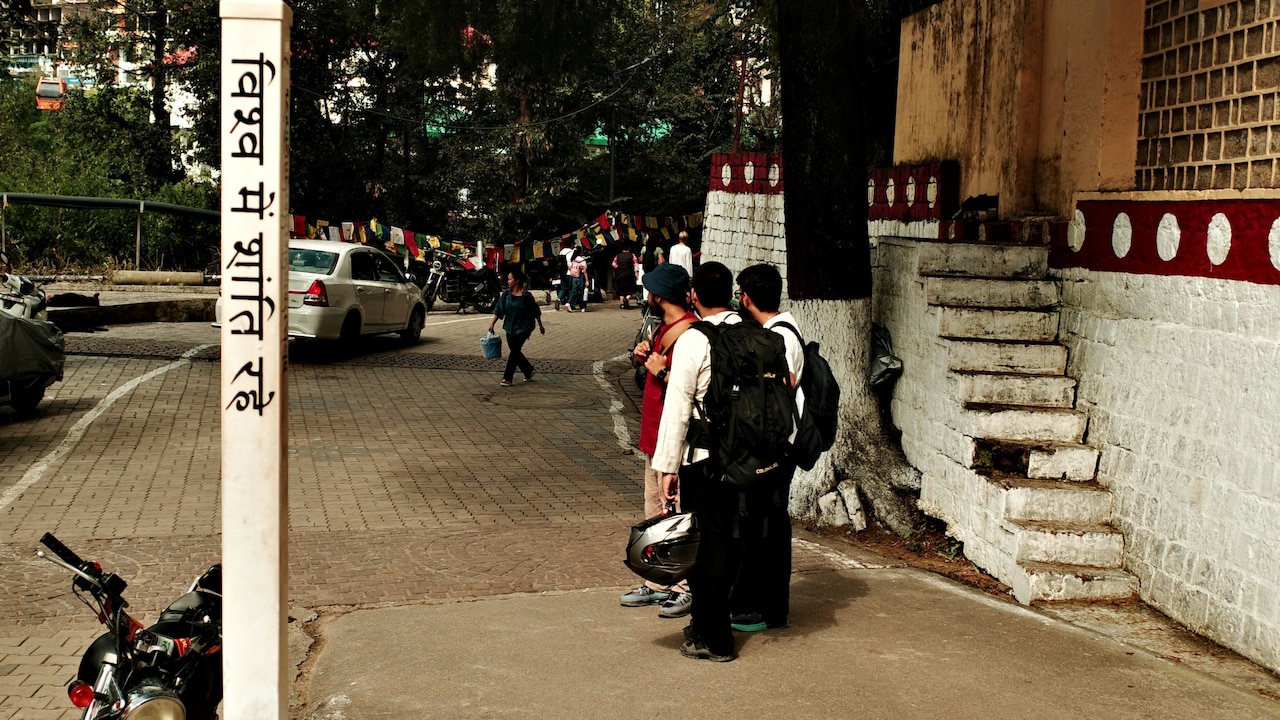
Cold tea tastes like copper when your hands are numb at four in the morning. I learned that sitting outside a tin-roofed guesthouse in McLeod Ganj, listening to diesel buses cough up the steep hairpin bends while mist wrapped around the deodar cedars like wet wool. Down in the valley, India was roaring into a new century—fiber cables, bullet trains, stock tickers blinking green in Mumbai. Up on the ridge, people still counted time by the turning of prayer wheels and the slow, heavy arithmetic of exile.
Walk through the narrow lanes of Dharamshala today and you feel a strange hollowness beneath the incense smoke. The shops still sell turquoise beads, thangka scrolls, and steaming bowls of thukpa. Yet ask an elder behind a counter where the young men and women went, and their eyes drop toward their knuckles. Fewer new arrivals cross the high passes out of Tibet each year. Meanwhile, thousands of Indian-born Tibetans—kids who grew up speaking Hindi and English alongside Tibetan, who studied on laptops in Bengaluru and Pune—are packing suitcases for Toronto, Minneapolis, Sydney, and London.
For decades, the Tibetan diaspora in India held together like a woven basket: tight, resilient, and built to carry weight across rough terrain. Now the reeds are thinning. You do not need a census spreadsheet to hear the quiet creak of a community changing shape, though the numbers back up what the eye notices.
The Arithmetic of a Shrinking Homeland in Exile
Demographic shifts rarely arrive with sirens. They creep in through half-empty classrooms, quiet monasteries, and aging parents left behind in settlement colonies built half a century ago.
When the Fourteenth Dalai Lama and tens of thousands of followers fled Tibet into India in 1959, exile was meant to be temporary—a waiting room before a return home. That temporary shelter became a permanent geography stretching from the cold high deserts of Ladakh down to Bylakuppe and Mundgod in southern Karnataka. Across these settlements, generations raised children under the banner of preserving language, faith, and identity far from Lhasa.
Over the past two decades, two forces have pulled steadily at that foundation. First, the stream of fresh refugees slipping across the Himalayan frontier has slowed to a trickle. Tighter border surveillance, high-altitude patrols, and harsher penalties inside Tibet have turned an already perilous winter trek over glaciated passes into a near-impossible gamble for most families. When new arrivals dry up, a community loses its direct living tether to the homeland—the people who carry fresh accents, recent memories, and stories straight from the plateau.
Second, a quiet outward tide has drawn young Tibetans away from Indian settlements toward Western countries. Many are born in India and hold Registration Certificates or Identity Certificates rather than standard Indian passports, which complicates long-term travel, government jobs, and certain legal protections. Even those with strong degrees in engineering, hospitality, or nursing often run into narrow ceilings at home. Abroad, higher wages, clearer pathways to residency, and established Tibetan communities in North America and Europe offer a future that feels less suspended in midair.
To understand the tension between staying and leaving, consider a hypothetical family—let us call them Tenzin, a sixty-four-year-old former carpenter in Bylakuppe, and his twenty-three-year-old niece, Dolma, who just finished a degree in hotel management. This scenario is invented for illustration, though it mirrors conversations heard across settlements every week.
Tenzin spent forty years building tables and temple pews out of seasoned timber. To him, leaving India feels like abandoning a post that someone must guard until the day everyone goes home. Every empty room in the settlement housing block feels like a surrender. Dolma loves her uncle fiercely, yet when she looks at her bank balance and her career options, she sees a wall of glass. A job offer in Canada or the United States means she can send money back to buy Tenzin better medicine and fix his leaky roof—even if it puts ten thousand miles and twelve time zones between them.
Neither of them is wrong. That is what makes the shift hurt so much.
When Survival Stops Looking Like Staying
Talk to older exiles long enough and you hear a fear that rarely makes headlines: what happens to a culture when its young people disperse across oceans?
Language is the first casualty when daily life shifts into another tongue. Think of a cultural tradition like a mountain stream fed by melting snow. If the snowpack shrinks at the top and water gets diverted into dozens of distant irrigation ditches, the main riverbed runs shallow. In Dharamshala or Bylakuppe, a child hearing Tibetan in the morning market, chanting in school assembly, and arguing with cousins in the courtyard absorbs the rhythm of the language without trying. In a suburb thousands of miles away, English or French or German takes over the school day, the playground, and eventually the inner voice.
Monasteries and nunneries feel the pull, too. Decades ago, families routinely sent a son or daughter into monastic life, viewing it as both spiritual devotion and a pillar of cultural continuity. Today, fewer young people choose robes, and those who do face modern questions about education, mental health, and life outside cloistered walls. When enrollment dips in traditional schools or monasteries, centuries of philosophical debate, medicine, and art risk losing their next generation of keepers.
Yet calling young emigrants "unpatriotic" misses the ground truth of their lives. I have sat with twenty-somethings in dusty cybercafes and quiet tea stalls who know every verse of exile history by heart, who tear up when they talk about Tibet, and who still book flights out of Delhi because they cannot see a dignified runway in front of them. Staying put out of noble sentiment does not pay rent or cover hospital bills.
There is also a quieter truth that outsiders often overlook. Many Tibetans in India are not merely "refugees" frozen in 1959; they are second- and third-generation Indians in lived experience, navigating a complex legal limbo where rights depend on paperwork, politics, and administrative discretion. Some apply for Indian citizenship when eligible; others hold back out of loyalty to exile identity or fear of complicating family status. Living in a legal gray zone wears people down over decades.
If I am honest with you, this is the part of the story that leaves me unsettled and uncertain. I am not an expert in international refugee law, and I cannot pretend there is an easy, tidy fix that satisfies every heart. When a community is small—numbering well under two hundred thousand worldwide, with tens of thousands in India—even a modest drop in local numbers changes the weight carried by everyone who remains.
A Different Kind of Continuity
Still, shrinking numbers in Indian settlements do not automatically spell cultural extinction. History shows that human traditions are stubborn things; they bend, fracture, and sometimes reassemble in forms their elders never predicted.
Across the globe, Tibetan associations in cities with growing populations are building weekend language schools, community centers, and cultural festivals. Digital tools connect cousins across continents on video calls every evening, letting grandmothers in Himachal Pradesh read bedtime stories to grandchildren who have never seen the Himalayas. Diaspora networks can also pool resources, fund scholarships, and keep international attention focused on Tibet when local leverage is tight.
Inside India itself, the shift is forcing practical adaptation. Settlement leaders and educators are wrestling with how to make local schools stronger, how to support entrepreneurs, and how to care for aging residents whose children live abroad. Remittances sent home from overseas workers already help keep many households afloat—an invisible economic lifeline running in reverse from West to South Asia.
The real question is not whether the Tibetan community in India is changing. It already has. The harder question is whether dispersion across continents can become a bridge rather than a slow unraveling. Can a culture keep its spine strong when its limbs stretch across half the planet?
Maybe the answer depends on small, unglamorous choices made far from diplomatic summits. It lives in whether a teenager learns to read Tibetan script with pride instead of embarrassment. It lives in whether an uncle in Karnataka and a niece in Minnesota stay honest with each other about sacrifice and belonging.
High above McLeod Ganj, strings of white, yellow, red, green, and blue cloth snap against the mountain wind until the ink fades to pale ghost-lines. Neighbors say the prayers are carried outward into the air with every gust, no matter how thin the cloth becomes. Out on the ridge, the wind keeps blowing, carrying old prayers toward places no map has named yet.


