The cicadas were louder than the servers. That was the first thing Sarah noticed when she walked the fence line of her family’s property in regional Victoria, just forty minutes outside of Melbourne. For generations, the horizon had belonged to rolling pastures, grazing sheep, and the occasional dust devil dancing across dry creek beds.
Now, a quarter-mile away, a massive, windowless concrete block was rising from the dirt like a monolith dropped from the sky.
You cannot see the electricity. You cannot hear the data streaming from millions of smartphones across the globe, carrying cat videos, financial trades, and late-night text messages. But you can hear the cooling fans. They hummed at a low, steady pitch, day and night, a mechanical heartbeat that never rested.
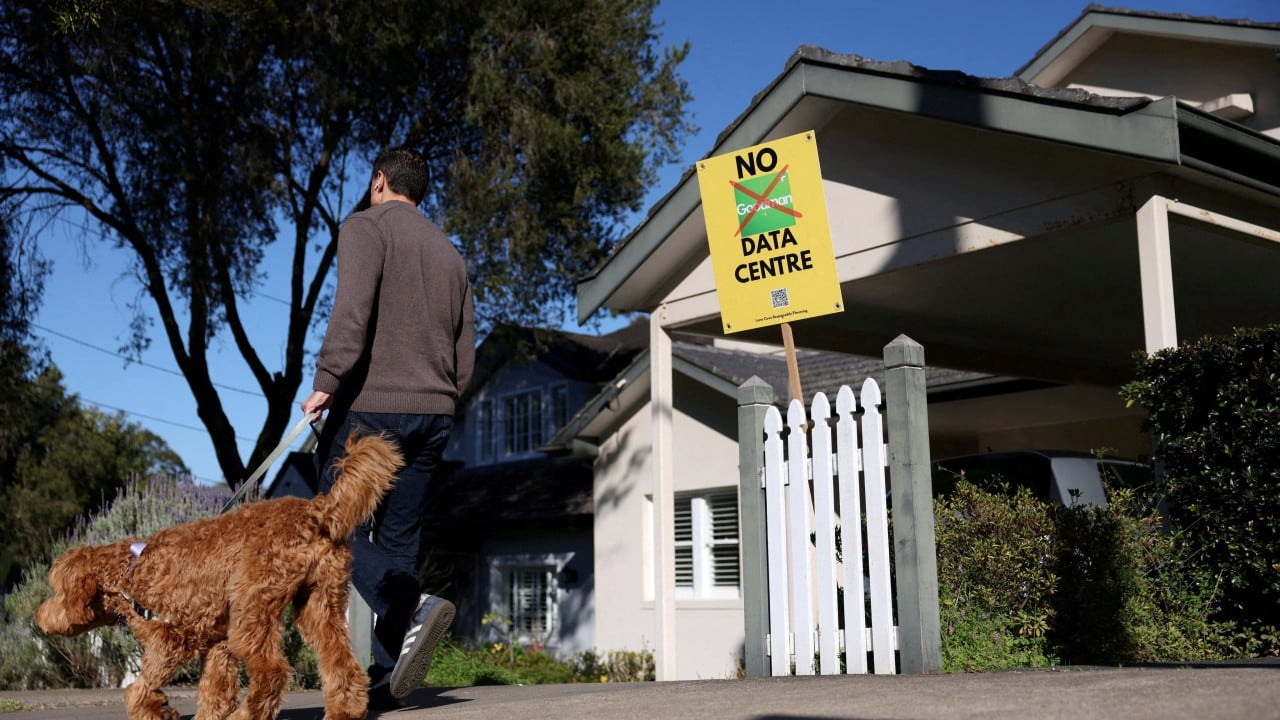
Across Australia, from the outskirts of Sydney to the quiet paddocks of rural Victoria, communities are waking up to a new kind of neighbor. Data centres are multiplying. The digital world has physical weight, and it has to live somewhere.
To understand why opposition is growing, you have to look past the corporate press releases and stand where Sarah stands. You have to look at an energy grid that is already groaning under the weight of summer heatwaves and industrial demands.
Data centres are power guzzlers. A single facility can consume as much electricity as a small town. When power companies look at their capacity charts, they see flashing red lights. Local residents see rising power bills and wonder why a warehouse full of computers gets priority over the local school or dairy farm.
Then there is the water. Servers get hot. Very hot. Millions of gallons are pumped through cooling systems every week, drawing from local reservoirs in regions that are already prone to severe droughts.
Consider what happens when a community feels left out of the conversation. Announcements are made in trade journals and municipal filings written in dense, bureaucratic jargon. Cranes appear. Dust flies. The locals feel bulldozed, literally and figuratively. Trust evaporates faster than water on a hot tin roof.
Yet, to dismiss data centres entirely is to misunderstand the architecture of modern life. Every time a doctor pulls up an electronic health record, every time a student submits an assignment online, every time a bank clears a transaction in milliseconds, that data has to be processed and stored. It has gravity. It pulls us forward, whether we like it or not.
So how do we reconcile the digital cloud with the physical earth?
Is there a middle ground between total rejection and unchecked expansion?
Some communities are starting to find out. In places where dialogue has replaced stonewalling, innovative solutions are taking root. Tech companies are being forced to adapt. Newer facilities are experimenting with closed-loop water systems that recycle nearly every drop. Others are partnering directly with local solar and wind farms, promising to run on green energy without stealing capacity from residential grids.
There are architectural experiments, too. Buildings wrapped in living green walls to absorb sound and heat, blending into the landscape instead of glaring against it. Noise barriers designed to drop the mechanical hum below the threshold of ambient countryside sound.
Most importantly, there is the shift toward genuine consultation. When developers sit down with local landowners years before the first shovel hits the dirt, the dynamic changes. Communities want transparency. They want to know what is in it for them beyond construction jobs that vanish once the concrete cures. They want local infrastructure upgrades, better broadband for their own homes, and a seat at the table.
Sarah still walks that fence line. The hum hasn't gone away. It probably never will. But recently, local council meetings have been packed with both angry farmers and corporate engineers forced to listen. The two sides are staring each other down across a chasm of misunderstanding, trying to figure out how to share the same patch of dirt.
The future is being built right now, brick by heavy brick, server by humming server. Whether it alienates the countryside or finds a way to coexist depends entirely on how hard we are willing to listen to the people standing at the edge of the property line.