The crack sounded like a dry twig snapping in a quiet forest.
I didn't even need to look down at the kitchen tile to know what had happened. My stomach dropped before the tablet stopped spinning. It was a flagship slab of anodized aluminum and edge-to-edge glass, a machine that cost more than my first used Honda Civic, and in less than two seconds, gravity had turned it into an expensive paperweight with a spiderweb of razor-sharp fractures radiating from the bottom bezel.
We have been conditioned to treat our personal screens like museum artifacts. We buy seventy-dollar cases to protect thousand-dollar rectangles, and then we buy insurance policies to protect the cases, living in a low-grade, perpetual state of anxiety every time a toddler reaches for a cartoon or a carry-on bag gets shoved into an overhead bin.
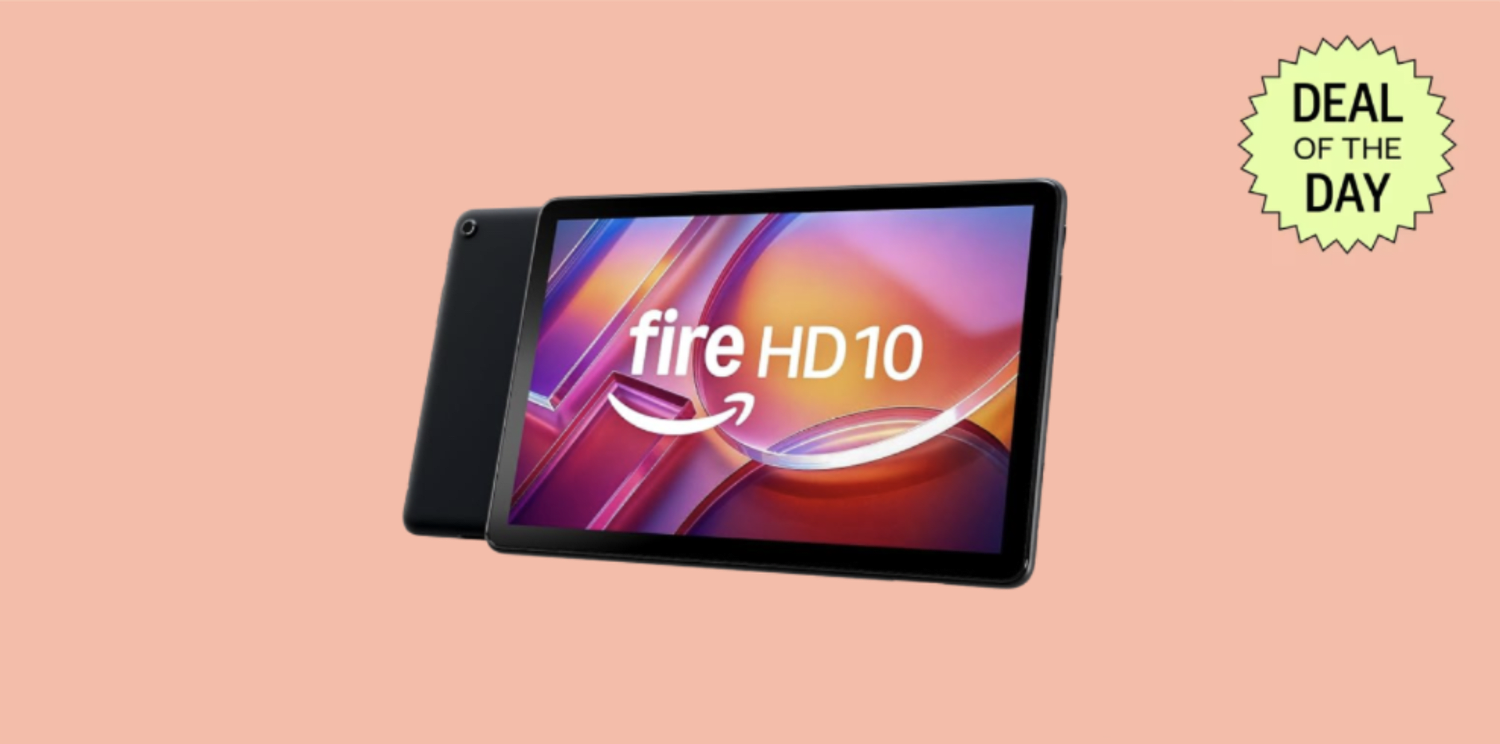
Which brings us to a quiet, unassuming piece of plastic currently sitting on Amazon’s digital shelves at a massive 53% discount until the warehouse bins run dry.
On paper, a price cut like this is just another line item in the endless churn of retail algorithms. A standard Fire tablet, slashed by more than half its retail price, hovering well under the hundred-dollar mark. Most tech commentators treat these devices with a polite, dismissive shrug. They call them "budget slates" or "media consumption devices," as if reading a novel, watching a movie on a red-eye flight, or keeping a child occupied during a three-hour layover were somehow lesser pursuits than rendering 4K video on a park bench.
They are missing the point entirely. When a capable piece of hardware drops by 53%, it ceases to be a tech purchase and becomes something much rarer in modern life.
Freedom.
The Tyranny of the Over-Engineered Slab
To understand why a deeply discounted Fire tablet matters, you have to look at how the tech industry lost its collective mind over the last decade. Somewhere along the line, manufacturers decided that every screen in your house needed to be capable of launching a space shuttle.
Consider a hypothetical scenario—let’s call her Elena, a graphic designer and mother of two living in Chicago. Elena owns a high-end laptop for her client work and a flagship smartphone for her daily life. Last year, she bought a top-tier tablet thinking she would sketch on the couch. Instead, she spent six months yelling at her kids not to touch it with sticky fingers, panicking when she left it in the backseat of a rideshare, and realizing she mostly used it to check recipes while making marinara sauce.
Elena fell into the trap of buying a Ferrari to drive to the mailbox.
The modern tablet market is built on a subtle psychological con. Companies convince us that unless we buy the model with the desktop-class processor, the studio-grade microphones, and the titanium chassis, we are settling for garbage. Yet behavioral studies on consumer device usage consistently reveal a lopsided truth: nearly 80% of all tablet screen time is spent doing exactly four things. People stream video. They read books and articles. They browse the web. They play casual games.
You do not need a thousand-dollar supercomputer to watch The Bear in bed. You need a bright screen, decent speakers, a battery that doesn't die before the credits roll, and a price tag low enough that you don't break into a cold sweat if you fall asleep and knock it onto the hardwood floor.
What 53% Off Actually Buys You
When Amazon slashes a Fire tablet by 53%, the math changes the psychology of ownership.
Think of a flagship tablet like a fine crystal wine glass. You hold it carefully, you wash it by hand, and you never take it near the swimming pool. A Fire tablet at half price is a heavy-duty insulated tumbler. You toss it in your backpack without a sleeve. You hand it to a six-year-old in the back of a minivan without hovering over their shoulder. You take it to the beach, prop it up against a cooler, and read three hundred pages while sand blows across the screen.
I learned this lesson the hard way after my kitchen tile disaster. Replacing that shattered flagship screen was going to cost nearly four hundred dollars—more than three times the price of a discounted Fire HD 10 or Fire HD 8. So I swallowed my pride, ordered a Fire tablet during a steep markdown, and braced myself for a miserable, laggy experience.
I was wrong.
The first thing you notice isn't what the device lacks; it's the immediate evaporation of stress. The polycarbonate shell isn't trying to win an industrial design award in Milan, and thank goodness for that. It has grip. It absorbs shock. When I tossed it onto my passenger seat the next morning, I didn't wince.
Let's be completely transparent about what happens under the hood, because honesty matters more than hype. If you are trying to edit multi-track audio files or run heavy 3D modeling software, this machine will choke. The processors inside Amazon’s lineup—typically octa-core chips paired with 2GB to 4GB of RAM depending on the specific model—are built for efficiency, not brute force. Switching between five heavy apps in rapid succession will occasionally produce a half-second stutter.
And then there is the elephant in the room: the software ecosystem.
Navigating the Walled Garden
If you have never used a Fire tablet, the operating system can feel like walking into a grocery store where every aisle leads back to the same checkout counter. Amazon runs Fire OS, a heavily modified version of Android that replaces Google’s services with Amazon’s own universe.
Out of the box, you won't find the Google Play Store sitting on the home screen. You won't see official YouTube apps from Google, nor will you find Gmail pre-installed. Instead, you get seamless—scratch that, effortless—integration with Kindle books, Prime Video, Audible, and Alexa. The lock screen, unless you pay an extra fifteen dollars to remove them, displays tasteful advertisements for upcoming shows and bestselling novels.
Does this confuse people? Absolutely. I have watched plenty of buyers open the box, tap around looking for their familiar Google icons, and feel a flash of buyer's remorse. It is a deliberate business model. Amazon sells the hardware at razor-thin margins—and at 53% off, almost certainly at a steep loss—because they know you will likely rent a movie, buy a paperback for your Kindle app, or reorder paper towels through the browser.
Yet for millions of people, this limitation is secretly a feature.
By stripping away the endless distractions of the broader app universe, the device naturally narrows its focus. My own screen time shifted almost immediately after making the switch. Without my work email pinging me from the corner of the display, and without the muscle memory of tapping into endless social media feeds, the tablet reverted to what screens were originally supposed to be: a window into stories. I started finishing two books a month again. I watched movies all the way through without checking Slack.
And for those who truly cannot live without a specific Android app, the tablet isn't actually locked down. Because Fire OS is built on Android’s open-source foundation, installing third-party app stores takes about ten minutes and a basic web tutorial—no voided warranties, no complex coding required. You get the hardware at a fraction of its manufacturing cost while retaining the backdoor key to the wider digital world.
The Anatomy of a Flash Markdown
Why does a discount hit 53%, and why does the clock tick so loudly when it happens?
Retail pricing in the consumer electronics space follows a predictable seasonal rhythm, punctuated by sudden inventory clearances. When Amazon drops a Fire tablet by more than half, it is rarely a random act of generosity. Usually, it signals one of two things: either a warehouse is clearing floor space ahead of a minor hardware refresh—perhaps a model with a slightly faster chip or a new color casing—or the company is using a loss-leader blitz to drive Prime ecosystem adoption during a crucial retail window.
Notice the phrasing attached to these drops: until it sells out.
Unlike standard promotional weekends where manufacturers simply turn down the price dial on an endless supply line, steep clearance markdowns are tied to physical pallets sitting in fulfillment centers. Once those specific SKUs are allocated to shopping carts, the price snaps back to retail instantly, often without warning.
Consider the numbers. A standard 10.1-inch Fire HD 10 typically retails around $140. Knock 53% off that figure, and you are suddenly looking at roughly $65. Even the smaller, single-hand-friendly Fire HD 8 drops from $100 down into the $45 range. At those prices, the device costs less than a single tank of gas, less than a dinner for two at a mid-range restaurant, and less than the replacement warranty on an iPad.
Who Actually Needs This (And Who Should Walk Away)
Not everyone should buy a tablet just because the price tag is bleeding red ink. Impulse buying a cheap gadget you will never turn on is still a waste of money, no matter how steep the percentage sign looks.
You should skip this deal entirely if you are looking for a laptop replacement. Even if you pair a Fire tablet with a Bluetooth keyboard, the file management system is clunky, split-screen multitasking is basic at best, and typing a three-thousand-word report on a ten-inch screen is an exercise in frustration. If your primary goal is productivity, spreadsheets, or creative work, save your money and buy a proper computer.
Similarly, if you are a visual purist who demands OLED blacks, 120Hz refresh rates, and color accuracy calibrated for photo editing, the IPS LCD panels on these tablets will feel pedestrian. They are plenty bright for a living room or an airplane cabin, and Full HD resolution on the larger models makes text crisp and movies vibrant, but they won't fool anyone into thinking they are looking at a studio monitor.
Now, flip the coin. Who does this serve?
It serves the commuter riding the train for forty-five minutes every morning, who wants to download three episodes of a thriller over Wi-Fi before going underground, without draining their phone's battery to 12% before lunchtime.
It serves the aging parent who struggles with tiny smartphone text and complicated interfaces, who just wants a large, reliable screen to video-call their grandkids, read the morning paper, and play solitaire without accidentally deleting their operating system.
It serves the traveler packing a single carry-on bag for a two-week trip across Europe, who refuses to carry two thousand dollars' worth of anxiety through crowded train stations and hostel lockers.
And it serves the parent—like our hypothetical Elena in Chicago—who finally realizes that giving a child a rugged, inexpensive tablet loaded with curated books and offline cartoons isn't bad parenting; it's buying yourself an uninterrupted hour to drink a cup of coffee while it is still hot.
The Liberation of "Good Enough"
We live in an era obsessed with optimization. Every purchase is treated like a permanent life decision, agonized over through dozens of comparison charts, benchmark scores, and unboxing videos. We have forgotten the profound joy of the "good enough" object—the tool that shows up, does its specific job without complaint, and costs so little that it never owns you back.
Think about the things in your house you actually love using. Chances are, it isn't the fragile heirloom piece sitting behind glass. It is the chipped ceramic mug that fits your hand perfectly. It is the faded canvas jacket you wear in the rain without checking the forecast. It is the paperback book with the bent spine and dog-eared pages that you carried in your coat pocket all winter.
Technology rarely gives us that feeling anymore because technology has become too precious, too fragile, and absurdly expensive.
When a capable, bright, ten-hour-battery tablet drops by 53%, it breaks that spell. It puts a window to the world's libraries, cinemas, and music halls into your hands for the price of a pair of running shoes. You stop worrying about microfiber cloths and protective sleeves. You stop calculating depreciation curves. You simply press the power button, lean back against the pillows, and let the story begin.
Somewhere in a warehouse right now, a forklift is moving the last few pallets of those boxes toward a packing line, and soon the listing will quietly revert to full price—leaving behind a lucky few who realized that the best screen in the world isn't the one with the fastest chip, it's the one you aren't afraid to live with.