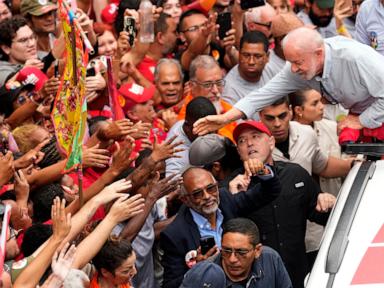
The rain in Brasília has a way of turning red dust into iron-colored mud, staining the cuffs of white trousers and the soles of cheap sneakers alike. On an October Sunday in 2026, two days before Luiz Inácio Lula da Silva turned eighty-one, that mud clung to the heels of millions of people standing in lines that wrapped around public schoolyards from the Amazon basin to the windswept pampas of the south.
They were not just casting ballots. They were settling a bet made four thousand miles away in Washington.
To read the standard dispatches about Brazil’s 2026 presidential election is to encounter a tidy, bloodless equation: an aging leftist incumbent seeking an unprecedented fourth nonconsecutive term against a forty-five-year-old senator carrying the surname of a jailed strongman and the blessing of Donald Trump. Numbers get recited. Coalitions get mapped. Analysts tally up who won the Southeast and who held the Northeast.
All of it misses the heartbeat under the floorboards.
Because what happened in Brazil during the autumn of 2026 was not merely a rematch between two political dynasties. It was a street-level collision between two competing visions of what a sovereign nation owes its poorest citizens—and whether a superpower can bully a neighbor into choosing a different master.
The Weight of a Kitchen Table
Consider a hypothetical household in the outskirts of Belo Horizonte, in the bellwether state of Minas Gerais—the exact kind of place where Brazilian elections live or die. Let us call the mother Helena, a fifty-two-year-old hospital orderly who rides two buses before dawn to scrub operating theaters, and her son Mateus, twenty-four, who delivers parcels on a battered motorcycle while studying systems analysis at night.
In early October, when Brazil held its first round of voting, Mateus almost stayed home. Thirty-three million Brazilians sat that first round out, exhausted by inflation, high interest rates, and the endless noise of scandal. Mateus looked at Lula—a man who had first taken office before Mateus could tie his own shoes—and saw a tired era. Then he looked at Flávio Bolsonaro, the lawyer and Rio de Janeiro senator anointed by his imprisoned father, Jair Bolsonaro, to reclaim the Planalto Palace, and heard promises of stripped-down bureaucracy, aggressive policing against organized crime, and a muscular new partnership with the United States.
Flávio won the first round. He carried Minas Gerais by more than five percentage points.
History said the race was over. Since Brazil returned to democracy in 1985 after two decades of military dictatorship, no candidate who finished second in the first round had ever come back to win the runoff. Never. Not once.
Yet three weeks later, on October 25, Helena and Mateus stood side by side at the voting booth, and Brazil broke its own forty-one-year rule.
When Foreign Tariffs Become Domestic Fuel
To understand why Mateus changed his mind, you have to follow the money—and the pride—from Washington’s trade desks straight to the price of rice and cooking oil in São Paulo.
In the months leading up to the vote, the Trump administration had watched Latin America tilt rightward. Argentina had Javier Milei; Chile had José Antonio Kast; Ecuador had Daniel Noboa; Colombia had Abelardo de la Espriella. Bringing Brazil—South America’s largest economy and a founding pillar of the BRICS bloc—into Washington’s orbit would have completed the sweep. Flávio Bolsonaro campaigned openly on that alignment, pitching Brazil as the answer to Washington’s hunger for rare-earth minerals and security cooperation.
Then came the pressure. When Brazilian courts prosecuted and sentenced former President Jair Bolsonaro to twenty-seven years in prison for plotting a coup after his 2022 defeat, Washington responded with punitive double-digit tariffs on Brazilian goods.
In Washington, those tariffs may have looked like leverage. In Brazil, they landed like a slap across the face.
Think of what happens when a big neighbor walks onto your porch and tells you which family member you are allowed to discipline—and threatens to wreck your livelihood if you disobey. Even Brazilians who had grown cynical about Lula’s Workers’ Party suddenly felt an older, sharper nerve twitch. Polling from Datafolha showed that fifty-two percent of Brazilians believed the American tariffs were designed specifically to boost Flávio Bolsonaro’s campaign.
Lula, a former metalworker who cut his teeth leading massive factory strikes in São Bernardo do Campo back in 1979, knew immediately how to play that chord. He stopped sounding like an incumbent defending interest rates and started sounding like a union organizer defending the factory gates. "Brazil belongs to Brazilians," he told roaring crowds. "Brazil will not be anyone's colony."
Words matter in a country that spent centuries as an extraction zone for foreign empires. Overnight, a referendum on grocery prices turned into a test of national spine.
The Invisible Safety Net
Still, nationalism alone does not feed a family when the rent comes due. What truly pulled millions of hesitant voters off their couches in the three weeks between the first round and the runoff was a quieter, colder fear: the dread of losing the floor beneath their feet.
In a country scarred by deep disparities of race and income, Brazil’s public institutions are not abstract policy papers. They are the difference between surviving an illness and dying in a hallway. Take SUS—Brazil’s universal public health system, the largest of its kind in the world. For families like our hypothetical Helena and Mateus, SUS is the clinic that monitors a grandmother’s blood pressure, the ambulance that arrives after a motorcycle crash, the insulin that keeps an uncle working.
Flávio Bolsonaro’s campaign insisted it would not privatize SUS, arguing instead for cutting public spending, trimming ministries, and bringing more private providers and technology into healthcare. On paper, those proposals sounded like standard fiscal efficiency.
In living memory, however, voters heard something very different. They remembered the COVID-19 pandemic under Jair Bolsonaro—a catastrophe so severe that a Brazilian Senate inquiry later recommended charging the former president with crimes against humanity. They looked at Lula’s expansion of anti-poverty cash transfers through Bolsa Família, medicine subsidies under Farmácia Popular, and student stipends under Pé-de-Meia, and realized how quickly a safety net unravels once the scissors come out.
Between October 4 and October 25, the streets shifted. Students poured out of universities in anti-Bolsonaro demonstrations. Artists, athletes, and everyday workers flooded social media—a digital battlefield the Brazilian right had long treated as its private turf.
I admit, watching from afar as the runoff approached, it was impossible to tell whether that late surge was real momentum or merely wishful noise. Polls showed a razor-thin deadlock. The right still commanded fierce loyalty among voters terrified of violent crime—men and women who looked at urban gang warfare and wanted a strongman willing to break rules to restore order. Even within the Bolsonaro movement, fissures had opened—including a very public feud between Flávio and his stepmother, former First Lady Michelle Bolsonaro, a towering figure among Brazil’s evangelical voters. Yet Bolsonarismo remained a juggernaut; four members of the Bolsonaro family won seats in the federal legislature during the October general elections.
Nothing about October 25 was guaranteed.
The Night the Pattern Broke
When the electronic ballot boxes—some of the fastest-tallying voting machines on earth—began reporting on Sunday evening, the numbers told a story nobody had ever seen in modern Brazilian democracy.
More than 124 million Brazilians had shown up, pushing turnout past eighty percent. When the dust settled, Lula had captured nearly fifty-two percent of the vote to Flávio Bolsonaro’s slightly more than forty-eight percent.
Stop and sit with what that margin actually means.
It means Brazil remains fiercely, almost evenly divided down its spine. Nearly half the electorate looked at the past four years and demanded a sharp turn toward deregulation, aggressive security crackdowns, and closer ties to Donald Trump’s White House. Flávio Bolsonaro refused to concede on election night, a familiar echo of his father’s 2022 playbook that sent a chill through anyone who remembers the riots that followed four years earlier.
Yet the democratic guardrails held. And for the first time in Brazilian history, a leader was directly elected to a fourth presidential term—a man born into rural poverty in Pernambuco in 1945, who lost a finger on a factory lathe, survived imprisonment and political resurrection, and will take the oath of office again on January 5, 2027, at eighty-one years old.
What Happens When the Flags Come Down
In Brasília that Sunday night, while supporters in red shirts wept and danced along Avenida Paulista in São Paulo, Jair Bolsonaro remained under house arrest, watching his family’s hopes for a presidential pardon evaporate on a television screen. Across the hemisphere, leaders from Mexico City to Asunción sent congratulations, recognizing that the largest democracy in Latin America had refused to become what Lula bluntly called "anyone's backyard."
For Washington, the loss is strategic and immediate. Brazil will not be joining a U.S.-led security bloc or handing over preferential access to its critical minerals. Instead, Brasília will keep balancing between Beijing, Washington, and the Global South, insisting that a country of more than two hundred million people gets to write its own foreign policy.
For Lula, however, victory brings a heavier burden than defeat ever could. He promised on election night to deliver "the best term a President has ever had in the history of this country," pledging to tackle public security, expand schools and clinics, and push Brazil into the artificial intelligence era. Saying those words into a microphone is easy; delivering them to forty-eight percent of a country that voted against you—while navigating an economy squeezed by high borrowing costs and a legislature packed with conservative opponents—will test every ounce of political craft an octogenarian has left.
Out in the neighborhoods where elections are actually decided, nobody celebrates for long. Monday morning still arrives at five o’clock. The buses still rattle over potholes. The clinic waiting rooms still fill before sunrise.
Somewhere in Minas Gerais, a woman in white scrubs steps off the first bus of the morning, wipes a smudge of red mud from her shoe, and walks through the hospital doors—knowing that for four more years, at least, the doors will stay open.