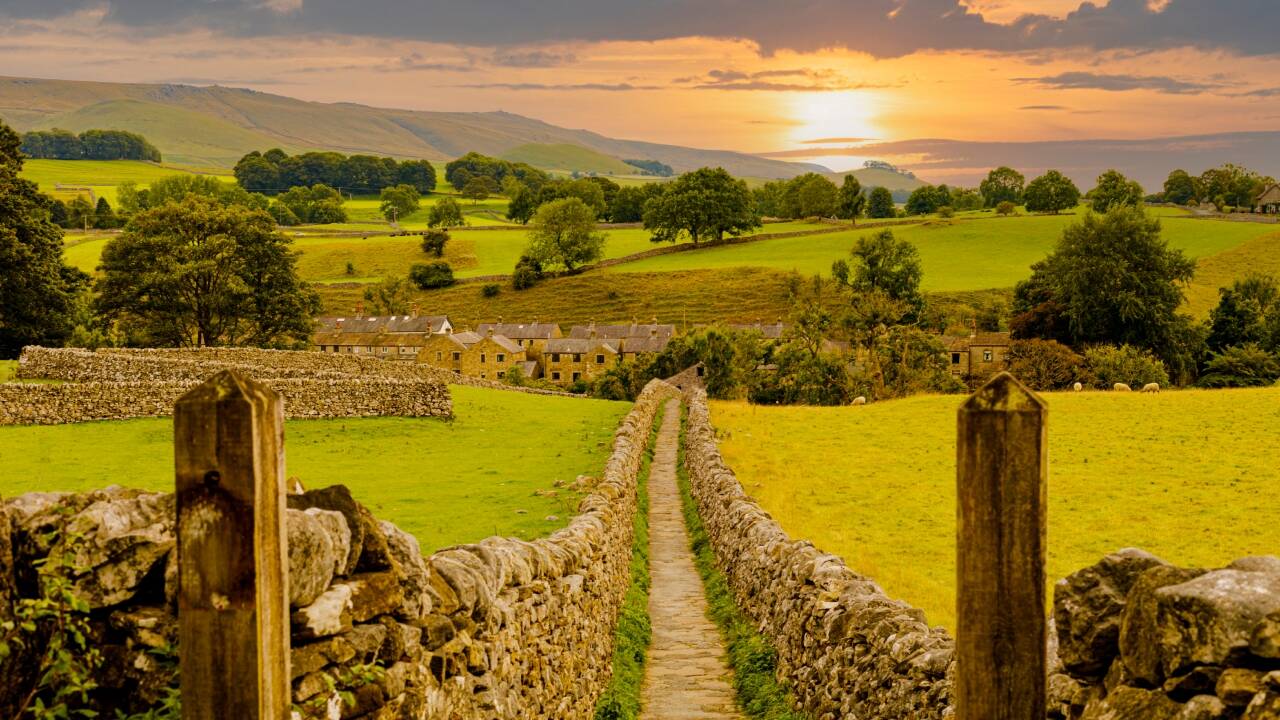
Agriculture and wildlife used to exist in a permanent state of war. For decades, the expansion of industrial farming meant the systematic removal of hedgerows, the draining of wetlands, and the broad application of chemicals designed to eliminate anything competing with a cash crop. The results were predictable. Bird populations plummeted, insect biomass collapsed, and biodiversity vanished from the rural map. But a quiet counter-revolution is taking place across agricultural regions worldwide, driven not by government mandates or radical activism, but by the practical realities of soil science and farm economics.
Modern growers are discovering that sterile fields are fragile fields. When an ecosystem is stripped down to a single monoculture, it becomes entirely dependent on synthetic inputs to survive. Every pest outbreak requires a heavier spray. Every dry spell threatens total crop failure because the dead soil has lost its capacity to retain moisture. To break this costly cycle, a growing number of producers are deliberately bringing wild species back into their production systems. This is not charity or ecological theater. It is a calculated strategy to restore biological resilience to working
The Quiet Return of Farmland Wildlife That Industrial Agriculture Tried to Erase
news, business
For decades, the rural horizon across the developed world offered a uniform view. Monocultures of corn, soy, and wheat stretched from fence line to fence line, unbroken by hedgerows, unbothered by weeds, and largely silent. The post-war agricultural consensus prioritized maximum yield per acre through chemical saturation and maximum mechanical efficiency. By treating fields as factories, modern food production achieved unprecedented calorie output.
It also triggered a quiet, catastrophic collapse.
Insect populations plummeted, ground-nesting birds vanished from the acreage, and once-common mammalian species found themselves squeezed into fragmented postage-stamp habitats. The traditional narrative insisted on a zero-sum equation: humanity could either feed the world or share the landscape with wildlife, but not both.
That binary is breaking down. Across thousands of working farms, a counter-movement is quietly gathering momentum. Growers who once measured success purely by bushels per acre are discovering that industrial efficiency has a hidden structural cost. When soil biology dies, input costs skyrocket. When native pollinators disappear, yields become entirely dependent on expensive synthetic intervention. The turn toward wildlife-friendly farming is not driven by romantic sentimentality or charity. It is an economic and ecological survival strategy deployed by producers who look at twenty-year trends and realize the old model is hitting a dead end.
The Economic Trap of Clean Fields
To understand why farmland wildlife is returning, one must first understand why it disappeared. The mid-twentieth-century industrialization of agriculture introduced a philosophy of radical simplification. Field margins were ripped out to accommodate wider combine harvesters. Wetlands were drained, and ditches were straightened into sterile concrete flumes. Every square foot that did not produce a cash crop was categorized as waste.
The consequences for biodiversity were absolute. Without native grasses, wildflowers, and brushy borders, insects lost their larval host plants. Without insects, insectivorous birds like meadowlarks and gray partridges could no longer feed their young.
Yet, this war on non-crop species created an expensive trap for the farmer. By eliminating natural predators through broad-spectrum insecticides, growers inadvertently eradicated the checks and balances that kept crop pests in check. This necessitated heavier applications of synthetic pesticides. By stripping fields of organic matter and microbial life, synthetic fertilizers became mandatory just to keep yields stable.
The balance sheet began to groan under the weight of these escalating input costs. Seeds, chemicals, diesel, and heavy machinery consumed an ever-larger share of gross revenue. When commodity prices fluctuated downward, profit margins evaporated.
A subset of agricultural producers noticed something crucial: the farms that maintained ecological diversity—patches of uncultivated land, mixed crop rotations, and functional hedgerows—often weathered economic shocks better. Their soils retained moisture during droughts. Their pest pressures were managed, in part, by resident populations of beneficial insects and raptors.
Wildlife was never just a pleasant aesthetic feature of the countryside. It was an indicator of biological function.
Rewilding the Working Acre
Restoring wildlife to a commercial farm requires moving away from the wall-to-wall herbicide approach. It does not mean turning thousands of acres of productive land back into a wilderness preserve. Instead, it means integrating ecological infrastructure directly into the agricultural footprint.
Consider the role of field margins. Instead of spraying fence lines down to bare dirt, progressive growers are planting buffer strips with native perennials, bunchgrasses, and flowering broadleaf plants. These strips act as highways and safe zones for pollinators, predatory beetles, and small mammals.
The mechanics of this intervention are precise. Predatory beetles and spiders winter in these undisturbed buffer strips. When spring arrives, these beneficial arthropods migrate into the adjacent cash crops to feed on aphids and crop-damaging larvae before those populations can explode. By fostering a permanent reservoir of predators, the farmer reduces or eliminates the need for early-season insecticide applications.
Beneath the soil, a parallel recovery occurs. When fields are planted with diverse cover crops between cash-crop seasons—mixtures of radishes, clover, rye, and vetch—mycorrhizal fungi and earthworms return. The deep taproots of cover crops break up compacted plow pans, allowing rainwater to infiltrate deeply rather than running off the surface and carrying topsoil away.
Ground-nesting birds, such as northern bobwhites and various sparrows, find the structural cover they need to raise broods safely away from heavy machinery. Raptors like kestrels and hawks find high perches along unmanaged field edges, providing free, round-the-clock rodent control.
The Policy Shift and Market Realities
None of this happens in a vacuum. For generations, government agricultural subsidies actively penalized environmental stewardship. Subsidies were frequently tied directly to maximum production of specific commodity crops, discouraging crop rotation and land resting. If a farmer took ten acres out of production to plant a wildflower meadow for pollinators, they faced financial penalties under old program rules.
That regulatory architecture is slowly shifting. In various jurisdictions across North America and Europe, agricultural agencies are implementing eco-schemes and conservation stewardship programs. These initiatives pay farmers directly for environmental services: carbon sequestration, water retention, and biodiversity enhancement.
When a farmer receives financial support to establish riparian buffers along a trout stream or to maintain winter cover crops, the economic risk of shifting away from pure industrial monoculture drops significantly.
At the same time, supply chain pressures are evolving. Food processing conglomerates and major grocery retailers face mounting scrutiny over their Scope 3 greenhouse gas emissions and environmental footprints. Corporate sustainability targets are no longer optional marketing gloss; they are tied to institutional investment capital. Consequently, grain buyers and food brands are beginning to offer premium pricing or long-term contracts to growers who can verify regenerative practices, including biodiversity metrics.
However, the transition is far from frictionless. Transitioning a 3,000-acre corn and soybean operation to include cover crops, reduced tillage, and wildlife corridors requires specialized knowledge, new machinery, and a high tolerance for short-term operational risk. A cover crop planted at the wrong time or terminated incorrectly can tie up soil nutrients, depressing the subsequent cash crop's yield.
Skeptics within the agricultural community point out that wildlife-friendly farming can yield lower per-acre volumes of specific commodities during the transition phase. For a producer operating on razor-thin margins with high land debt, the risk of a yield dip can feel existential.
The Long View from the Tractor Cab
The success of farmland wildlife recovery ultimately depends on generational change and stubborn pragmatism. The growers leading this shift are rarely ideological environmentalists; they are business owners who look at soil organic matter percentages and water tables with cold realism.
When a farmer watches topsoil blow away in a high wind, or spends thousands of dollars more on nitrogen fertilizer than they did a decade ago to achieve the same yield, the romance of industrial farming wears thin.
The return of the pheasant to the stubble field, the resurgence of bumblebees in the orchard, and the nesting of hawks in the windbreak are not charity cases. They are the visible proof that the biological engine of the farm is starting to run under its own power again. Food production and ecological health were never natural enemies. They were forced apart by a century of reductionist chemistry, and bringing them back together is the only viable path forward for agriculture that expects to last another hundred years.


