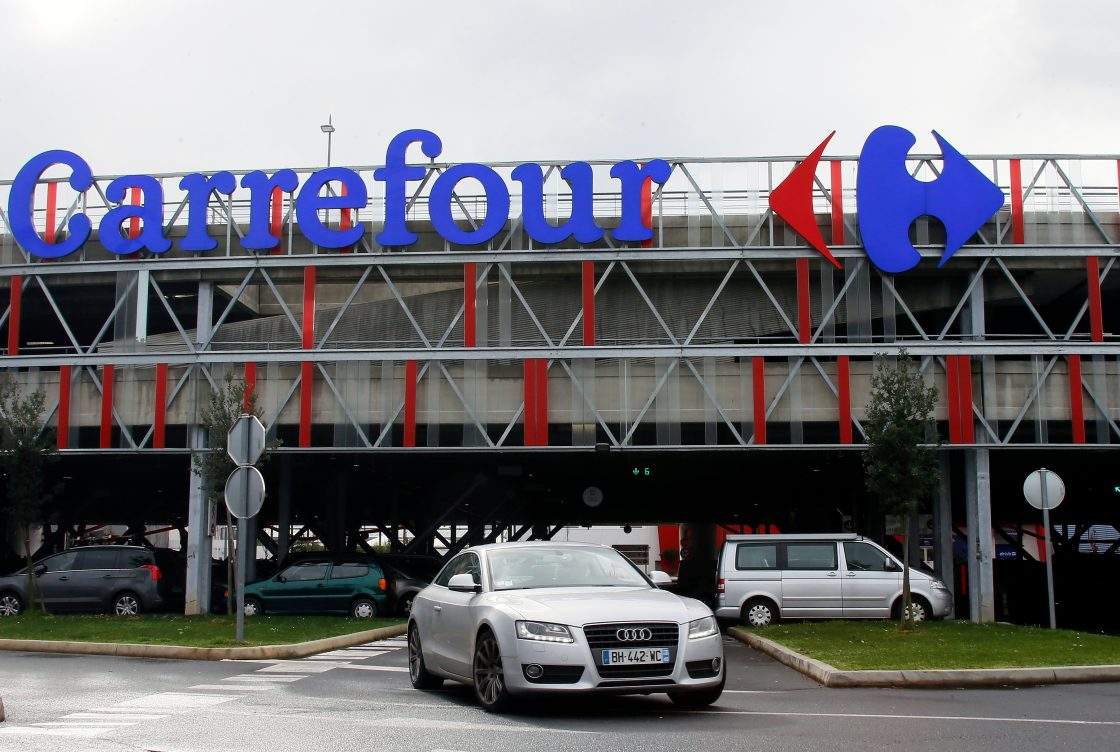
At 3:14 in the morning, a grocery store is a cathedral of hums.
There is the low, steady drone of the fluorescent ballasts overhead, the faint click of a rotating sign in the bakery, and beneath it all, the rhythmic, reassuring thrumming of the compressors. For decades, that mechanical heartbeat has been the invisible foundation of modern civilization. It is the reason a family in Lyon can buy fresh Atlantic salmon on a Tuesday evening, why a diabetic can trust the insulin stored behind the pharmacy counter, and why milk does not sour before dawn.
Now, picture a hypothetical night shift manager named Laurent walking the polished linoleum floors of a hypermarket just outside Paris. He is holding a clipboard, checking off pallets of yogurt and crates of butchered poultry. The air in the dairy aisle is normally crisp enough to raise goosebumps through a fleece vest. Tonight, Laurent notices something subtle. The hum has stopped. The glass doors of the refrigeration units are weeping, thick beads of condensation gathering like sweat on a feverish brow. On the digital readout above the butter, the numbers are climbing. Four degrees Celsius. Six. Nine.
Laurent assumes a breaker tripped. He walks to the utility corridor, expecting to smell ozone or see a blown fuse. Instead, he finds the physical hardware intact, yet completely unresponsive to his manual overrides. Someone thousands of miles away has locked the digital doors to his cold chain.
Silence.
When French cybersecurity officials recently attributed a widespread cyberattack on supermarket refrigeration systems to state-sponsored actors in Iran, the headlines treated it like a bizarre geopolitical footnote. It sounded almost absurd, the stuff of late-night comedy monologues. Hackers targeting milk and butter? Nation-states wages war against frozen peas?
To laugh at that headline is to fundamentally misunderstand how modern conflict works, and how fragile the scaffolding of our daily comfort truly is.
The Myth of the Glass Box
We like to think of the internet as something contained within screens—a glowing rectangle in our pockets or a monitor sitting on an office desk. When we hear the phrase cyber warfare, our minds conjure images of spies stealing nuclear blueprints, hackers draining Swiss bank accounts, or digital vandals defacing government websites. We assume the digital world and the physical world are separated by a thick pane of glass.
That glass shattered years ago. We just refused to sweep up the pieces.
To understand how an operative in Tehran can spoil thousands of tons of Brie in Normandy, you have to understand the quiet revolution that took place behind the walls of retail infrastructure over the last decade. In the name of efficiency, sustainability, and razor-thin profit margins, grocery chains stopped buying dumb machines. A commercial refrigerator is no longer just an insulated box with a motor and a thermostat. It is an endpoint on a sprawling corporate network, a node in the Internet of Things.
These modern cooling systems are connected to centralized building management software. They report energy consumption in real time, predict mechanical failures before they happen, and allow a single technician in a regional headquarters to adjust temperatures across four hundred stores with a few clicks. It is a marvel of logistical engineering.
It is also an unlocked back door.
Think of a modern supermarket’s computer network like a sprawling medieval castle. The corporate headquarters—where financial records, payroll, and customer credit card data live—is the central keep, surrounded by thick stone walls, moats, and armed guards. Hackers know better than to charge the front gate. Instead, they walk around the perimeter until they find the unattended delivery entrance used by the local ice vendor.
In the world of industrial cybersecurity, refrigeration contractors, HVAC technicians, and smart-meter providers are those third-party vendors. Often, the software controlling the cold aisle runs on outdated operating systems, protected by default passwords that were never changed after installation. Once an intruder compromises the remote access portal used by a refrigeration maintenance company, they do not just control the thermostats. They are inside the castle walls.
The Architecture of Anxiety
Why would a sophisticated intelligence apparatus expend time and resources to ruin a grocer’s inventory?
Because traditional warfare is expensive, messy, and triggers immediate, devastating retaliation. If a foreign power bombs a French port or sabotages a railway line, fighter jets scramble and treaties are invoked. The rules of engagement are clear.
Hybrid warfare operates in the gray zone—the murky territory below the threshold of armed conflict. The goal is not to conquer territory, nor is it necessarily to steal secrets. The goal is friction. It is the slow, grinding erosion of public trust.
Consider what happens when the cold chain breaks on a national scale. A single supermarket holds tens of thousands of euros worth of perishable inventory. When temperatures rise above safe thresholds for more than a few hours, health regulations leave store managers with zero discretion. Everything must be destroyed. Pallets of meat, crates of produce, mountains of dairy—all of it hauled to the dumpsters while the store’s doors remain shuttered for days of sanitation and system resets.
Multiply that single store by dozens, or hundreds, across a region. Suddenly, the disruption moves from a corporate balance sheet to the kitchen table. Parents cannot find baby formula. Local restaurants run out of ingredients. Rumors begin to swirl on social media before official statements can even be drafted. People start hoarding canned goods, creating artificial shortages that amplify the panic.
The attackers do not need to destroy the power grid to make a population feel vulnerable. They only need to remind citizens that the abundance they take for granted exists at the mercy of an unseen adversary. It is psychological warfare delivered via an empty shelf.
Living in the Blind Spot
I spent three years consulting for mid-sized logistics and retail firms, walking through the concrete loading docks and cramped server closets that keep supply chains moving. If there is one universal truth I learned in those fluorescent-lit rooms, it is that security is almost always treated as a tax on productivity.
I remember sitting across from an operations director in a cramped office smelling of stale coffee and cardboard. We were reviewing the network architecture for his distribution centers—massive, cavernous warehouses where automated cranes moved pallets of frozen goods in pitch darkness. When I pointed out that the software regulating the warehouse temperatures shared a network bridge with their primary administrative servers, he waved a hand dismissively.
"Nobody wants to hack a freezer," he told me, genuinely baffled by my concern. "What are they going to do, ransom my fish sticks?"
He wasn't stupid. He was just operating on an obsolete mental model of risk. Like most business leaders, he viewed cybersecurity through the lens of data theft. Since his freezers didn't store social security numbers or proprietary algorithms, he assumed they had zero value to an attacker. He couldn't see that to a geopolitical adversary, operational disruption is the currency.
This blind spot is not unique to France, nor is it limited to groceries. Walk into almost any hospital, municipal water treatment plant, or manufacturing facility, and you will find the exact same vulnerability. We have spent twenty years aggressively digitizing physical infrastructure—connecting thermostats, elevators, assembly lines, and medical pumps to the internet—while leaving the security architecture stuck in the twentieth century.
We built a civilization on software, and then we forgot to lock the doors.
The Anatomy of an Invisible Siege
When French cybersecurity agency ANSSI traced the digital breadcrumbs of the supermarket attacks back to Iranian state-backed groups, they uncovered a playbook that has been steadily refined over the past several years.
Historically, Tehran’s cyber capabilities were viewed by Western intelligence as noisy and somewhat crude—relying on distributed denial-of-service attacks that temporarily knocked websites offline, or rudimentary wiper malware designed to erase hard drives. Those days are over. Driven by intense economic sanctions and shadow conflicts in the Middle East, Iran has invested heavily in asymmetric capabilities. If you cannot match the West’s conventional military hardware, you learn to weaponize its interconnectedness.
The brilliance, and the horror, of targeting commercial infrastructure lies in its deniability and its psychological reach. When a major defense contractor is breached, the public barely notices; it feels abstract, a distant skirmish between spies. When your neighborhood grocery store has to throw away every carton of milk because a server in Tehran issued a shutdown command, the conflict becomes deeply personal.
And the mechanics of the attack are chillingly simple. Security researchers who have analyzed similar intrusions into industrial control systems describe a patient, methodical process. The attackers scan the open internet for exposed industrial ports—digital windows left cracked open for remote maintenance. They use stolen credentials purchased on dark web forums, or exploit unpatched vulnerabilities in commercial VPNs.
Once inside, they don't immediately pull the trigger. They linger. They map the network, identifying which servers control the physical machinery. They study the rhythms of the business, waiting for a Friday night or a holiday weekend when IT staffing is thin and response times are sluggish. Then, they deploy ransomware or custom scripts that sever the connection between the local operators and the physical hardware, cranking the thermostats up or shutting the compressors down entirely.
By the time the alarms start ringing on a night manager’s phone, the damage is already irreversible.
Rebuilding the Digital Walls
So, where does this leave us? It is easy to feel a creeping sense of helplessness when confronted with the reality of state-sponsored cyber warfare. An individual shopper cannot patch the firmware on a supermarket’s cooling grid, nor can they negotiate peace treaties in the Middle East.
Yet, acknowledging the vulnerability is the exact prerequisite for fixing it. For too long, the defense of critical infrastructure has been left to the fragmented discretion of private companies, many of whom treat cybersecurity as an optional expense until the day their operations grind to a halt.
The solution does not require reinventing the internet. It requires returning to basic, disciplined engineering principles that we abandoned in our rush for convenience.
First, we have to rebuild the walls inside the castle. In cybersecurity, this is known as network segmentation. There is no legitimate reason why a commercial refrigerator needs to communicate on the same digital highway as a company’s corporate email or point-of-sale terminals. Operational technology—the machines that move, cool, and manufacture physical goods—must be isolated in digital airlocks, heavily monitored and accessible only through strict, multi-factor authentication.
Second, we must end the culture of blind trust with third-party vendors. Every remote maintenance portal is a potential invasion route. Companies must demand the same rigorous security standards from the contractor who services their air conditioning as they do from the bank that holds their capital.
Finally, governments and private industries have to stop treating these incidents as isolated corporate embarrassments. For years, companies hid cyberattacks to protect their stock prices and reputations, allowing attackers to use the exact same exploits against dozens of victims in sequence. France’s decision to publicly name Iran as the culprit behind the supermarket attacks marks a crucial shift. Sunlight is a powerful disinfectant. Public attribution strips away the anonymity that state-backed hackers rely on, signaling to adversaries that their actions are being watched, traced, and tallied.
The Hum in the Dark
It is easy to dismiss a cyberattack on supermarket fridges as a strange quirk of the modern age, a bizarre collision of high-tech espionage and mundane domesticity.
Do not be fooled by the banality of the target.
Every time you walk down the bright, climate-controlled aisles of a grocery store, you are witnessing a quiet miracle of coordination. Trucks, satellites, power grids, and algorithms are working in silent concert to keep the perishable world from decaying. That system is stronger than we think, yet far more delicate than we care to admit.
Imagine Laurent again, standing in that humid dairy aisle at three in the morning, listening to the dead silence of the machines. The battlefields of the twenty-first century do not always look like trenches in the mud or smoke rising over distant horizons. Sometimes, they look like a puddle of water forming beneath a glass door, and a digital thermometer ticking slowly upward in the dark.



