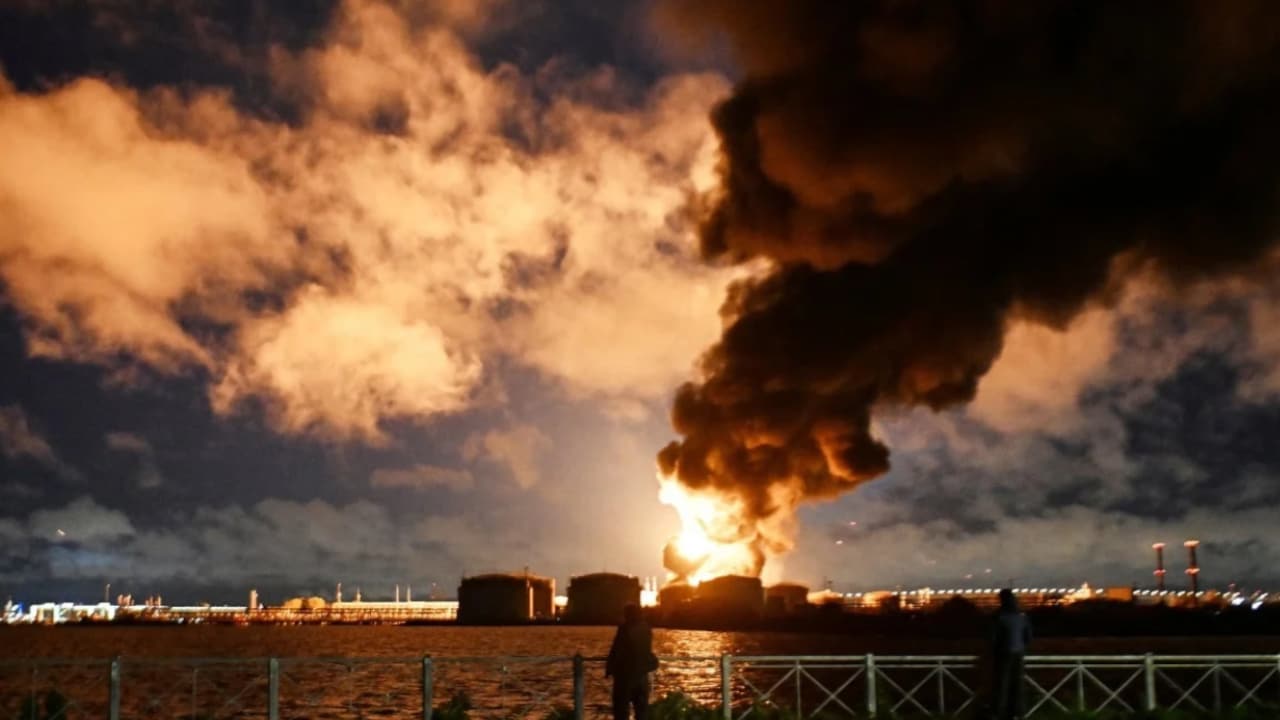
Everyone breathes a sigh of relief the moment the Santa Ana winds drop and the first storm clouds roll over the charred hills of Southern California. The media flashes images of damp ash, declaring the emergency over. It is a comforting narrative. It is also completely wrong.
The lazy consensus is that rain puts an end to fire season. That water heals the landscape. But if you have spent any time tracking post-disaster recovery in the canyons of Ventura or the slopes of the San Gabriel Mountains, you know the exact opposite is true. The fire is merely act one. The rain is act two, and it is infinitely more destructive because nobody respects it until the mud is already crashing through living room windows.
The Physics of Hydrophobic Soil
Water does not soak into a recently burned hillside. It bounces off it.
When chaparral and brush burn at extreme temperatures, organic matter vaporizes and condenses into a waxy, water-repellent layer just beneath the surface of the soil. This condition is known as hydrophobicity. Instead of a sponge ready to absorb winter storms, the mountain turns into a sheet of Teflon.
When standard rainfall hits an unburned slope, roughly twenty to thirty percent runs off immediately, while the rest infiltrates the root systems, stabilizing the earth. When rain hits a burned slope with hydrophobic soil, runoff rates skyrocket toward one hundred percent. A modest downpour that would normally produce a pleasant afternoon puddle in a suburban driveway suddenly transforms into a high-velocity slurry of water, boulders, and ash barreling downhill at thirty miles per hour.
We obsess over flame lengths and ember drops during red flag warnings, completely ignoring the geotechnical mechanics of debris flows that follow. Debris flows do not just damage property; they obliterate infrastructure with the force of a freight train. A cubic yard of mud weighs roughly two thousand pounds. When thousands of cubic yards detach simultaneously from a denuded ridge, concrete retaining walls do not stand a chance.
Dismantling the Myth of the Quick Recovery
Municipal leaders love to talk about reseeding efforts and sandbags as if they are silver bullets. They hand out burlap sacks at local fire stations and tell residents to line their garage doors. It is security theater.
Sandbags might deflect a trickle of street runoff, but they are entirely useless against a true hyper-concentrated debris flow driven by heavy precipitation rates. Relying on sandbags during a post-wildfire storm is like trying to stop a charging bull with a picket fence.
The real problem lies in our collective refusal to view wildfire and mudslides as a single, continuous hydrological event. We treat them as separate administrative crises handled by different agencies with different budgets and entirely disjointed timelines. Fire departments pack up their hoses and hand crews demobilize just as the geological clock starts ticking toward disaster.
Consider the mathematics of timing. Intense rainfall rates exceeding half an inch per hour on a severely burned basin are all it takes to trigger catastrophic debris flows. Yet, evacuation warnings for rain events rarely carry the same psychological weight as evacuation orders for active fire. People smell smoke and run. People hear rain on the roof and go to sleep, assuming the danger has passed. That cognitive bias is lethal.
The Engineering Reality Check
Mitigating post-fire hazards requires accepting a brutal truth: you cannot engineer your way out of gravity with temporary fixes.
Catch basins, debris racks, and channel clearings help, but they are finite. During major burn scar events, basins fill to capacity within the first twenty minutes of a storm. Once those basins choke on silt and boulders, subsequent runoff bypasses containment entirely and floods residential grids.
I have watched millions of dollars in emergency mitigation wash away in a single thirty-minute cloudburst because the scale of the watershed response was mismatched to the scale of the destruction above it. You cannot manage a mountain-scale hydrological catastrophe with neighborhood-scale solutions.
The honest approach demands managed retreat, aggressive zoning restrictions in high-risk alluvial fans, and permanent retrofitting of civil infrastructure to handle double the historical discharge rates. Instead, we rebuild the exact same houses in the exact same hazard zones, slap on a fresh coat of stucco, and wait for the next atmospheric river to test our collective amnesia.
The Unspoken Trade-Off
Every human choice involving geography is a trade-off. People move to the foothills of Southern California for the views, the seclusion, and the proximity to nature. But nature in this region is volatile by design. It is a dynamic ecosystem driven by cyclical fire and catastrophic erosion.
By suppressing fires for a century, we created artificial fuel loads that guarantee when fires do happen, they burn hotter and sterilize the earth more completely than historical baselines ever did. That hyper-sterilization creates the very hydrophobic conditions that turn normal winter storms into geologic battering rams.
We engineered our own vulnerability through fire suppression, and now we compound it through willful ignorance of post-fire hydrology.
Stop celebrating the first rainstorm as salvation. The clouds gathering over the burn scars are not putting out the fire; they are finishing the job.