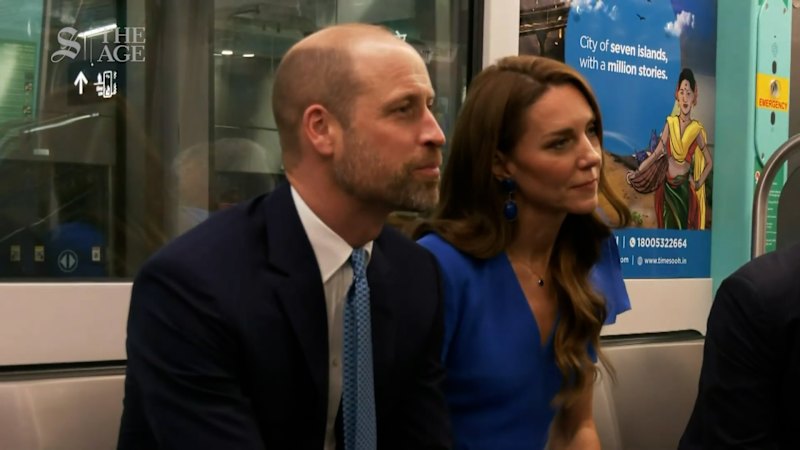
When members of the Rajasthan Royals boarded the Mumbai Metro ahead of their Indian Premier League fixture at Wankhede Stadium, local commuters pulled out their phones and turned a routine transit trip into a viral social media spectacle. The team chose the suburban rail network over their standard fleet of luxury coaches to bypass Mumbai's notorious evening gridlock and avoid severe delays caused by ongoing coastal road and infrastructure construction along the Western Express Highway.
To casual observers scrolling through Instagram reels, seeing international cricket stars standing beneath fluorescent train lights next to office workers looks like a charming, spontaneous slice-of-life moment. It was not spontaneous. In the hyper-managed ecosystem of modern franchise cricket, no multimillion-dollar athlete steps onto public transportation without months of logistical planning, security clearances, and brand strategy alignment. The viral clip was the visible tip of a massive operational iceberg involving urban infrastructure bottlenecks, strict IPL anti-corruption protocols, and the constant battle for digital fan engagement. For a closer look into similar topics, we suggest: this related article.
The Brutal Reality of Mumbai Matchday Traffic
Anyone who has covered cricket in Mumbai over the last two decades knows the geography of the city is actively hostile to rigid broadcast schedules. The Wankhede Stadium sits at the southern tip of the Mumbai peninsula in Churchgate, a heritage precinct bordered by the Arabian Sea and narrow arterial roads. Meanwhile, most visiting franchises stay in five-star properties clustered near the international airport in Andheri or along the Bandra-Kurla Complex corridor, roughly twenty to twenty-five kilometers north.
On a clear Sunday morning, that drive takes forty minutes. On a weekday evening during rush hour, when the gates open for an IPL night match, the same stretch transforms into a parking lot. To get more context on this topic, comprehensive analysis can be read at Bleacher Report.
Over the past several years, simultaneous construction projects across the city have choked the traditional north-south corridors. Work on the Mumbai Coastal Road, upgrades to the Western Express Highway, and the expansion of underground metro lines have narrowed lanes and created unpredictable bottlenecks. A single stalled truck near Worli or Mahim can add ninety minutes to a commute. For an IPL franchise, arriving ninety minutes late is not merely an inconvenience. It is a breach of tournament regulations.
The Board of Control for Cricket in India enforces strict matchday arrival windows. Teams must be inside the stadium perimeter well before the toss to complete warm-ups, fulfill mandatory broadcaster interviews, and pass security sweeps. Missing that window triggers heavy financial penalties and disrupts live television programming schedules worth billions of dollars.
When team operations managers run the numbers on a 5:00 PM departure from the northern suburbs to South Mumbai, the road route becomes an unacceptable gamble. The Mumbai Metro, specifically the elevated corridors connecting the western suburbs toward the city center, runs on a dedicated grade-separated track completely immune to street-level chaos. What takes two hours in a luxury Volvo bus takes less than forty minutes on a metro rake.
Inside the Logistics of Moving Million-Dollar Assets
Putting twenty-five elite athletes, coaching staff, and heavy kit bags onto a public commuter train requires surgical precision. You do not simply hand Sanju Samson or Jos Buttler a smart card and tell them to tap through the turnstile during peak evening rush.
Franchise logistics teams coordinate directly with the Mumbai Metro Rail Corporation and local law enforcement days before the journey. Every detail is mapped out down to the specific train coach and platform entry gate.
- Kit Separation: Players never carry their massive cricket coffins onto public transit. The heavy equipment trucks leave the team hotel hours earlier, taking the slow road route directly to the Wankhede loading bays while the players travel light with only small personal backpacks.
- Perimeter Control: Private franchise security works alongside the Maharashtra Security Force to establish a moving buffer zone. Plainclothes officers board the specific coach ahead of the players to clear space and monitor entry points at intermediate stations.
- Timing the Gaps: Operations managers study ridership patterns to hit the brief lulls between major commuter waves, ensuring the train is crowded enough to look authentic on camera without posing a crushing hazard.
The financial stakes inside that single metro carriage are staggering. Between retention fees and auction prices, the combined valuation of the players standing near those stainless-steel handrails easily crosses fifty crore rupees. A twisted ankle caused by a sudden lurch of the train or an overzealous fan lunging for a selfie could derail an entire season. Team physiotherapists and strength coaches weigh those physical risks against the physiological toll of sitting cramped inside a stationary bus for two and a half hours before a high-intensity T20 match.
Sitting in traffic stiffens hip flexors and drains mental energy. Standing or sitting upright on a fast-moving, air-conditioned train keeps the athletes fresh and preserves their pre-game routine.
The Anti-Corruption Hurdle Nobody Mentions
While fans focus on the novelty of seeing cricketers in public, security directors worry about the BCCI Anti-Corruption Unit. In franchise cricket, the integrity of the game relies heavily on controlling who has access to players in the hours immediately preceding a match.
Under standard tournament protocols, teams operate inside tightly sealed bubbles. Hotel floors are locked down, team buses are swept for listening devices, and drivers are vetted months in advance. Stepping onto a public metro train punches a temporary hole in that perimeter.
In a public carriage, an unknown individual can stand three feet away from a starting bowler and strike up a casual conversation. To satisfy anti-corruption guidelines, the franchise's designated integrity officer must accompany the squad throughout the transit. Every interaction is observed, and players are briefed beforehand to keep exchanges polite, brief, and strictly surface-level. They cannot accept food, drinks, or unfamiliar items handed to them by passengers, a rule that remains absolute even when surrounded by smiling fans offering local snacks.
This regulatory friction is why teams only use public transit when road conditions leave them with no viable alternative. The paperwork and security manpower required to clear a twenty-minute train ride often exceed the effort needed to manage a standard police-escorted motorcade.
Why Viral Transit Clips Are Marketing Gold
Once the logistical necessity is established, the franchise's digital media team takes over. Modern IPL teams operate as year-round content studios, and their primary currency is organic reach.
Traditional stadium footage is tightly restricted by broadcast rights holders. Franchises cannot simply post live match clips on their social channels without running into copyright strikes from the official television and streaming networks. Behind-the-scenes travel content, however, belongs entirely to the team.
Putting players on the Mumbai Metro delivers a massive public relations dividend that no paid advertising campaign can replicate.
- Humanizing Superstars: Elite cricketers spend most of their lives behind tinted glass, five-star lobby doors, and stadium boundary ropes. Seeing them hold onto overhead straps and laugh with daily wage earners strips away that isolation and builds immediate emotional affinity with local audiences.
- Cross-Market Appeal: Even though Rajasthan Royals represent Jaipur, Mumbai is the commercial capital of Indian cricket. Capturing the imagination of Mumbai commuters generates massive engagement across national sports feeds, boosting sponsor visibility on the players' travel kits.
- Earned Media Multiplication: Mainstream news outlets, radio stations, and regional television channels pick up the vertical phone videos within minutes, giving the franchise's title sponsors hours of free airtime without spending a single rupee on media buying.
Look closely at the videos released from the ride. The framing is clean, the sponsor logos on the training jerseys are clearly visible, and the tone is upbeat. The team's embedded videographers are positioned at specific angles to capture both the players' reactions and the genuine surprise of the commuters around them.
The Historical Precedent in Global Sport
Rajasthan Royals are not the first franchise to trade luxury coaches for municipal rail, nor will they be the last. Across global sports, teams based in congested megacities routinely turn to subways when surface streets collapse.
In New York, players from both the Yankees and the Mets have famously taken the 7 Train or the 4 Train to make first pitch when accidents gridlocked the Major Deegan Expressway. During the 2012 London Olympics, several high-profile athletes abandoned official Olympic lane buses for the London Underground to guarantee on-time arrivals at venues in Stratford. In Tokyo, domestic baseball stars regularly utilize the bullet train and local commuter lines because the rail network is vastly superior to highway travel.
What separates the Indian Premier League from these Western examples is the sheer density of celebrity culture in India. A baseball player in a cap and sunglasses can ride the New York subway largely unbothered. An Indian cricket star in full team kit cannot walk ten feet in Mumbai without triggering a crowd surge.
That difference makes the Mumbai Metro experiment a delicate balancing act. It works precisely because it remains a rarity. If every IPL team started taking the metro before every game at Wankhede, the novelty would evaporate overnight, replaced by dangerous platform overcrowding and impossible security demands for the transit police.
The Shifting Infrastructure of Indian Cricket
The sight of an IPL squad commuting by train highlights a deeper structural reality about urban India. For decades, sports infrastructure and city planning operated in separate silos. Stadiums were built in historic downtown districts, while hotels and airports expanded outward into the suburbs.
As Mumbai's metro network continues to expand—particularly with the rollout of underground corridors connecting Colaba, Bandra, and SEEPZ—public rail is rapidly becoming the most reliable artery in the city. The old model of moving VIPs via siren-blaring motorcades is losing its effectiveness against sheer traffic volume. Even a police pilot vehicle cannot part four lanes of bumper-to-bumper cars that have nowhere to pull over.
Franchise operations managers are quietly rewriting their playbooks to reflect this new urban geography. Pre-season scouting now includes mapping metro stations alongside hotel proximity and practice net facilities. When the tarmac freezes over in Mumbai, the fastest route to the crease runs on steel rails.