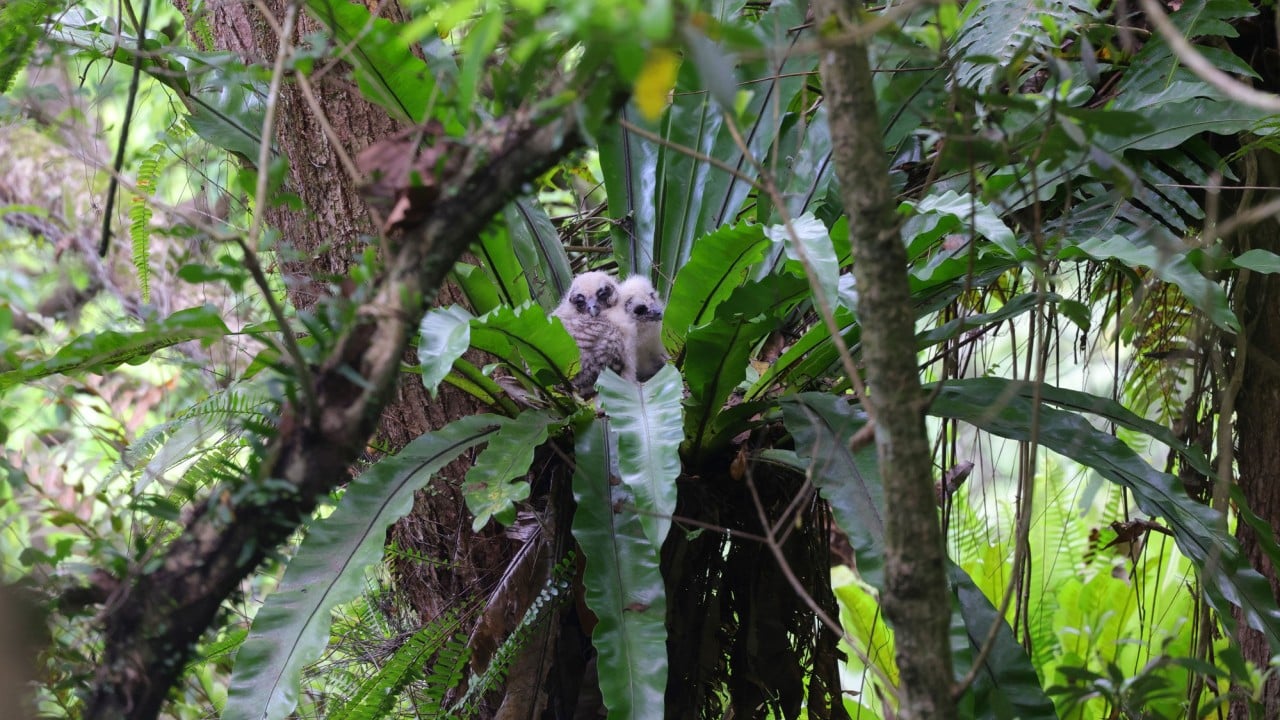
Two fluffy white chicks with sleepy eyes just caused a massive stir in the concrete jungle.
Wildlife monitors at Kadoorie Farm and Botanic Garden (KFBG) in Tai Po spotted the pair of rare Brown Wood Owl chicks nestled high in a Bird's nest fern on a camphor tree. They watched from a distance as the balls of fluff grew into healthy young raptors and successfully fledged. Learn more on a connected topic: this related article.
It sounds like a pure conservation victory. But the truth is much more complicated.
While the internet celebrates the rare victory, the chaotic aftermath at the nature reserve exposes a glaring disconnect between local wildlife appreciation and actual environmental ethics. Further reporting by Al Jazeera delves into comparable perspectives on the subject.
The Crowds and the Shut Down
Shortly after KFBG shared news of the breeding milestone, scores of birdwatchers and amateur photographers flooded the reserve. They carried massive long-lens cameras and crowded the area, desperate to capture a glimpse of the elusive family.
The situation spiraled fast. Visitors started pushing boundaries, prompting serious concerns about disturbing the vulnerable fledglings. The parent owls were already stressed, fiercely driving away a predatory Red-billed Blue Magpie to protect their young. They didn't need a wall of humans clicking shutters and tracking their every move.
KFBG had to take drastic action. They completely shut down the access road leading to the nesting site and wiped their original photo post from social media. Staff even issued explicit warnings against toxic behaviors like using laser beams or recorded owl hooters to bait the birds into view.
If you love nature, you don't crowd it out of its own home.
The reserve handled the backlash beautifully, reminding everyone that animal welfare always beats a good photo opportunity. Disappointed photographers were told they could visit Woody, a captive Brown Wood Owl living at the site's raptor sanctuary, instead of stalking a wild family.
Why These Chicks Matter
To understand why people went crazy over these birds, you have to realize just how rare the Brown Wood Owl (Strix leptogrammica ticehursti) is in Hong Kong. They are large, striking nocturnal predators with massive dark eyes, zero ear tufts, and a deep, ghostly four-note call that can chill you to the bone.
They sit right at the top of the nighttime food chain. That means they are excellent indicators of forest health.
- Habitat issues: These owls need mature, dense forests with old trees to nest.
- Scarcity: Only about four active breeding sites have ever been mapped across the entirety of Hong Kong.
- The historical gap: While historical records showed juveniles popping up occasionally, detailed observations of local adults successfully incubating eggs and raising young are incredibly rare.
This specific pair actually bred at KFBG last year too. Seeing them return and successfully rear two healthy chicks means the local hillside forest is finally maturing into a functional ecosystem. It proves that if you leave a forest alone long enough to heal, the apex predators will return.
The Bigger Conservation Battle
Hong Kong has a surprising amount of green space, but its trees are relatively young. Decades of historical logging and wartime deforestation wiped out the ancient canopy. Most current woodlands are secondary forests, meaning the trees aren't old enough to naturally form the large hollows that owls crave.
Because of this housing shortage, local owls often resort to risky behavior. Collared Scops Owls have been caught trying to nest in hollow tree roots right on the ground, leaving their eggs completely vulnerable to snakes and stray dogs.
The Brown Wood Owls at KFBG got lucky by finding a massive Bird's nest fern growing high on a camphor tree, which acted as a secure natural cradle.
We can't just rely on luck. If we want to see more raptor success stories, the next step is clear. Local conservationists and park managers need to scale up the deployment of heavy-duty, predator-proof nest boxes in secondary forests. This bridges the gap while our forests take the next fifty to one hundred years to age naturally.
If you want to help, support local reforestation efforts and keep your distance when wildlife encounters happen. Stay on designated trails, never share live coordinates of nesting birds online, and leave the laser pointers at home. Let the birds be wild.


