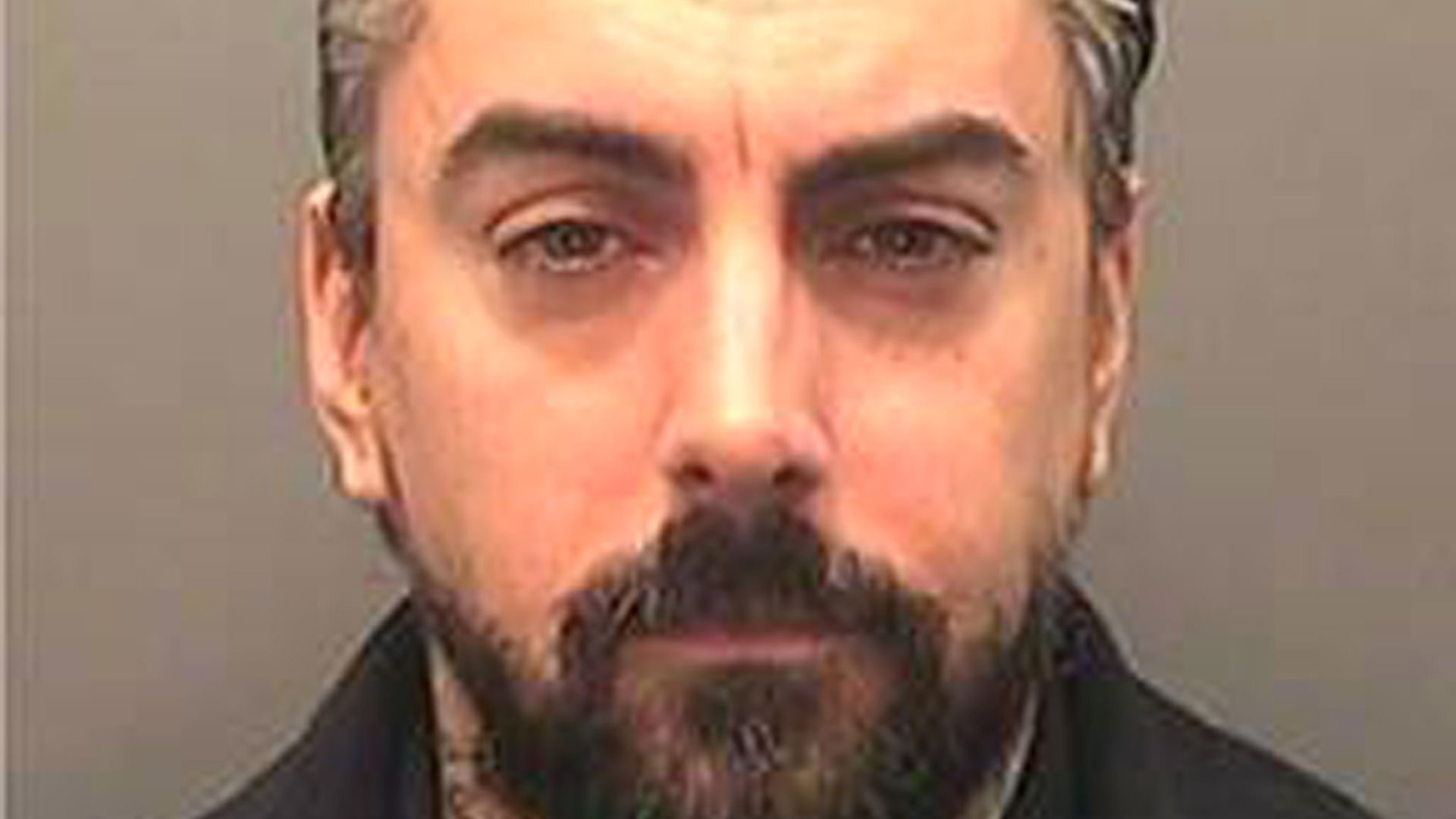
The air inside a high-security prison doesn't circulate; it stagnates. It carries the scent of industrial floor wax, bleached laundry, and a low-frequency hum of collective anxiety that never truly shuts off. In this environment, reputation is the only currency that doesn't depreciate. But for Ian Watkins, the former frontman of Lostprophets, reputation is a terminal illness.
He was once the voice of a generation’s angst, a man who commanded festival stages and saw his face plastered on the bedroom walls of teenagers across the globe. Now, his name is a shorthand for a specific kind of darkness that even the most hardened criminals find stomach-turning.
This isn't a story about redemption. Some debts are too heavy for the scales of human forgiveness. Instead, this is an autopsy of a "last chance" played out in the claustrophobic theater of the British justice system, where a man already buried alive by his own depravity narrowly escaped a physical grave.
The Silence of the HMP Wakefield Infirmary
Wakefield is known colloquially as "Monster Mansion." It houses the individuals the state has decided are too dangerous, or too hated, to exist anywhere else. In August 2023, the silence of the wing was shattered.
Imagine the scene. It isn't like the movies. There is no slow-motion buildup. There is only the frantic scuffle of boots on linoleum, the wet thud of a makeshift blade meeting flesh, and the sudden, overwhelming realization that a life is leaking onto the floor. Watkins was cornered in his cell by three fellow inmates. They didn't want his money. They didn't want his food. They wanted the grim satisfaction of erasing a man whose crimes against the innocent had made him a target with a permanent "X" on his back.
He was stabbed. Repeatedly. For hours, as the court later heard, he was held hostage, a terrifying eternity where the roles had flipped. The man who had once been the predator was now the prey, facing the sharpened edges of a justice that exists outside the rule of law.
When the guards finally breached the room, they found a scene that looked more like a slaughterhouse than a cell. Watkins was rushed to the hospital. He survived, but the scars—both the jagged lines on his skin and the psychological weight of being a marked man—remained.
The Legal Tightrope
The fallout of that morning landed in a courtroom, a place of wood paneling and dispassionate procedure that felt light-years away from the blood-stained floor of Wakefield. The narrative shifted from the violence of the act to the mechanics of the law.
Richard ‘Skatty’ Prendergast and Stephen ‘Paddy’ Power, both already serving life sentences for their own brutal legacies, stood accused of the attack. They had nothing to lose. When you are already consigned to a life behind bars, the threat of more time carries the weight of a feather.
But the court had to grapple with a different kind of math. How do you protect a man who is arguably the most despised inmate in the country?
The defense argued about "last chances." They spoke of the thin line between punishment and state-sanctioned negligence. If the prison system cannot keep even its most reviled inhabitants safe, the entire structure of the "Monster Mansion" begins to crumble. It is a paradox that the public finds hard to swallow: the more heinous the crime, the more the state must exert itself to ensure the criminal survives to serve their sentence.
A Ghost in the Machine
Watkins appeared via video link during the proceedings. The rock star hair was gone. The bravado had long since evaporated. He looked like a ghost haunting his own life.
There is a specific kind of tension in a courtroom when a victim is also a villain. The jury and the public are forced to hold two conflicting ideas at once. One: the attack was an act of calculated, savage violence that should never happen in a civilized society. Two: the victim is a man who destroyed lives in ways that defy words.
This tension creates a vacuum where empathy struggles to survive. Most people don't want to hear about Watkins’ "last chance." They want to close the book. They want to forget that the voice on those early 2000s records belongs to the man in the video feed.
But the law doesn't have the luxury of emotion. It operates on the cold logic of the "duty of care."
The Invisible Stakes
Why does this matter to anyone outside those prison walls?
It matters because the safety of a prison is the ultimate litmus test for the health of a society. When we decide that certain people are so "bad" that their safety no longer matters, we surrender the moral high ground that separates us from them.
The "last chance" given to Watkins wasn't a gift. It wasn't a gesture of kindness. It was a cold, bureaucratic necessity. It was the system asserting that it, and only it, has the right to determine the length and quality of a man's suffering.
The attackers were given additional years on their sentences. To them, it was a badge of honor, a way to climb the social ladder of the incarcerated world. To Watkins, it was a reminder that every day behind those walls is a gamble. Every corner turned, every meal eaten, every hour of sleep is shadowed by the knowledge that there are people willing to throw their own lives away just to end his.
The music has stopped. The lights have dimmed. All that remains is the slow, grinding machinery of a life spent in a cage, protected by the very people he spent his career rebelling against.
He lives on a razor’s edge. Not because he is a rebel, but because he is a remnant. He is a cautionary tale of how quickly a legacy can turn into a life sentence, and how a "last chance" in the eyes of the law can feel like a lingering death in the eyes of the man holding the blade.
The cell door closes. The hum of the prison returns. The world moves on, leaving a broken man to count the stitches in his skin and the years left on his clock.