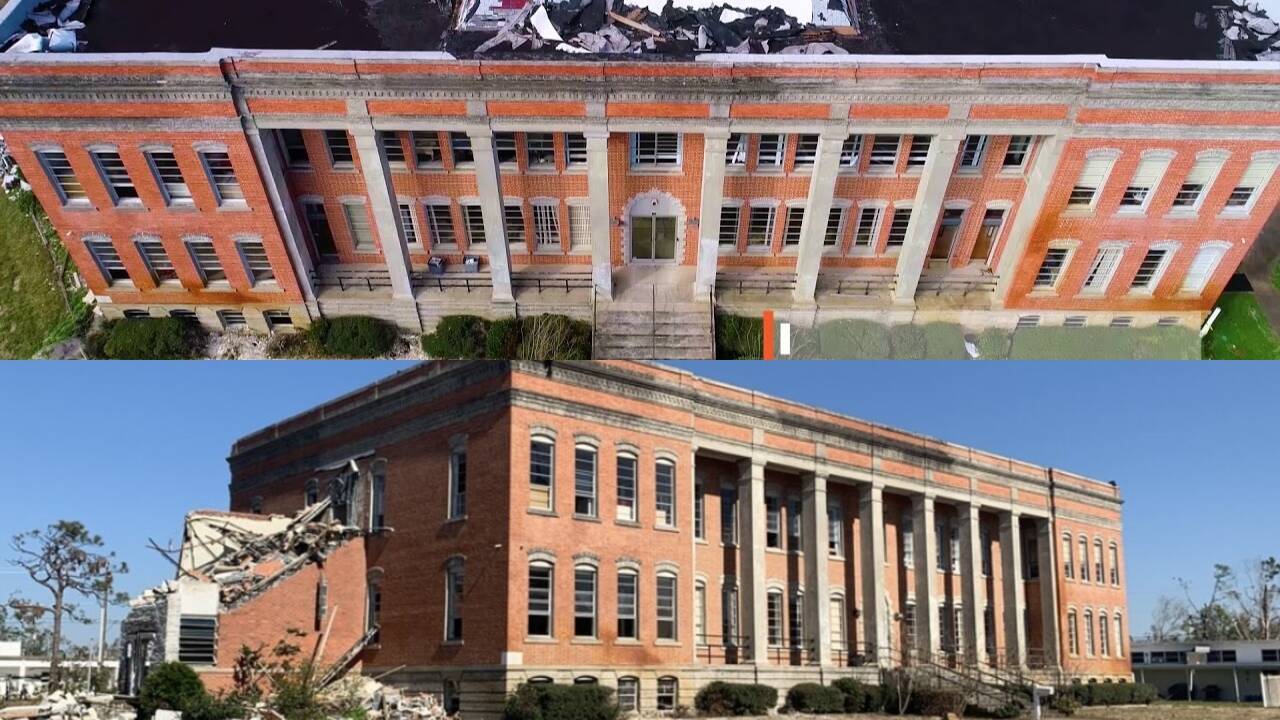
Unused municipal infrastructure represents a distinct failure of capital allocation. When a public asset like a school facility sits vacant for years, the municipality absorbs continuous carrying costs while forfeiting potential community utility and tax base enhancement. The recent initiative to rehabilitate an abandoned Panama City school building provides a case study in asset recovery. Transforming a derelict institutional property into a functional space requires navigating physical degradation, zoning constraints, and capital financing hurdles. Deconstructing this transformation reveals the structural mechanics necessary to convert dead real estate into active public capital.
The Cost Function of Vacancy
Property vacancy is not a neutral state. A dormant building generates an accumulation of direct and indirect expenses that drain municipal resources long after educational operations cease. Understanding the financial drain requires categorizing these liabilities into distinct operational buckets.
- Deferred Maintenance Escalation: Structural integrity degrades exponentially over time. Roof leaks left unattended compromise load-bearing timber and steel, while moisture intrusion initiates mold proliferation that ruins interior finishes.
- Security and Insurance Overhead: Vacant structures attract vandalism, unauthorized habitation, and liability claims. Municipalities must fund perimeter security, boarding, and specialized commercial property insurance policies that carry steep premiums for unoccupied assets.
- Opportunity Cost of Land: Real estate held off the tax rolls or denied productive use creates a deadweight loss for the local economy. The surrounding commercial or residential area fails to benefit from the foot traffic and community anchor effects typically generated by an active facility.
Mitigating these costs demands an operational pivot from passive holding to active disposition or redevelopment. When a school district abandons a facility due to population shifts or consolidation, holding the property without a clear three-year horizon plan guarantees capital destruction.
Regulatory and Zoning Friction
Redeveloping an abandoned educational site involves complex legal hurdles. Municipal zoning codes typically designate these parcels for public or institutional use. Introducing a commercial, mixed-use, or multi-family residential model requires navigating land-use amendments, public hearings, and environmental impact assessments.
Environmental remediation often represents the primary bottleneck in adaptive reuse projects. Older institutional buildings frequently contain hazardous materials installed during construction eras when regulations permitted substances now classified as toxic.
- Asbestos-Containing Materials: Found in pipe insulation, floor tiles, and ceiling plasters, requiring specialized abatement protocols before demolition or renovation begins.
- Lead-Based Paint: Prevalent in structures built before federal bans, necessitating containment strategies to protect workers and future occupants.
- Environmental Site Assessments: Phase I and Phase II audits must determine whether underground storage tanks or historical chemical use on the grounds contaminated the surrounding soil.
Navigating these regulatory constraints adds months to project timelines. Developers and municipal planners must price this friction into the initial feasibility models to avoid capital shortfalls midway through execution.
Capital Stacking and Financing Mechanisms
Revitalizing a derelict school building rarely relies on a single funding source. The high cost of remediation and structural retrofitting necessitates a capital stack that blends public incentives with private investment.
Municipalities often utilize tax increment financing or specialized economic development grants to subsidize the early-stage risk of site preparation. Private developers inject equity in exchange for long-term lease agreements or property ownership, contingent upon meeting specific community benefit benchmarks.
The underwriting process for these transactions hinges on net operating income projections or quantifiable public value metrics. Because traditional lenders view adaptive reuse of historical or abandoned public properties as high-risk ventures, capital structures must incorporate credit enhancements or public-private risk-sharing agreements to achieve financial closure.
The Operational Execution Phase
Once capital is secured and regulatory approvals are finalized, execution shifts to architectural transformation. Converting a structure designed for single-use classrooms into a modern, multi-purpose facility requires radical interior reconfiguration while preserving the structural shell.
Floor plates in older schools often feature long, double-loaded corridors flanked by rigid cellular rooms. Modern spatial requirements favor open-plan layouts, collaborative zones, and flexible mechanical systems. HVAC, electrical, and plumbing infrastructures must be completely stripped and replaced to meet contemporary energy efficiency codes.
Project managers must monitor supply chain variables and labor availability to prevent budget overruns. Adaptive reuse projects carry higher variance in construction costs than greenfield developments because hidden structural anomalies inevitably emerge once interior walls are opened.
Strategic Asset Disposition Matrix
Phase 1: Asset Audit
- Physical condition assessment
- Title and zoning verification
- Environmental liability screening

Phase 2: Capital Structuring
- Public grant allocation
- Private equity sourcing
- Tax incentive utilization

Phase 3: Execution and Delivery
- Hazardous material abatement
- Interior spatial reconfiguration
- Mechanical systems overhaul
Execute a phased post-occupancy evaluation six months after facility relaunch to measure utility costs, spatial utilization rates, and community feedback against initial baseline projections. Adjust ongoing property management protocols based on empirical performance data to ensure long-term operational sustainability.