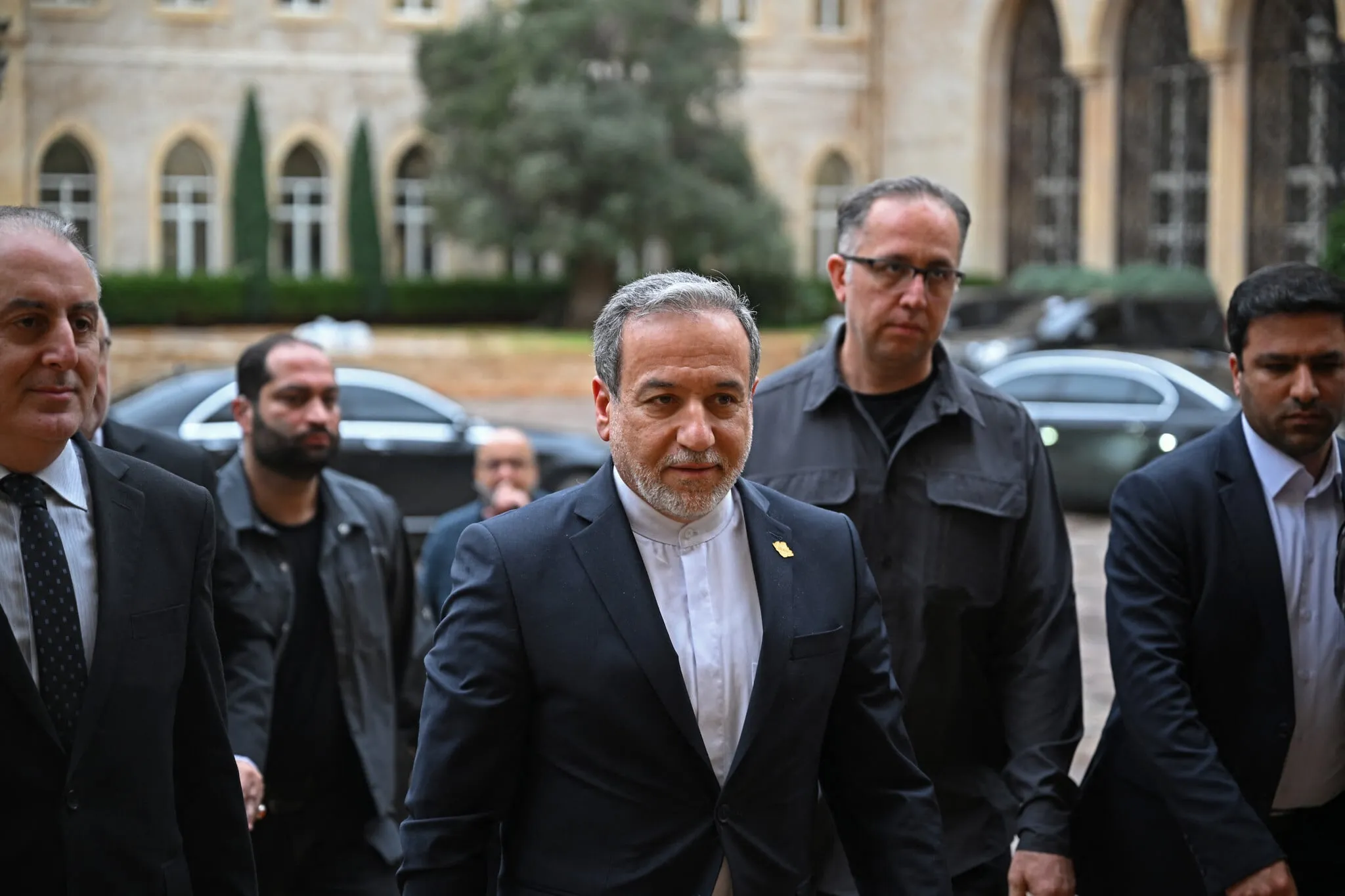
The facade of a unified Iranian government has finally cracked. President Masoud Pezeshkian and Parliament Speaker Mohammad Bagher Ghalibaf are reportedly moving to purge Foreign Minister Abbas Araghchi, a diplomat once considered the administration’s most vital link to the West. The charge is not incompetence, but something far more lethal in the halls of Tehran: "subservience." Araghchi is accused of bypassing the presidency to take direct orders from the Islamic Revolutionary Guard Corps (IRGC), effectively turning the Ministry of Foreign Affairs into a satellite office for the military elite.
This is not a simple cabinet reshuffle. It is a desperate attempt by the executive branch to reclaim the right to govern a nation currently sliding into a "complete political deadlock." As the war with the United States and Israel ravages the Iranian economy, the struggle for the steering wheel of the state has moved from the shadows into a public, high-stakes brawl.
The Puppet Master in the Shadows
At the center of this mutiny is Ahmad Vahidi, the IRGC commander who has emerged as the de facto sovereign of Iran’s wartime policy. Sources indicate that for the past several weeks, Araghchi has acted less like a cabinet minister and more like Vahidi’s personal aide. This shadow chain of command was most visible during the botched nuclear negotiations in Pakistan. While Pezeshkian believed his Foreign Minister was representing the government’s 10-point peace plan, Araghchi was allegedly coordinating every move with Vahidi, often failing to brief the President entirely.
Vahidi’s logic is cold and pragmatic. He has explicitly declared that because of the "critical wartime situation," all sensitive managerial posts must be directly controlled by the Guards. This is a soft coup under the guise of national security. By co-opting Araghchi, the IRGC ensured that even when the "pragmatists" sat across the table from American diplomats, the words they spoke were scripted in the barracks, not the presidential palace.
The Islamabad Betrayal
The friction reached a breaking point during the late April talks in Islamabad. Speaker Ghalibaf, who had initially led the negotiating team, was forced to step back after a internal reprimand regarding his attempt to include nuclear energy issues in the package. Araghchi stepped into the void, traveling to the Pakistani capital alone on April 24.
However, the proposal he delivered—a document the U.S. ultimately rejected—was fundamentally compromised. Earlier in April, Araghchi had shown a surprising willingness to discuss scaling back support for the "Axis of Resistance," including Hezbollah. This moment of diplomatic flexibility was met with a swift and brutal correction from the Supreme National Security Council and IRGC hardliners. By the time Araghchi reached Islamabad, he was a man under heavy surveillance. U.S. Vice President JD Vance later noted that the Iranian team appeared to lack any real authority to finalize a deal, describing a delegation that had to check back with Tehran for every syllable.
A Ghost President in a Failing State
Masoud Pezeshkian is finding out the hard way that winning an election does not mean winning power. The President has reportedly told close associates that he is stuck in a "deadlock," stripped even of the authority to replace officials killed in the ongoing conflict. His warnings about the economy are being ignored. Pezeshkian recently cautioned that without a ceasefire, the Iranian financial system would face total collapse within a month.
The signs of that collapse are already visible on the streets:
- ATM Failures: Many machines in major cities are out of cash or physically inaccessible.
- Banking Disruptions: Online services for Bank Melli and other major lenders are failing intermittently.
- The Hormuz Crisis: On April 17, Araghchi announced the Strait of Hormuz was "completely open" to commerce. Within 24 hours, the IRGC Navy attacked commercial vessels and declared the strait closed to all traffic, a direct and public humiliation of the Foreign Ministry.
This disconnect is not just embarrassing; it is dangerous. It signals to the world that Iran has two foreign policies: the one it advertises to the UN, and the one it executes with missiles.
The Ghalibaf Paradox
The most telling sign of the IRGC’s overreach is the alignment of Mohammad Bagher Ghalibaf with Pezeshkian. Ghalibaf is no liberal reformer; he is a former IRGC commander himself. Yet, even he sees the danger of a military that operates entirely outside the legislative and executive framework. When a man like Ghalibaf joins a "moderate" president to call for a minister's ouster, it suggests the IRGC has pushed too hard, threatening the very institutional stability that keeps the Islamic Republic afloat.
The refusal of hardline lawmakers to sign a parliamentary statement backing the negotiating team on April 27 was the final straw. It proved that the "Deep State" in Tehran no longer trusts the formal state to even pretend it is in charge.
The Cost of Subservience
If Araghchi is dismissed, it will be a rare moment of presidential assertion. But it may also be too little, too late. The IRGC has already signaled that it views the diplomatic process merely as a "strategic game" to buy time, not a path to a solution. By turning the Foreign Minister into a messenger for the military, they have effectively burned the only bridge Tehran had left to the international community.
The tragedy of Araghchi is the tragedy of the Iranian technocrat. He attempted to navigate a middle path and ended up owned by the very force he was supposed to balance. If Pezeshkian cannot remove a minister who takes orders from a general, he is no longer a president. He is a spectator.
The Iranian government is now a house divided against itself, and the floor is starting to give way.


