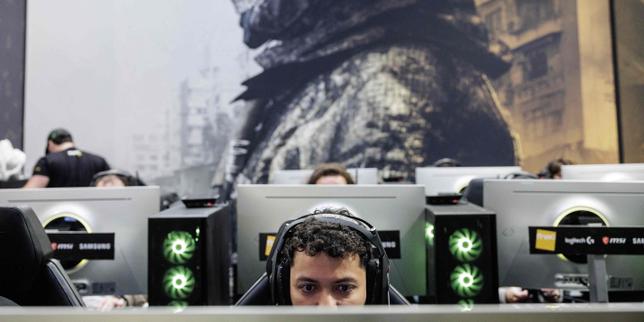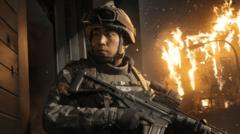
Activision confirmed it will remove real-world footage of the 2022 Seoul Halloween crowd crush from promotional materials for Call of Duty after facing intense public backlash from South Korean players and global observers. The clip, which appeared in a live-action trailer designed to evoke real-world global chaos, drew immediate condemnation for trivializing a disaster that killed 159 people in Itaewon. While the publisher moved quickly to scrub the offending frames and issue an apology, the incident exposes a much deeper structural failure in how billion-dollar gaming franchises source, vet, and weaponize real human suffering for marketing hype.
How Real Tragedy Slips Into Triple-A Marketing Pipelines
Modern video game marketing operates on an assembly line. When a massive publisher like Activision commissions a live-action trailer, the work rarely happens entirely inside the primary game studio. Instead, creative briefs are handed off to external ad agencies, third-party production houses, and freelance editors working under crushing deadlines. Learn more on a connected issue: this related article.
The Itaewon crowd crush footage did not end up in a Call of Duty trailer because a creative director sat in a boardroom and maliciously decided to exploit a South Korean national tragedy. It happened because of stock footage blind spots.
Editors building fast-paced "sizzle reels" or live-action mood pieces routinely pull thousands of clips from commercial licensing libraries like Getty Images, Shutterstock, or Pond5. They search using broad, emotional keywords. Terms like "panic," "crowd," "emergency," "night chaos," or "police lights" return tens of thousands of unlabeled or poorly tagged news clips from around the globe. Further reporting by Wall Street Journal explores similar perspectives on the subject.
An editor sitting in Los Angeles or London, cutting a two-minute video at three in the morning on a tight turnaround, sees a chaotic nighttime street scene with flashing red and blue lights and dense crowds. Without regional context or rigorous metadata verification, that clip gets dropped into a timeline, color-graded, and overlaid with dramatic sound design.
Once the rough cut reaches executive approval, the review process focuses almost entirely on brand safety metrics that matter to Western shareholders. Reviewers check for competitor logos, unauthorized music, clear depictions of extreme gore, or accidental leaks of unannounced gameplay mechanics. Nobody in that approval chain is running reverse-image searches on three-second B-roll clips to verify the geopolitical or humanitarian context of a crowd scene filmed halfway across the world.
The Thin Line Between Gritty Realism and Exploitation
Call of Duty has built an empire on blurring the line between entertainment and geopolitical reality. Since the franchise pivoted from World War II to modern warfare in 2007, its marketing playbook has relied heavily on borrowed gravitas. Trailers regularly incorporate real news broadcasts, actual military terminology, and documentary-style cinematography to convince players that what they are buying is not just an arcade shooter, but an authentic reflection of modern conflict.
This aesthetic strategy carries an inherent trap. When a entertainment product uses real-world trauma as wallpaper, it relies on a delicate illusion of distance. Western audiences often consume footage of distant conflicts or civil unrest as abstract texture rather than lived human grief.
The Itaewon disaster shattered that distance immediately. On October 29, 2022, hundreds of thousands of young people gathered in Seoul's popular nightlife district for the first unrestricted Halloween celebrations since the COVID-19 pandemic. A deadly crowd surge trapped thousands in a narrow, sloping alleyway, resulting in 159 deaths and nearly 200 injuries. The event remains an open wound in South Korean society, sparking years of political fallout, criminal negligence trials, and ongoing grief for thousands of families.
When South Korean gamers spotted those exact emergency scenes repurposed to sell a video game, the reaction was visceral. To them, it was not generic "chaos B-roll." It was the night their friends, classmates, or siblings died on live television.
Why Localization Teams Are Ignored Until Crisis Hits
The most frustrating aspect of this failure is how easily it could have been prevented. Activision Blizzard maintains dedicated regional offices, localization teams, and community managers across Asia, including a major presence in South Korea—one of the most lucrative and culturally influential gaming markets on the planet.
Yet in traditional triple-A publishing structures, localization is treated as a post-production assembly step rather than a strategic filter.
Regional teams are routinely handed finished assets days or even hours before global launch with strict instructions to translate the subtitles, adapt the key art typography, and schedule the social media posts. They are rarely brought into the creative development phase to vet raw footage or cultural sensitivities before a trailer is locked.
Had a single South Korean staffer been shown the rough cut of the trailer prior to publication, the footage would have been flagged within seconds. The crisis would never have existed. Instead, the regional team was likely blindsided at the exact same moment as the public, forced into immediate damage control while scrambling to get headquarters in California to wake up and authorize a takedown.
A Pattern of Unforced Errors Across the Industry
Activision is far from the only major entertainment company to stumble into this exact minefield, nor is this even the first time the Call of Duty franchise has faced backlash over real-world historical sensitivity.
Consider the broader industry track record over the past decade:
- Historical Misattribution: In Call of Duty: Modern Warfare (2019), the campaign featured a fictionalized war crime called the "Highway of Death" attributed to Russian forces. In reality, the historical Highway of Death was a 1991 Gulf War incident where American-led coalition forces bombed retreating Iraqi troops. The narrative swap drew sharp criticism from historians and players alike for rewriting real military history to fit a convenient fictional villain.
- Unauthorized Trademarks and Imagery: Multiple shooter franchises have faced lawsuits and forced patches after artists inadvertently pulled real-world insignia, copyrighted artworks, or actual disaster imagery from Google Image searches during crunch periods.
- Disaster Tourism in Marketing: Film studios and game publishers alike have repeatedly been caught using real footage of plane crashes, terrorist attacks, and natural disasters in early teaser trailers, forced to scrub them only after eagle-eyed internet sleuths identify the exact dates and locations of the clips.
In almost every instance, the root cause is identical. Speed and visual impact are prioritized over editorial rigor.
The Economics of Outrage and the Apology Cycle
When these controversies erupt, corporate crisis management follows a rigid, predictable script. First comes silence while executives assess whether the backlash will blow over within a news cycle. When regional outrage threatens to spill over into mainstream Western gaming press—or worse, mainstream financial media—the publisher issues a sterile statement.
The phrasing never varies. The company expresses regret, states that the footage was included unintentionally, confirms it is being removed immediately, and reiterates its respect for those affected.
From a purely financial standpoint, this reactive posture costs almost nothing. Re-editing a digital trailer and replacing the video file on YouTube and social platforms takes a few hours of labor. No physical discs have to be recalled. No game code has to be rewritten. Sales projections for the upcoming title remain largely untouched in North America and Europe, where the vast majority of the audience never even notices the controversy.
However, this calculation ignores the slow erosion of brand trust in key growth markets. South Korea is not a peripheral territory for gaming; it is a cultural tastemaker with immense influence over esports, streaming trends, and mobile expansion. Every time a Western publisher treats Asian tragedies as disposable stock footage, it reinforces a perception of cultural arrogance that alienates both players and local regulatory bodies.
What Meaningful Vetting Actually Looks Like
If major publishers genuinely want to stop embarrassing themselves and hurting affected communities, issuing apologies after the fact is useless. Fixing the pipeline requires changing how creative assets are built and approved before a single frame goes public.
First, publishers must ban unverified news and documentary stock footage from live-action trailers. If a marketing agency wants to depict civil unrest, emergency response, or crowd panic, they have the multi-million-dollar budgets required to hire extras, close down a backlot street, and film synthetic scenes from scratch. Staging a scene eliminates any chance of accidentally broadcasting a real person's worst day on earth.
Second, provenance tracking must become mandatory in post-production. Every single third-party clip dropped into an editing timeline should require a documented metadata sheet verifying the date, location, and event depicted before it can pass into executive review. If an editor cannot verify what happened in a clip, the clip gets deleted.
Third, regional cultural review must happen before picture lock. Global marketing campaigns cannot be designed in a vacuum in Santa Monica or London and simply dropped onto international markets. Regional leads must have veto power during the rough-cut phase, not just translation duties at the finish line.
Until publishers build these guardrails into their production budgets, editors on tight deadlines will keep reaching into the same unlabeled stock libraries, pulling real human tragedy off the shelf to sell virtual warfare.