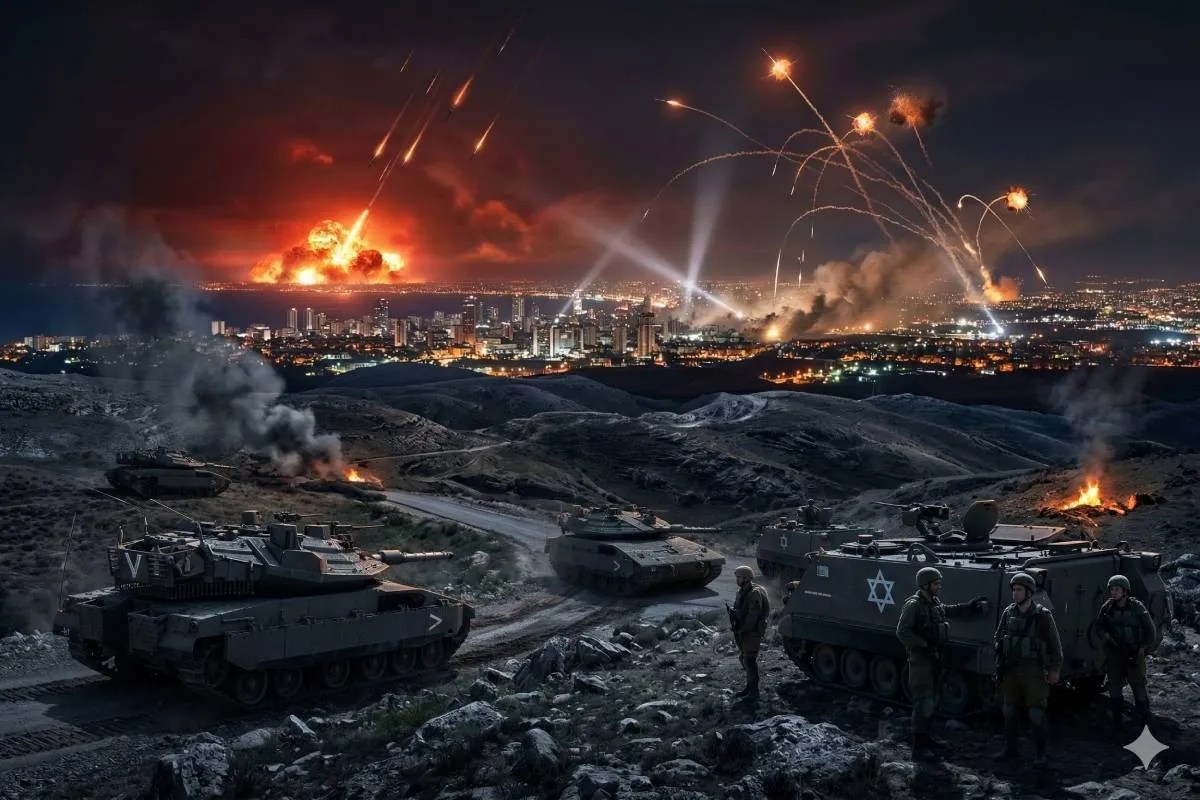
The United States House of Representatives just blinked. In a narrow 212-219 vote on Thursday, lawmakers rejected a resolution that would have forced President Donald Trump to halt his military campaign against Iran. This wasn't just another procedural hiccup in a divided capital; it was a definitive surrender of the one power the Constitution supposedly guards most jealously. By failing to pass the measure, the House effectively handed the executive branch a blank check for a conflict that has already claimed over 1,200 lives and saw the first-ever assassination of a sitting Supreme Leader.
This legislative collapse reveals a grim reality about modern American governance. Despite the frantic rhetoric about "restoring the balance of powers," when the missiles start flying, the collective nerve of Congress dissolves. The rejection of the war powers resolution, following a similar defeat in the Senate, ensures that "Operation Epic Fury" will continue without a formal declaration of war or a clear expiration date.
The Strategy of the Accomplished Mission
House Speaker Mike Johnson stood before cameras this week to defend the administration, offering a narrative that felt jarringly familiar to anyone who remember the early 2000s. He argued that limiting the president’s authority during active hostilities would be "dangerous," simultaneously claiming that the mission is "nearly accomplished." It is a classic pincer movement of political logic: the war is too critical to stop, but too close to victory to worry about.
Defense Secretary Pete Hegseth, however, provided a different timeline behind closed doors. He recently suggested the campaign could extend eight weeks—twice the original estimate. This discrepancy is not an accident. It is a calculated ambiguity that allows the administration to maintain public support while expanding the scope of the mission from "deterrence" to what looks increasingly like orchestrated regime change.
While the White House frames the strikes as a surgical necessity to destroy Iran’s ballistic missile shield, the reality on the ground is far messier. Reports of a strike on an Iranian girls' school that killed more than 170 people have surfaced, leaving the Pentagon "taking a look" while the UN demands answers. This is the friction of war that a 48-hour notification window under the 1973 War Powers Act was never designed to handle.
The Invisible Hand of the Ally
One of the most significant factors ignored by the initial wave of reporting is the unprecedented level of coordination—and pressure—from Jerusalem. In a moment of rare candor, Secretary of State Marco Rubio appeared to admit that the initial strikes were triggered as much by Israeli security requirements as by any "imminent" threat to U.S. soil.
This isn't just about shared interests. It represents a fundamental shift in how the U.S. enters a conflict. Historically, the War Powers Resolution was meant to prevent a president from "stumbling" into war. It did not account for a scenario where the U.S. military functions as the heavy kinetic arm of a regional partner’s strategy. By joining an ongoing Israeli operation already in progress, the Trump administration created a "fait accompli" that made the House vote feel like a choice between supporting the troops or abandoning an ally in the heat of battle.
Why the Anti-War Coalition Fractured
On paper, the resolution should have passed. A bipartisan coalition led by Ro Khanna and Thomas Massie—the same duo that forced the release of the Jeffrey Epstein files—attempted to bridge the populist right and the progressive left. They argued that if the war is worth fighting, it is worth a vote.
But the coalition cracked under the weight of "intellectual cakeism." Voters, and by extension their representatives, want the results of a strong foreign policy—the destruction of nuclear threats and the humbling of adversaries—without the political or economic costs of a formal war.
- The Funding Loophole: The administration is already running through its baseline budget. They will soon need a supplemental appropriations bill to keep the bombers in the air. This is where the real war power lies, yet Congress has shown a historical allergy to using the "power of the purse" to stop a moving train.
- The Veto Shadow: Even if the resolution had passed, Trump had already signaled a veto. For many centrist Democrats and uneasy Republicans, voting "no" was a way to avoid a futile confrontation that would only result in a public lashing from the White House.
- Shifting Justifications: In 2020, the excuse was the "imminent threat" of Qasem Soleimani. Today, the justification is a "collective self-defense" of allies and the preemptive destruction of nuclear infrastructure. By the time the legal debate catches up to the rationale, the target has already been turned to rubble.
The Hollow Authority of Article I
The debate on the House floor was filled with references to the Framers. Representative Jamie Raskin reminded his colleagues that the Constitution was designed to prevent the "temptation" of a single person dragging the nation into blood and debt. But those reminders felt like echoes from a museum.
The 1973 War Powers Resolution, enacted as a check on executive overreach after Vietnam and the secret bombings of Cambodia, has become a tool for theater rather than a mechanism of control. It requires a president to notify Congress within 48 hours of military action. Trump did exactly that, submitting a report that cited "national interests" and "constitutional authority as Commander in Chief." The law asks for a report; it does not demand permission.
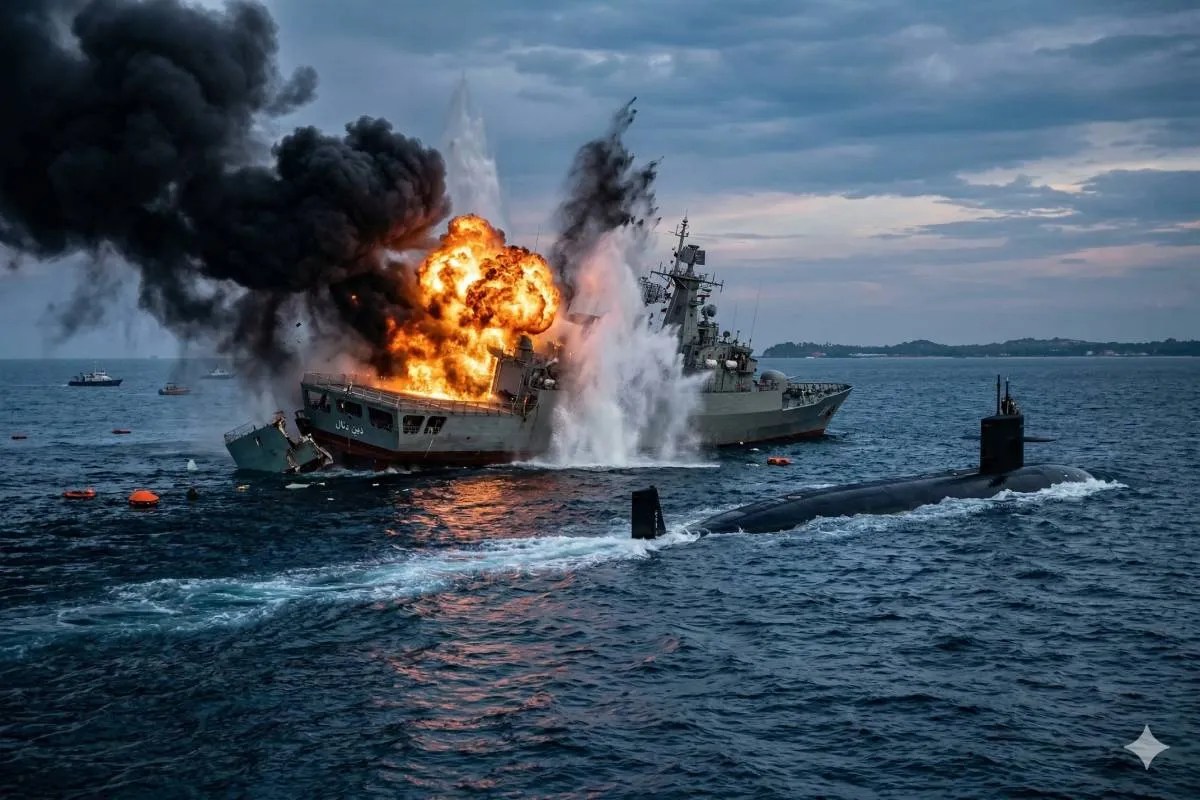
By the time the House gathered to vote, the U.S. had already torpedoed an Iranian warship near Sri Lanka and conducted widespread bombing runs across the Iran-Iraq border. The conflict is no longer a "test" of a strategy; it is the strategy itself.
The failure of this resolution marks the end of a specific era of legislative oversight. We have moved past the point where Congress debates the merits of entering a war. Instead, we have entered a phase where the executive branch initiates the conflict and challenges the legislature to find the courage to stop it. On Thursday, that courage was nowhere to be found.
The bombers are still in the air, the death toll is rising, and the only "check" remaining on the administration is the high cost of a victory that remains stubbornly out of reach.