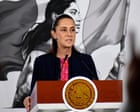
The diplomatic rift between Mexico City and Washington reached a boiling point on Tuesday when Mexican President Claudia Sheinbaum publicly warned US Ambassador Ron Johnson to stop meddling in domestic politics. The immediate spark was an assertive social media post by Johnson, who implied that Mexico was reducing a shared security crisis into a mere political dispute. Sheinbaum fired back during her daily morning press conference, stating bluntly that ambassadors must respect internal political affairs.
Yet, this public spat is merely the surface of a deep structural crisis. The escalation is driven by an unprecedented wave of US legal indictments against active Mexican politicians, uncoordinated American intelligence operations on Mexican soil, and a radical domestic push by Sheinbaum to shield her administration from foreign judicial reach.
The Sovereignty Offensive
For over a year, the Sheinbaum administration played a calculated game of strategic compliance with Washington. Seeking to mitigate threats of US military intervention from Donald Trump, Mexico quietly deployed thousands of troops to its northern border to halt migration, halted oil shipments to Cuba, and extradited nearly 100 cartel figures to the United States.
That pragmatic strategy shattered in April.
A high-stakes raid on a clandestine fentanyl laboratory in Chihuahua state went sideways when it was revealed that CIA operatives were actively participating on the ground without the knowledge or constitutional authorization of the Mexican federal government. The fallout deepened a week later when the US Department of Justice unsealed drug-trafficking indictments against the governor of Sinaloa, Rubén Rocha Moya, along with nine other current and former officials.
Rocha is not just any regional politician. He is a heavyweight within Sheinbaum’s ruling Morena party and a close ally of her political mentor, former President Andrés Manuel López Obrador.
The Pushback From Mexico City
The United States DEA and DOJ are no longer just hunting cartel kingpins. They are aggressively targeting the political infrastructure that allegedly protects them. This shift has backed Sheinbaum into a corner, forcing her to choose between capitulating to Washington or defending the integrity of her political coalition.
She chose defense. Mexico has flatly refused to extradite Governor Rocha, demanding that the United States produce ironclad evidence before any legal movement occurs. To codify this resistance, the Morena-dominated Mexican Congress passed a sweeping constitutional amendment that makes foreign interference explicit grounds to annul domestic election results.
The Strategy Behind the Spat
During a weekend rally commemorating her electoral victory, Sheinbaum went on the offensive, suggesting that the US indictments were not a genuine effort to combat narcotics but rather a coordinated attempt by right-wing American sectors to influence Mexico’s upcoming elections. She took care to separate these actions from the White House itself, blaming deep-state actors and hawkish legislators rather than the US president.
This rhetoric serves a dual domestic purpose.
- Coalescing the Base: By framing the judicial assault on Morena politicians as a violation of national sovereignty, Sheinbaum unites a nationalistic voter base against a historic foreign adversary.
- Preemptive Defense: Labeling US law enforcement actions as political interference allows the Mexican government to dismiss future indictments against other high-ranking officials as biased operations.
The strategy carries immense risk. While it shields the party domestically, it alienates the very US law enforcement agencies that Mexico relies on for intelligence sharing and border security coordination.
The Broken Blueprint of Bilateral Security
The fundamental problem with the current US-Mexico security dynamic is a total breakdown in mutual trust. The United States views Mexican law enforcement as compromised by systemic corruption, while Mexico views American agencies as rogue actors operating with a total disregard for local law.
Consider the dynamic of a typical joint operation. Under previous bilateral frameworks, the DEA would share actionable intelligence with an elite Mexican naval unit, which would then execute the raid. Today, that mechanism is virtually non-functional. Because the US now believes that top-tier state governors and security chiefs are actively leaking information to cartels, Washington has reverted to unilateral action, as seen in the unauthorized Chihuahua raid.
When the US operates unilaterally, it violates Mexican law. When Mexico reacts by shutting down cooperation, the cartels exploit the vacuum. It is a cyclical breakdown that guarantees higher volumes of synthetic drugs flowing north and an unchecked flow of black-market firearms flowing south.
The Limits of Rhetoric
Despite the fierce language originating from the National Palace, Mexico cannot afford a total diplomatic decoupling from the United States. The two nations remain tied by the USMCA trade agreement, and Mexico’s economic stability depends entirely on its status as America's top trading partner.
Sheinbaum's administration is attempting to walk an impossible tightrope. It must project absolute sovereignty to its citizens while maintaining enough back-channel cooperation with Washington to prevent economic retaliation or crippling border closures. Ambassador Johnson’s recent public statements indicate that Washington's patience with this double-game is wearing thin.
The Coming Judicial Storm
The confrontation over Ambassador Johnson's social media post is not an isolated incident. It is the opening salvo of a much larger geopolitical showdown. With US federal prosecutors openly stating that the indictments against Morena officials are just the beginning, more political figures are bound to find themselves in American crosshairs.
Mexico’s new constitutional defenses and public rebukes may temporarily shield its politicians from extradition, but they will not stop the flow of US warrants. As long as Washington treats Mexican political corruption as a direct national security threat to the American public, the traditional diplomatic boundaries between these two neighbors will continue to erode.
The immediate path forward requires an uncomfortable compromise that neither side seems willing to make. Washington must accept that it cannot treat Mexico as an open theater for unilateral law enforcement operations. Concurrently, Mexico City must reckon with the reality that national sovereignty cannot be used as a blanket shield to protect officials tied to organized crime. Until both nations find a way to establish a verifiable, transparent mechanism for vetting public officials and sharing intelligence, the relationship will remain defined by public acrimony and mutual distrust.