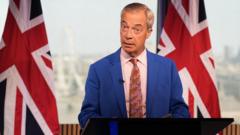
Nigel Farage has resigned as the Member of Parliament for Clacton to force a tactical by-election, a high-stakes gamble designed to freeze dual parliamentary standards investigations into his personal finances before they can issue potentially devastating verdicts. Faced with intense scrutiny over an undisclosed £5 million gift from cryptocurrency billionaire Christopher Harborne and separate undeclared financial benefits from convicted fraudster George Cottrell, the Reform UK leader has weaponised the constitutional machinery of Westminster. By voluntarily vacating his seat and immediately standing for re-election, Farage is attempting to replace legal accountability with a populist mandate.
This is not a sudden departure from public life; it is a calculated pre-emptive strike. Don't forget to check out our earlier coverage on this related article.
Under the rules governing Westminster, the Parliamentary Commissioner for Standards possesses the authority to investigate the conduct of sitting MPs. By stepping down, Farage effectively pauses these inquiries, as the watchdog's jurisdiction primarily applies to active members. If he successfully retains the seat in the upcoming vote, he will argue that his constituents have acted as the ultimate jury, rendering any subsequent regulatory findings irrelevant.
The Watchdog Trap
To understand the timing of this resignation, one must examine the specific threat Farage faced within the House of Commons. The parliamentary standards commissioner was already investigating a £5 million donation from Harborne, received shortly before the 2024 general election. Rules require new MPs to declare significant financial interests covering the twelve months prior to their election. Farage had previously defended the arrangement on LBC, stating the money was unconditional and that he could spend it on luxury items if he chose. If you want more about the context of this, BBC News offers an excellent summary.
The pressure intensified dramatically following disclosures regarding George Cottrell, a long-term ally who served time in a United States federal prison for money laundering conspiracy. Reports revealed that Cottrell funded digital staff for Farage and provided access to an expensive townhouse near Buckingham Palace.
The danger for Farage was not merely a public relations issue. A serious breach of parliamentary declaration rules carries the risk of a suspension from the House of Commons. If a suspension meets or exceeds ten sitting days, it automatically triggers the Recall of MPs Act. This mechanism allows constituents to sign a petition that forces a by-election.
Farage knew the trap was closing. A forced recall by-election, occurring after a damning official report, would place him on the defensive. By initiating the vacancy himself, he controls the calendar, dictates the narrative, and seeks reelection before any official verdict is published.
The Populist Playbook Extended
The rhetoric of the resignation speech followed a familiar blueprint. Standing before cameras at Millbank Tower, Farage framed the financial investigations not as a matter of transparency, but as a coordinated assault by a panicked political elite. He characterized the contest as a battle between the people and the establishment, urging voters to use the ballot box to send a defiant message to Westminster.
This strategy relies on a simple premise. Populist leaders often attempt to position democratic mandates as superior to institutional rules. If the voters of Clacton return him to parliament with an increased majority, Farage gains an incredibly powerful shield. Any future attempt by the standards commissioner to resume the investigation or issue sanctions will be dismissed by Reform UK as an effort to overturn a democratic vote.
+-----------------------------------------------------------+
|               FARAGE'S TACTICAL ESCAPE ROUTE              |
+-----------------------------------------------------------+
|                                                           |
|  [Pending Investigations]                                 |
|  • £5m Harborne Gift                                      |
|  • Cottrell Financial Benefits                             |
|               |                                           |
|               v                                           |
|  [Threat: Commons Suspension & Forced Recall Petition]     |
|               |                                           |
|               v                                           |
|  [Pre-emptive Resignation] ---> Watchdog Inquiries Paused |
|               |                                           |
|               v                                           |
|  [Controlled By-Election] ---> Seeking New Mandate        |
|                                                           |
+-----------------------------------------------------------+
Opponents have been quick to challenge this narrative. Representatives for the Labour government and Conservative leader Kemi Badenoch labeled the move a gimmick designed to evade transparency. Sir Ed Davey, leader of the Liberal Democrats, urged other major parties to refuse to participate, describing the election as a vanity project. However, such a boycott is highly unlikely to materialize, as a complete withdrawal would leave the seat uncontested.
The Fragmented Right
While the establishment parties present a traditional front, the genuine threat to Farage may emerge from his own political flank. The political landscape of the British right has fractured since the 2024 election. Rupert Lowe, the former Reform UK MP who broke away to form the rival group Restore Britain, has offered a scathing assessment of the maneuver. Lowe accused Farage of turning Clacton into a media circus to distract from poor personal decisions regarding financial disclosures.
Restore Britain has adopted a patient strategy. Lowe announced that his party will not contest this immediate by-election. Instead, they intend to wait for the inevitable conclusion of the financial investigations, calculating that a second vacancy will arise later in the year if the watchdog resumes its work and uncovers systemic violations. This calculates that voters may tire of multiple trips to the polling station to resolve the personal legal difficulties of one individual.
The financial cost of the election also introduces an unusual dynamic. By-elections typically cost the taxpayer upwards of £200,000 to administer. Aware of the potential backlash over public spending, Farage announced that Reform UK would cover the costs of the election out of party funds. While intended to demonstrate fiscal responsibility, the offer highlights the vast financial resources at the disposal of his party, ironically reinforcing the questions surrounding his wealthy backers.
The Margin of Safety
Clacton is historically fertile territory for anti-establishment campaigns. Farage secured the seat in 2024 with a comfortable majority of over 8,400 votes, capturing 46.2 percent of the total electorate. The local demographics skew older and more Eurosceptic than the national average, making it an ideal defensive stronghold.
For the opposition, the objective is not necessarily an outright victory, which remains a steep statistical climb. Instead, the goal is to shift the terms of debate. If Labour or the Conservatives can transform the local campaign into a referendum on personal integrity and financial transparency rather than immigration and national sovereignty, they can erode that majority. A significantly reduced margin of victory would severely weaken the claim that the electorate has given him a clean bill of health.
There is also the volatility of tactical voting to consider. In regular elections, anti-Reform votes are frequently split between the traditional parties. In a isolated by-election, voters often coalesce behind whichever candidate appears best positioned to defeat the incumbent. If a progressive alliance forms or voters independently decide to back a single alternative, the arithmetic of the seat could shift rapidly.
The gamble carries immense risk. If Farage wins decisively, he will return to the House of Commons with his authority enhanced, possessing a fresh mandate that he will use to attack the integrity of the committee system. If he loses, or even if he wins by a razor-thin margin, the myth of his electoral invincibility will be broken, leaving him vulnerable to both the parliamentary watchdog and rivals within his own movement. He has wagered his entire parliamentary career on the belief that the voters of an Essex coastal town value defiance over disclosure.