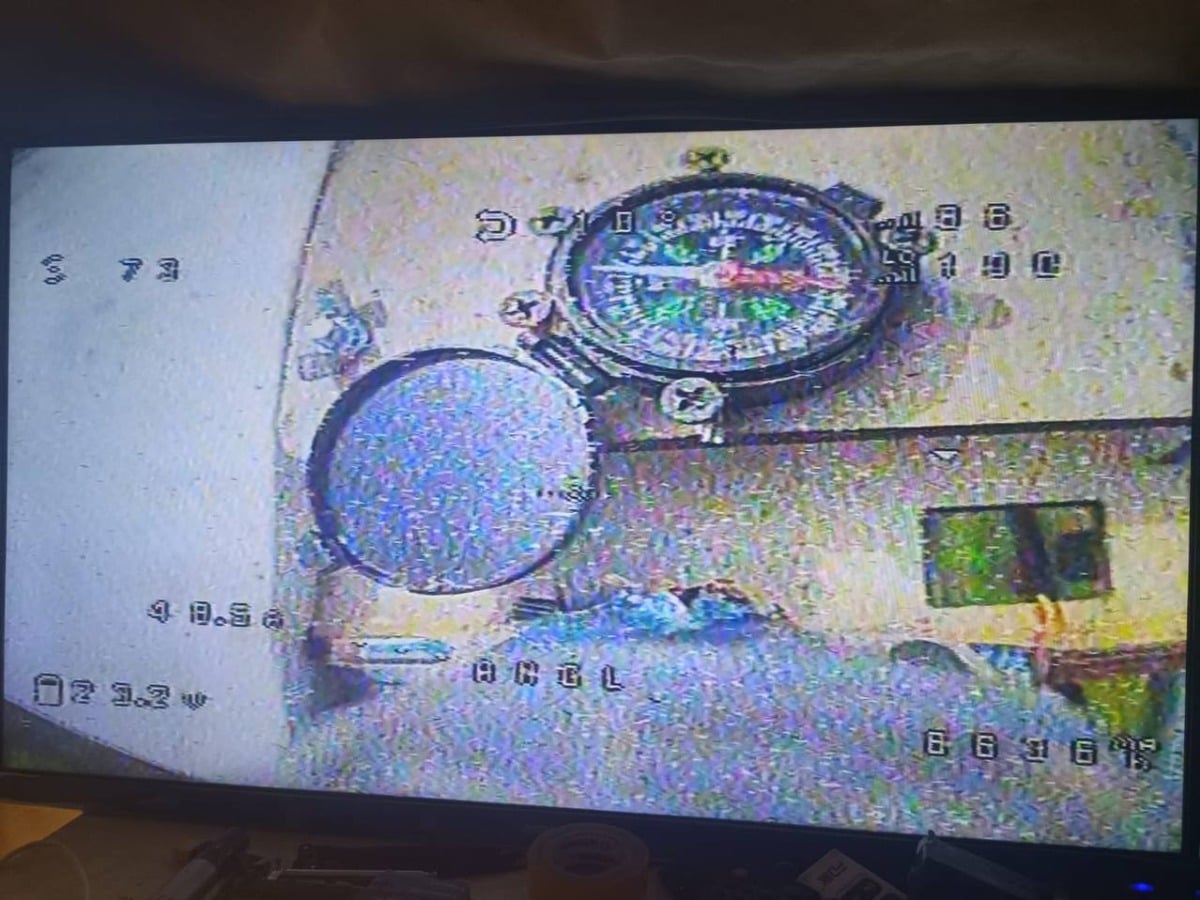
Russia is now gluing ordinary plastic camping compasses to its frontline strike drones to keep them flying through dense military jamming. The modification appeared on the Molniya, a fixed-wing attack drone used to strike targets dozens of miles behind Ukrainian lines. By positioning a two-dollar mechanical compass directly in front of the drone’s nose-mounted camera, Russian operators have created a crude but entirely unjammable backup navigation system. When electronic warfare severs the digital telemetry link or blinds the satellite navigation, the pilot simply tilts the camera downward to read the physical needle.
This is not a sign of industrial collapse, but rather a cold response to a battlefield reality where digital systems frequently fail.
The Blindness of High Tech Warfare
Electronic warfare on the modern battlefield has reached an unprecedented level of intensity. Entire regions are blanketed by invisible signals designed to overwhelm, distort, or completely block the satellite frequencies that modern weapons rely upon to navigate. Military forces use heavy jamming stations to break the bond between an unmanned aerial vehicle and its human operator. When those signals are cut, standard military hardware often turns into expensive, directionless debris.
The digital instrumentation on a standard military drone relies heavily on an Inertial Measurement Unit and a Global Navigation Satellite System receiver. These components calculate velocity, altitude, and heading by reading signals from orbital satellites. If a hostile electronic warfare system floods the area with noise, the satellite data disappears. If the drone is also hit with spoofing attacks, the onboard computer is fed false coordinates, tricking the machine into flying miles off course or plunging directly into the dirt.
A mechanical needle ignores radio waves. It reacts exclusively to the magnetic field of the earth, an ambient force that cannot be jammed, spoofed, or turned off by an enemy electronic warfare unit. While a multi-million dollar signal-jamming array can easily erase the digital telemetry display on a pilot's viewing monitor, it has absolutely zero influence on a physical piece of magnetized steel floating in a plastic casing filled with oil.
The Mechanics of the Low Tech Compromise
The integration of the analog compass onto the Molniya platform is brutal in its simplicity. Engineers attach the circular compass to the exterior fuselage or a small extended bracket just within the tilt radius of the gimballed onboard camera. The camera is the pilot’s primary eye, transmitting a live video feed back to a headset or monitor miles away.
Under normal operating conditions, the pilot monitors a digital overlay called an On-Screen Display. This overlay superimposes battery voltage, signal strength, and a digital artificial horizon over the live video. When the drone enters an area protected by heavy localized jamming, this digital overlay often flickers, corrupts, or freezes entirely. The pilot loses the digital heading indicator.
That is when the manual override occurs. The operator uses the controller to pitch the camera lens downward, moving the view away from the horizon and focusing directly on the physical compass mounted to the frame. By reading the position of the physical needle against the printed cardinal directions, the operator determines the true heading of the aircraft. They can then manually steer the drone toward the general vicinity of the target or guide it backward along a safe path until digital signals are restored.
This solution does have clear operational drawbacks. A physical compass mounted next to electric motors, high-current wiring, and video transmitters is subjected to intense local electromagnetic interference. The magnetic field generated by the drone's own electronics can cause the compass needle to deflect, a phenomenon known in naval navigation as deviation. To make this system usable, technicians must calibrate the placement of the compass or accept a significant margin of error in the readings.
The Mirage of Sophistication
Western defense analysts frequently look at these modifications and mock them as evidence of supply chain desperation. They point to the crude tape, the cheap plastic housings, and the reliance on consumer-grade goods as proof that trade sanctions are crippling the adversary's ability to produce military electronics. This perspective misses the fundamental lesson of the current conflict.
Sophistication is an extreme liability when it creates single points of failure. A highly advanced navigation system that costs fifty thousand dollars and requires clean satellite signals is entirely useless if it refuses to function in a contested electromagnetic environment. Conversely, a cheap airframe that costs less than two thousand dollars to manufacture becomes a potent threat if it can reliably reach its destination through a zone of total electronic denial.
The weaponization of commercial technology has rewritten the rules of engagement. Both sides are discovering that the cycle of electronic measure and countermeasure moves too quickly for traditional defense procurement systems to keep pace. When a new jamming frequency is deployed on the frontline, waiting eighteen months for a defense contractor to design, test, and manufacture a hardened digital chip is a recipe for tactical defeat. A solution must be found in hours, using whatever materials are available in local hardware stores or commercial warehouses.
The Economics of Attrition
The Molniya itself represents a philosophy of extreme economic asymmetry. It is built largely from cheap materials like plywood, foam, and off-the-shelf hobbyist electronics, allowing it to be produced in massive quantities at a fraction of the cost of traditional loitering munitions. The inclusion of a cheap magnetic compass fits perfectly into this design framework.
Consider the financial equation of modern air defense. If an atmospheric strike asset costs fifteen hundred dollars to build, deploying a million-dollar missile interceptor to shoot it down is an unsustainable long-term strategy for the defender. If the cheap asset can bypass electronic defenses using an analog compass, the defender is forced to expend physical kinetic interceptors to stop it. This shifts the burden of defense from software algorithms to physical ammunition supplies, draining the adversary's stockpiles of expensive air-defense missiles.
This low-tech adaptation highlights a broader trend toward pragmatism over perfection. The goal is not to build an elegant piece of engineering that wins awards at international defense expos. The goal is to field a weapon that achieves a basic level of functionality under the worst possible conditions. By bypassing the digital system entirely, the mechanical compass ensures that the drone remains a dangerous, functional weapon even when stripped of its modern intelligence. The future of infantry conflicts may well belong to those who can most effectively marry the digital age with the mechanical certainties of the past.
The true value of the modification is its refusal to rely on a digital world that can be erased with the flip of a high-powered electronic warfare switch.