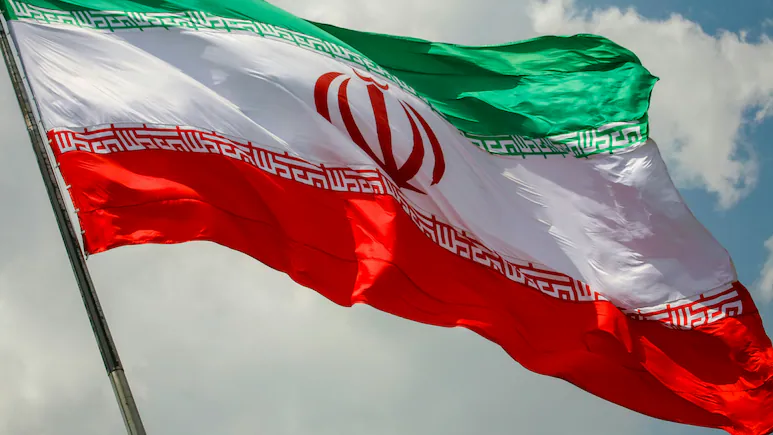
The alignment between Donald Trump and Benjamin Netanyahu regarding Iran is rarely about securing a lasting peace in the Middle East. Instead, the politics of escalation against Iran serves as an indispensable domestic survival mechanism for both leaders, converting complex regional security crises into immediate political capital at home.
Watch how the cycle operates. Every time domestic legal pressures mount in Jerusalem or partisan battles intensify in Washington, the rhetoric surrounding Tehran sharpens. This is not a coincidence, nor is it merely ideological alignment. Both men have spent decades mastering the art of asymmetric political warfare, and they recognize that an existential external adversary solves a multitude of internal problems.
The Architecture of Mutual Political Survival
To understand why these two leaders consistently favor maximum pressure over diplomatic off-ramps, you have to look at their respective voter bases and institutional vulnerabilities.
For Benjamin Netanyahu, the longest-serving prime minister in Israeli history, confronting Iran is the central pillar of his political brand. He has positioned himself as "Mr. Security"—the sole figure capable of preventing a second Holocaust in the form of an Iranian nuclear weapon. This framing allows him to dismiss domestic critics, judicial reform protesters, and coalition partners as naive distractions from an imminent existential threat. When his government faces collapse over ultra-Orthodox military exemptions or corruption trials, escalating tensions with Tehran or its regional proxies immediately resets the national agenda. Dissent becomes unpatriotic.
Donald Trump operates under a completely different set of domestic incentives, yet he arrives at the exact same strategic destination. Trump’s foreign policy instinct is fundamentally transactional and skeptical of prolonged foreign entanglements. He campaigned on ending "endless wars" and regularly mocks the traditional Washington foreign policy establishment. Yet, on Iran, Trump has repeatedly embraced the most hawkish posture available—from tearing up the 2015 Joint Comprehensive Plan of Action (JCPOA) to ordering the 2020 assassination of Qasem Soleimani, and continuing that confrontational posture well into the mid-2020s.
Why the contradiction? Because Trump views Iran primarily through the lens of domestic political contrast and personal grievance.
Tearing down the Obama-era nuclear deal allowed Trump to dismantle his predecessor's signature foreign policy achievement while simultaneously consolidating support among evangelical Christians and major pro-Israel donors. Furthermore, Iran’s alleged assassination plots against Trump and his former national security officials turned a geopolitical dispute into a deeply personal vendetta. For a leader who equates national interest with personal loyalty and strength, backing down from Tehran is psychologically impossible.
The Illusion of "Maximum Pressure"
The core mechanism uniting Trump and Netanyahu is the doctrine of maximum pressure. The theory sounds simple enough on cable news. Apply crushing economic sanctions, isolate the regime diplomatically, and threaten overwhelming military force until Tehran’s leadership either collapses from internal unrest or capitulates at the negotiating table.
Decades of intelligence and economic data tell a very different story.
When the Trump administration reimposed sweeping sanctions in 2018, Iran’s economy contracted sharply, the rial plummeted, and inflation soared. Yet the regime did not collapse, nor did it return to the table to sign a "better deal." Instead, Tehran systematically dismantled the limits placed on its nuclear program. Before the U.S. withdrawal from the JCPOA, Iran’s breakout time—the period needed to produce enough weapons-grade uranium for a single bomb—was estimated by intelligence agencies at roughly one year. By removing the guardrails without a viable diplomatic alternative, maximum pressure compressed that breakout window to a matter of weeks.
Economic Strangulation vs. Strategic Reality
Sanctions are a blunt instrument that frequently empower the exact hardliners they are designed to weaken. When legitimate international banking and trade channels are severed, illicit smuggling networks take over. In Iran, those networks are controlled by the Islamic Revolutionary Guard Corps (IRGC).
Rather than starving the IRGC of funds, extreme economic isolation allowed the military conglomerate to monopolize the black market, further entrenching its control over Iran’s domestic economy while the middle class—the very demographic most likely to push for democratic reform—was wiped out financially.
Netanyahu understands this dynamic intimately, which reveals a critical divergence in what "success" actually looks like to each leader.
- Trump wants a trophy. He wants a dramatic, televised diplomatic surrender that carries his name, proving he could accomplish what his predecessors could not.
- Netanyahu wants permanent containment or regime collapse. He views any negotiated settlement that leaves Iran’s nuclear infrastructure or regional proxy network intact as a existential gamble Israel cannot afford to take.
This quiet friction is the great unspoken fault line in the Trump-Netanyahu alliance. They agree entirely on the escalation phase, because escalation generates immediate political dividends for both. They disagree fundamentally on the endgame.
How Escalation Traps Both Sides
In international relations, statesmen often fall victim to the commitment trap. When leaders repeatedly declare in public that an adversary is an intolerable threat that will never be allowed to cross a specific red line, they strip themselves of the diplomatic flexibility needed to avoid a war they might not actually want to fight.
Consider a hypothetical scenario that illustrates this trap in practice. Imagine an intelligence report confirms Iran has enriched uranium to 90 percent purity—weapons-grade—at a deeply buried facility like Fordow. Having spent years mocking previous administrations for weakness, neither Trump nor Netanyahu could easily absorb that news without taking kinetic military action. Doing nothing would destroy their carefully constructed personas as strongmen. Yet launching massive airstrikes against hardened nuclear facilities carries an immense risk of triggering a full-scale regional war, sending global oil prices past $150 a barrel, and dragging American troops back into a major Middle Eastern ground and air campaign.
This is the inherent danger of weaponizing foreign policy for domestic politics. You begin by using the threat of escalation to rally your base and outmaneuver political rivals at home. Eventually, the rhetoric creates a momentum of its own, cornering you into choices where every available option carries catastrophic risk.
The Proxy War Feedback Loop
The situation is complicated further by the Axis of Resistance—Iran’s network of regional militias including Hezbollah in Lebanon, the Houthis in Yemen, and various Shiite militias in Iraq and Syria.
Tehran deliberately built this ring of fire over four decades to establish forward deterrence. The logic from Iran's perspective is straightforward: if Israel or the United States strikes Iranian soil, Tehran does not need a conventional air force to retaliate. It can unleash tens of thousands of precision-guided missiles from Lebanon, disrupt global maritime shipping through the Bab el-Mandeb Strait, and target American bases across the Persian Gulf.
When Netanyahu escalates militarily against Hezbollah or strikes Iranian assets directly, he is attempting to shatter this deterrence model and restore Israel's escalatory dominance. However, every strike forces Tehran to respond to preserve its own credibility among its proxies. This creates a tit-for-tat ladder where each rung is higher and more lethal than the last.
Trump’s return to the center of American foreign policy injects massive unpredictability into this feedback loop. Unlike traditional Republican or Democratic presidents who rely on interagency processes, allied consultations, and calibrated signaling, Trump prides himself on strategic ambiguity—what Richard Nixon famously termed the "Madman Theory." By convincing adversaries that he might act irrationally or disproportionately, Trump believes he can deter them from testing him.
The flaw in the Madman Theory is that it requires the adversary to understand your red lines well enough to avoid crossing them by accident. When communication channels between Washington and Tehran are practically non-existent, strategic ambiguity easily curdles into fatal miscalculation.
The Overlooked Factor of Global Realignment
Most mainstream commentary frames the Trump-Netanyahu-Iran triangle as a self-contained Middle Eastern drama. That analysis is dangerously outdated. The geopolitical board has shifted dramatically since Trump’s first term, and the politics of escalation now reverberates directly through Moscow and Beijing.
Iran is no longer an isolated pariah state operating on the margins of the global economy. Through its supply of Shahed attack drones and ballistic missiles to Russia for use in Ukraine, Tehran has forged a transactional military partnership with Vladimir Putin. In return, Russia has become far more willing to share advanced air defense technology, satellite intelligence, and diplomatic cover at the United Nations Security Council.
Simultaneously, China has emerged as the primary economic lifeline for the Iranian regime. Ignoring U.S. secondary sanctions, independent Chinese refineries purchase the vast majority of Iran’s discounted crude oil exports, settling transactions in renminbi outside the reach of the U.S. dollar-dominated financial system.
This creates a profound strategic dilemma for any American administration pursuing escalation:
- Sanctions enforcement hits a wall. Crushing Iran’s oil revenue requires sanctioning major Chinese financial institutions, a move that would immediately ignite a full-blown trade and currency war with Beijing—harming American consumers and businesses.
- Military strikes carry global blowback. An Israeli or American military campaign against Iran would disrupt energy supplies flowing to Asia, giving China a direct stake in stabilizing or resupplying Tehran, while Russia would happily exploit the distraction to press its advantage in Eastern Europe.
Netanyahu has little reason to weigh these global trade-offs; his mandate is strictly Israeli national security and his own political survival. Trump, however, has to answer to American voters who care deeply about inflation, gas prices, and avoiding foreign wars. Escalating against Iran in the current multipolar environment is vastly more expensive and complicated than it was a decade ago.
The Gulf States Have Changed the Equation
Another critical shift often ignored by hawks in both Washington and Jerusalem is the quiet diplomatic revolution across the Persian Gulf.
During Trump’s first term, Saudi Arabia and the United Arab Emirates were enthusiastic cheerleaders for maximum pressure against Iran. They viewed Tehran as an aggressive revolutionary threat and believed an American security umbrella would protect them from any blowback.
That illusion died in September 2019. When a swarm of drones and cruise missiles struck Saudi Aramco’s processing facilities at Abqaiq and Khurais—temporarily knocking out half of the kingdom's oil production—the Trump administration declined to retaliate militarily against Iran. The message received in Riyadh and Abu Dhabi was unmistakable: Washington would not go to war to defend Gulf infrastructure.
Consequently, Saudi Crown Prince Mohammed bin Salman pivoted. With Chinese mediation, Riyadh restored diplomatic relations with Tehran in 2023. Today, the wealthy Arab Gulf states are fiercely opposed to any Israeli or American military escalation against Iran. They know their gleaming cities, desalination plants, and oil terminals would be the first targets of Iranian retaliation, and they refuse to let their economic diversification plans burn to serve the domestic political agendas of leaders in Jerusalem or Washington.
Without Gulf airspace, basing rights, or financial backing, any sustained military campaign against Iran becomes exponentially harder for the United States to execute.
Where Domestic Theater Meets Geopolitical Reality
The fundamental flaw in the politics of escalation is that it treats foreign policy as an extension of domestic campaign messaging. You can win an election cycle by projecting toughness, tearing up multilateral agreements, and promising swift, decisive victories over foreign enemies. You cannot wish away the laws of physics, economics, or regional geography once the missiles start flying.
Both Trump and Netanyahu have built their political careers on breaking institutional norms and defying conventional diplomatic wisdom. That audacity has served them remarkably well in domestic arenas where media cycles move fast and voters reward strength over nuance. Yet Iran’s clerical establishment plays a generational game, measuring time in decades rather than news cycles or election calendars.
When two leaders who need perpetual crisis to maintain domestic power confront a regime that has spent forty-five years perfecting asymmetric survival, the result is a slow-motion collision that neither side can fully control. The rhetoric demands decisive action, the political incentives punish compromise, and the institutional guardrails that once prevented accidental wars have been systematically dismantled.