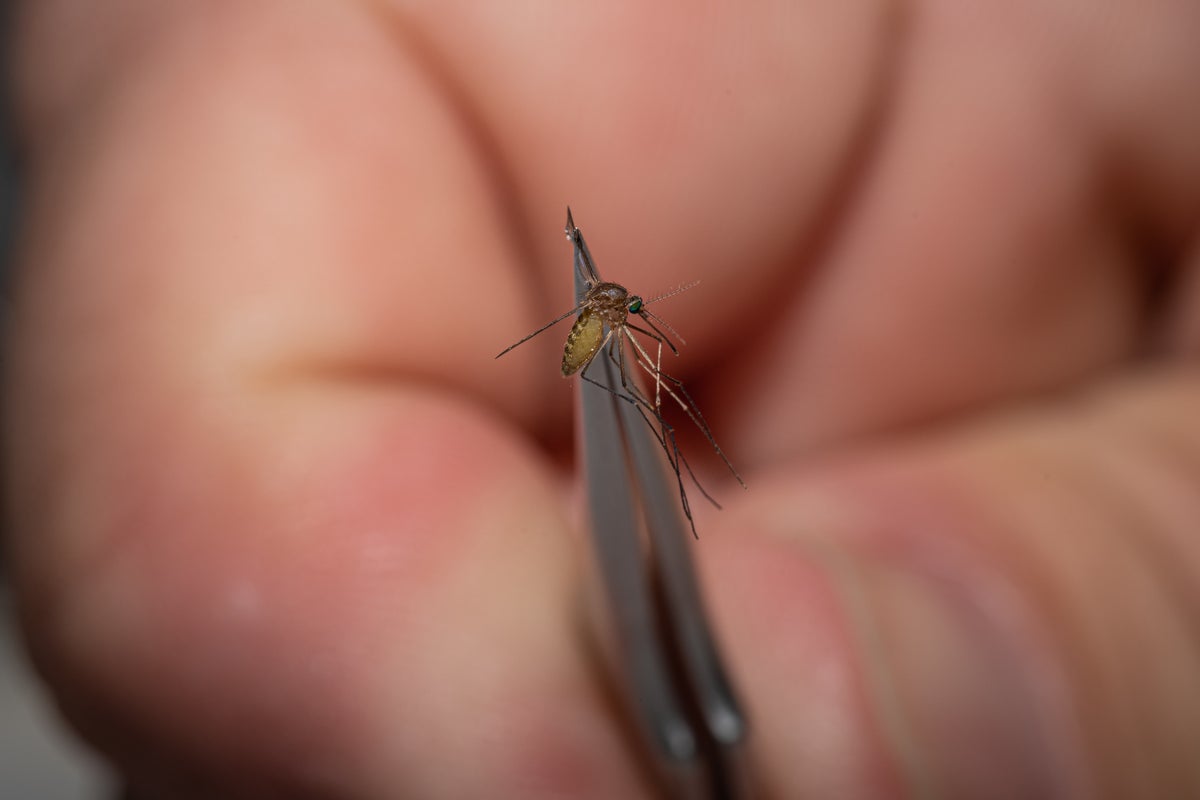
The United States is facing a sharp, early-season surge in West Nile virus cases, with federal health officials confirming a massive spike in infections compared to historic averages. Data from the Centers for Disease Control and Prevention reveals that a warmer climate, deteriorating local public health funding, and shifting avian migration patterns have turned what used to be a predictable seasonal nuisance into an expanding national threat. This is not just a routine biological fluctuation. It represents a systemic breakdown in municipal vector control colliding with rapidly changing environmental realities that the current infrastructure is ill-equipped to handle.
The Quiet Inundation of the American Suburbs
For years, West Nile virus maintained a reliable cadence. Mosquitoes belonging to the Culex genus fed on infected birds, then passed the virus to humans, usually peaking in late August and early September. Most people never knew they had it. The human body's immune response quietly extinguished the pathogen before it could cause a single symptom, leaving behind nothing but antibodies.
That predictability has shattered. By mid-summer, federal surveillance systems already logged multiple times the historical average of confirmed human infections for that specific period. The early onset indicates that the virus overwintered with extreme efficiency, thanks to a succession of historically mild winters. When spring arrived, mosquito populations did not build up slowly; they exploded.
The standard public health playbook treats West Nile as a localized issue managed through neighborhood spraying and community reminders about standing water. This approach ignores the underlying ecological shift. Municipalities that historically never worried about arboviruses are suddenly finding their traps full of infected insects. The geographic footprint of the virus has crept into higher elevations and more northern latitudes, catching local health departments entirely off guard.
Shifting Birds and Starved Budgets
To understand why the virus is expanding, one must look at birds. Birds are the primary amplifying hosts of West Nile. Mosquitoes do not create the virus; they merely transfer it. When migratory birds change their nesting grounds and travel timelines due to altered weather patterns, they bring the viral reservoir into contact with new mosquito populations.
- Avian Immunity Declines: As older bird populations die off, a younger generation without herd immunity enters the ecosystem, allowing the virus to replicate wildly.
- Vector Adaptation: Culex mosquitoes are uniquely adapted to urban and suburban environments, thriving in storm drains, neglected swimming pools, and catch basins.
- Micro-Climate Heat Islands: Concrete-heavy urban environments retain heat overnight, accelerating the replication rate of the virus inside the mosquito's gut.
While the biology of the virus adapts at a rapid clip, the human defense system is moving backward. Local health departments across the country have seen their budgets slashed or diverted over the last several years. Vector control—the unglamorous work of counting bugs in traps, testing them for pathogens, and treating stagnant water with larvicide—is frequently the first line item cut when city budgets tighten.
A decade ago, a typical county health department maintained a dedicated team of entomologists and field technicians. Today, that same county often relies on a single part-time contractor tasked with managing hundreds of square miles. The lack of proactive tracking means cities are forced into reactive positions, spraying adulticides only after human cases are hospitalized. By then, the transmission chain is already entrenched.
The Broken Economics of Mosquito Control
The deficit in public management has created a booming market for private pest control companies. Suburban neighborhoods are increasingly filled with yard-spraying trucks promising a mosquito-free summer. This privatized solution complicates public health efforts.
Most commercial yard treatments rely on pyrethroids, a class of synthetic chemical insecticides designed to kill a wide range of flying insects. When private companies apply these chemicals indiscriminately across thousands of private properties, they introduce two distinct problems. First, they eliminate natural predators like dragonflies, spiders, and beetles that naturally keep mosquito populations in check. Second, they accelerate insecticide resistance.
Public health labs have already documented significant resistance to standard adulticides in Culex populations across several states. When a city eventually needs to spray a neighborhood to stop a confirmed outbreak, the chemicals may no longer work. The reliance on individual, commercial intervention degrades the efficacy of collective public health measures.
When the Virus Breaches the Nervous System
While approximately eighty percent of West Nile infections pass without notice, the remaining twenty percent result in West Nile fever. This condition presents as a grueling, multi-week affliction marked by debilitating headaches, joint pain, rashes, and extreme fatigue. For a fraction of those infected, the reality is much worse.
About one in every 150 infected individuals develops neuroinvasive disease. This occurs when the virus successfully crosses the blood-brain barrier, causing inflammation of the brain or the protective membranes surrounding the spinal cord.
[Infection] ──> (80% Asymptomatic)
              ──> (20% West Nile Fever) ──> (~1% Neuroinvasive Disease) ──> Meningitis / Encephalitis
The clinical manifestations of neuroinvasive West Nile are severe. Patients can present with acute flaccid paralysis, a condition mirroring polio where muscles suddenly lose all strength. The long-term prognosis for these patients is grim. Up to forty percent of individuals hospitalized with neuroinvasive West Nile virus require admission to long-term care or specialized rehabilitation facilities. Many never regain their baseline cognitive or physical function.
The financial burden on the healthcare system is substantial. A single case of neuroinvasive West Nile can accumulate hundreds of thousands of dollars in medical bills during the acute phase alone, followed by years of supportive therapy. There is no vaccine available for humans, and there are no targeted antiviral medications. Treatment consists entirely of supportive care—intravenous fluids, mechanical ventilation, and pain management.
The Illusion of Personal Responsibility
Public service announcements inevitably focus on individual actions. Citizens are told to wear long sleeves, avoid the outdoors at dawn and dusk, and apply repellents containing DEET. While these measures offer individual protection, framing an expanding environmental crisis solely around personal habits shifts the blame away from structural failures.
An elderly resident living in an older urban neighborhood with poorly maintained municipal drainage systems cannot fix the infrastructure by applying bug spray. A construction worker or agricultural laborer cannot simply choose to avoid working during peak mosquito hours. The distribution of risk is unevenly weighted toward populations that lack the means to insulate themselves from their surroundings.
Addressing the rising trajectory of West Nile requires moving beyond basic awareness campaigns. It demands a reinvestment in municipal infrastructure, specifically the modernization of storm-water management to eliminate systemic breeding grounds. It requires restoring multi-year funding guarantees for regional vector-control districts so that testing can occur year-round, rather than waiting for the first ambulance to arrive at a hospital door. Until public policy addresses the structural degradation of vector suppression, the virus will continue its quiet expansion across the American map.