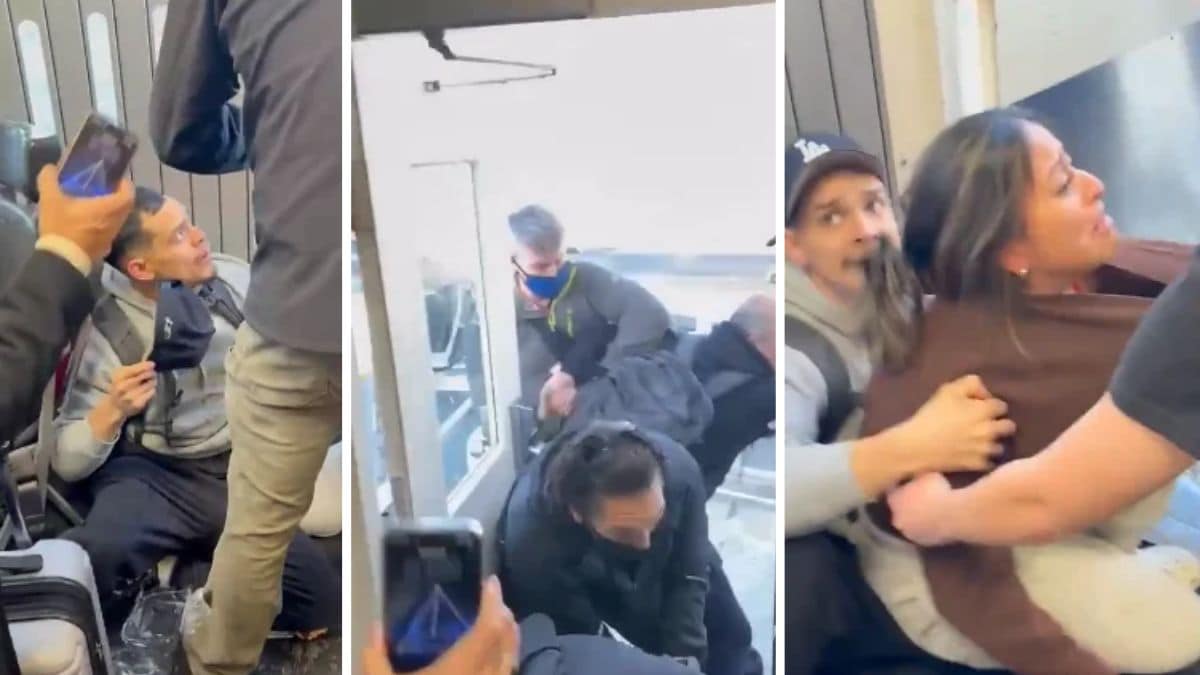
Watching federal agents pull passengers off an Alaska Airlines boarding line at Seattle-Tacoma International Airport isn't just viral internet fodder. It's a stark reminder of how federal immigration enforcement operates inside U.S. transit hubs—and what you actually need to know when a routine boarding process turns into a federal detention.
When video footage circulated showing Immigration and Customs Enforcement agents removing two passengers during an Alaska Airlines boarding sequence at Sea-Tac, travelers immediately started asking the same questions. Can they do that without a judge's signature? Why didn't the airline stop them? And what happens to your rights the second you step past a TSA checkpoint? Building on this idea, you can also read: Why India and the Netherlands Are Suddenly Betting Everything on Chips and Warships.
Honestly, most travelers have a massive blind spot here. We tend to treat airports like extensions of our local shopping malls, assuming the exact same everyday privacy rules apply until we cross an international border. They don't.
Why ICE Enforcement Happens at Domestic Airport Gates
You might assume immigration agents only hang out at international arrivals or customs checkpoints. That's wrong. Domestic gates—especially at major hubs like Seattle-Tacoma International Airport—are completely fair game for federal enforcement actions. Observers at TIME have shared their thoughts on this matter.
Here's why. Federal law gives Department of Homeland Security agencies broad authority to operate within 100 miles of any U.S. external boundary. That 100-mile zone isn't just a narrow strip of sand along the coast. It covers roughly two-thirds of the entire U.S. population, including the entire city of Seattle, Sea-Tac Airport, and almost every major coastal and border metropolis in the country.
Even beyond the 100-mile rule, commercial aviation operates under strict federal oversight. When you buy a plane ticket, your name, date of birth, and gender are transmitted through the Secure Flight program run by the Transportation Security Administration. That data gets vetted against federal watchlists and databases well before you ever scan your boarding pass at the gate.
If an individual has an active administrative warrant for removal, an outstanding federal arrest warrant, or specific flags in DHS databases, federal officers don't need to wait for them to fly internationally. They know which gate you're standing at. They know what time boarding starts. And they use the controlled environment of a jet bridge or boarding area because it limits escape routes and minimizes the risk of a high-speed pursuit.
It looks jarring on a smartphone video. Seeing agents physically escort or drag individuals out of a crowded boarding area disrupts the calm, predictable routine airlines work hard to maintain. Yet from a tactical standpoint, airport gates are among the most predictable places for federal agents to execute a targeted enforcement action.
The Role of Airlines and Airport Police During Federal Removals
Whenever a video like the Seattle Alaska Airlines incident goes viral, the airline's social media mentions instantly catch fire. People demand to know why gate agents didn't intervene or why airport security stood by.
Let's be clear about how jurisdiction works inside a terminal. Airline employees—from gate agents to flight attendants—are private-sector workers. They have zero legal authority to block, delay, or interfere with federal law enforcement officers executing official duties. In fact, interfering with a federal agent can result in immediate arrest for the airline employee.
Port of Seattle Police, who patrol Sea-Tac, operate under a different set of rules. Local and port police departments in Washington State are bound by state laws—specifically the Keep Washington Working Act—which restricts local law enforcement from using state or local resources to assist with federal civil immigration enforcement.
That distinction creates a confusing visual for onlookers. You might see local airport police nearby keeping the crowd back or maintaining general terminal safety while ICE agents handle the actual detention. They aren't participating in the immigration arrest, nor can they legally step in to stop federal officers from making one.
Airlines themselves operate under federal aviation regulations that require cooperation with lawful directives from federal agencies. When federal agents notify a carrier that they are removing a passenger, the airline's priority shifts immediately to operational safety, de-escalating tension in the gate area, and getting the remaining 150-plus passengers on board so the flight doesn't lose its departure slot.
Administrative Warrants vs. Judicial Warrants at the Airport
If you want to understand what is legally happening when ICE detains someone in public, you have to understand the difference between two pieces of paper. Most people lump all warrants together. In immigration law, that mistake changes everything.
A judicial warrant is signed by a federal judge or magistrate. It is backed by probable cause of a crime and grants law enforcement broad authority to enter private spaces and make arrests.
An administrative warrant—commonly Form I-200 or Form I-205—is issued by DHS or ICE officials themselves, not a judge. It authorizes ICE agents to arrest a specific person suspected of violating civil immigration laws.
Here is the catch. An administrative warrant does not allow ICE agents to enter a private home without consent. You can keep your front door shut if an agent only has a Form I-200.
An airport boarding area is not your living room. Under Fourth Amendment case law, public spaces—including airport terminals and commercial boarding gates—do not carry the same expectation of privacy as a private residence. In a public space, ICE agents do not need a judicial warrant to approach, question, or detain someone if they have probable cause to believe that person is removable from the United States.
That's why these removals happen so fast. There is no door to keep closed. Once agents positively identify their target in the boarding line, they have the legal authority to take that person into custody right there on the concourse carpet.
What Actually Happens When Boarding Gets Disrupted
When a detention unfolds at the gate, the ripple effects hit everyone on the flight manifest. It's rarely a quiet, invisible process, especially when passengers resist or bystanders start filming.
First, boarding stops immediately. Gate agents will halt scanning passes to prevent passengers from getting trapped on the jet bridge while officers are working. If the detention happens inside the jet bridge itself, flight attendants will often close the main cabin door to isolate passengers already on board from the commotion outside.
Second, baggage protocols kick in. Under strict Federal Aviation Administration and TSA security rules, a passenger's checked luggage cannot fly on a domestic or international flight if that passenger has been involuntarily removed for security or law enforcement reasons—a rule known as Positive Passenger Bag Match.
Ground crews have to locate that specific passenger's bags in the cargo hold and pull them off the aircraft. If the plane is packed and the bags were loaded early, digging them out can easily tack 30 to 45 minutes onto your departure time.
Third, the crew has to reset. Flight attendants and pilots are trained to manage cabin safety, not crowd psychology after a tense law enforcement confrontation. Before pushing back from the gate, the captain and lead flight attendant will typically confer to make sure passengers in the immediate area are calm and that no secondary disputes are brewing in the aisles.
Your Actual Legal Rights Inside a U.S. Airport
Filming an incident at a Seattle airport gate is your First Amendment right, provided you don't physically obstruct officers or cross security perimeters. Thousands of people have seen footage from Sea-Tac precisely because bystanders pulled out their phones.
But what if you are the one being questioned by federal agents at an airport? Knowing where your rights start and stop makes a massive difference.
- The Right to Remain Silent: Whether you are a U.S. citizen, a green card holder, or undocumented, the Fifth Amendment applies to you on U.S. soil. You do not have to answer questions about your birthplace, your immigration status, or how you entered the country. You can state clearly, "I am exercising my right to remain silent."
- Identification Rules at Checkpoints: To pass through TSA screening, you must present acceptable identification—like a REAL ID-compliant driver's license or a passport. Refusing to show ID at the TSA podium simply means you won't be allowed into the sterile concourse. However, if you are already inside the terminal and federal agents approach you randomly, Washington State does not have a "stop and identify" statute requiring you to carry or produce ID papers on demand unless you are driving or under arrest.
- Consent to Searches: TSA has the administrative authority to screen your bags and person for weapons and explosives as a condition of flying. That consent does not automatically extend to ICE agents searching your phone's photo gallery or private messages at a domestic gate. Without a judicial warrant, you do not have to unlock your phone or consent to a search of your digital devices during a domestic terminal encounter.
- Non-Citizens Carrying Documentation: Under federal law (INA Section 264(e)), lawful permanent residents and non-citizens over 18 are legally required to carry proof of their registration or immigration status at all times. Failing to carry a green card is technically a misdemeanor, though rarely prosecuted on its own. Still, having valid documentation readily accessible prevents prolonged detention while agents verify your status.
Why These Videos Trigger Intense Public Backlash
Videos showing federal agents dragging passengers away at an airport hit a raw nerve because they collide two completely different worlds. Commercial air travel is built around customer service, hospitality, and voluntary compliance. Immigration enforcement is built around state coercion, detention, and removal.
When those two worlds smash together at Gate N12 or Concourse C, passengers feel blindsided. People travelling with kids, elderly parents, or anxious flyers suddenly find themselves inches away from a physical struggle.
There is also a persistent misconception that flying domestically insulates travelers from immigration checks. For years, undocumented immigrants and individuals with pending immigration cases relied on valid state driver's licenses or foreign passports to fly between U.S. cities without incident.
As federal databases have become faster, more interconnected, and better integrated with airline passenger manifests, that buffer has largely disappeared. Real-time data sharing means an active removal order can trigger an alert the moment a boarding pass is generated or scanned.
Advocacy groups like the Northwest Immigrant Rights Project have repeatedly pointed out that public transit hubs are increasingly used for targeted arrests because they offer predictable schedules and controlled environments. Meanwhile, federal officials maintain that arresting individuals at airports is safer for both officers and the public than conducting operations in residential neighborhoods or workplaces where variables are harder to control.
Both realities exist at the exact same time. It is completely legal for federal agents to make targeted arrests in public airport terminals, and it is completely understandable why witnessing someone being physically dragged out of a boarding line leaves travelers shaken.
Practical Steps Before Your Next Flight
If you're flying through Sea-Tac or any major U.S. hub—especially if you or someone you travel with has a complex immigration history—don't leave things to chance. Take concrete precautions before you head to the terminal.
- Verify Your Legal Status and Pending Notices: Before booking any flight, confirm there are no unresolved administrative removal orders, missed immigration court dates, or expired statuses tied to your name. Even a missed court notice mailed to an old address can trigger an active warrant in DHS systems.
- Prepare a Legal Contact Plan: Memorize—don't just save in your locked phone—the phone number of an immigration attorney or a trusted family member. If you are detained, your phone will be confiscated and logged into property, leaving you without access to your contacts list.
- Carry Proper Documentation: If you have valid immigration status, a pending asylum receipt, or a green card, keep physical copies or originals secure in your carry-on bag. Never pack critical immigration paperwork in checked luggage that could get separated from you.
- Know How to Document Safely: If you witness an enforcement action at a gate and choose to record it, keep a clear physical distance of at least ten to fifteen feet. Hold your camera steady, capture badge numbers or agency insignia if visible, and never step between agents and the person being detained.
- Handle Gate Delays Calmly: If your flight gets held up because federal agents removed a passenger and ground crews are pulling bags, check your airline app immediately for tight connection alerts. Gate agents will be busy dealing with security paperwork, so rebooking a missed connection directly through the app or airline phone line is almost always faster than waiting at the desk.


