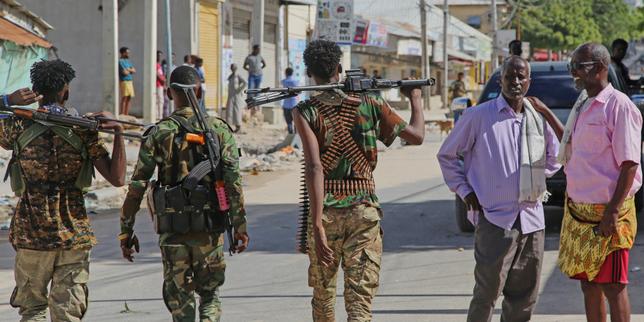
The tarmac at Aden Adde International Airport does not just melt under the East African sun; it seems to vibrate. Step off the plane in Mogadishu, and the first thing that hits you is not the heat, but the scent of the sea mixed with aviation fuel and something older, heavier—the lingering dust of a city that has spent decades rebuilding itself from rubble.
For years, the global shorthand for this place was chaos. Black Hawk Down. Warlords. Famine. But if you look past the armored personnel carriers and the concrete blast walls today, you notice a different kind of presence. It is written in the bold red lettering on the sides of schools, stamped onto water tankers, and flying from the masts of naval vessels guarding the coastline.
Turkey.
To the casual observer, an alliance between a NATO power straddling Europe and Asia and a war-torn nation on the Horn of Africa feels random. It feels like a geopolitical typo. But walk through the bustling markets of the Bakara Bazaar or sit in the air-conditioned offices of Somalia’s young entrepreneurs, and you quickly realize this is no accident. It is one of the most sophisticated, aggressive, and deeply felt foreign policy experiments of the twenty-first century.
Turkey did not just send aid to Somalia. It moved in.
The Day the World Looked Away, One Man Didn't
To understand how this bond was forged, we have to go back to 2011. Somalia was starving. A catastrophic drought, compounded by the brutal tyranny of Al-Shabaab militants, had pushed millions to the brink of death. The international community did what it always does: it issued grave statements from press rooms in Geneva and Nairobi, set up refugee camps across the border in Kenya, and managed the misery from a safe distance. Mogadishu was deemed too dangerous for foreign dignitaries.
Then, a plane landed.
On board was Recep Tayyip Erdoğan, then the Prime Minister of Turkey. He brought his wife, his cabinet, business leaders, and a contingent of reporters. He did not stay inside the heavily fortified airport perimeter. He walked through the dusty, disease-ridden displacement camps. He held the hands of emaciated children. He wept with mothers who had buried their infants in the sand just days prior.
It was a staggering piece of political theater, but to Somalis, it was something much deeper. It was validation. After twenty years of being treated like a geopolitical leper colony, a leader of a major Muslim nation had come to sit in the dust with them.
Consider the psychological impact of that single visit. In a culture where presence and solidarity mean everything, Turkey earned a lifetime of geopolitical credit in twenty-four hours.
While Western NGOs operated out of secure compounds in neighboring Kenya, flying in for day trips under heavy guard, Turkish aid workers brought their families to Mogadishu. They rented houses in the city. They ate the local fish. They died in Al-Shabaab bombings alongside their Somali hosts. They paid for their presence in blood, and that shared sacrifice created an unbreakable emotional contract.
Beyond Bread and Blankets
Step into the Deva Hospital in Mogadishu. The corridors are clean, the equipment is modern, and the air is filled with the soft murmur of Turkish and Somali doctors consulting over charts.
This is the real engine of Turkish influence. Western aid often feels like an endless cycle of emergency interventions—sacks of grain delivered today, a plastic tarp tomorrow, a temporary fix that leaves the root causes untouched. The Turkish model shifted the paradigm from charity to infrastructure almost immediately.
They paved the roads linking the airport to the city center, transforming a notorious gauntlet of improvised explosive devices into a smooth, functioning highway. They took over the management of Mogadishu’s seaport and airport, turning corrupt, crumbling hubs of smuggling into revenue-generating engines for the Somali state.
Let us look at the hard math behind this generosity. Turkey has poured more than $1 billion into Somalia since 2011. But this is not an act of pure, selfless altruism. No nation spends that kind of capital without expecting a return on investment.
By building schools, hospitals, and mosques, Ankara created a captive market. Today, the shops of Mogadishu are flooded with Turkish goods. Somali businessmen fly to Istanbul for dental work and vacations. The elite send their children to universities in Ankara. Turkey did not just rebuild Somalia; it integrated the country into its own economic and cultural orbit.
Turkish Influence Matrix in Somalia
┌───────────────────────────┬───────────────────────────┐
│ Humanitarian / Cultural   │ Economic / Military       │
├───────────────────────────┼───────────────────────────┤
│ • Schools & Universities  │ • Port & Airport Revenues │
│ • Hospitals & Medical Care│ • TURKSOM Military Base   │
│ • Mosque Restoration      │ • Exclusive Defense Pacts │
└───────────────────────────┴───────────────────────────┘
But the real masterstroke lies in the barracks just south of the capital.
The Iron Guarantee
TURKSOM is a sprawling, state-of-the-art military facility overlooking the Indian Ocean. It is Turkey’s largest overseas military base. Here, Turkish officers train the Gorgor (Eagle) Brigade, an elite commando unit of the Somali National Army.
The training is rigorous, conducted in a mix of Turkish and Somali. These young men are not just taught how to shoot; they are taught how to build a state. They wear Turkish-style uniforms, march to Turkish commands, and sing the national anthems of both countries.
This is where the invisible stakes become crystal clear. Somalia possesses the longest coastline on mainland Africa, situated right along the Gulf of Aden—one of the most critical maritime choke points in global trade. Whoever controls or influences Somalia has a front-row seat to the transit of global energy and commerce.
For Turkey, a nation seeking to reassert itself as a global superpower independent of its traditional Western alignments, Somalia is the perfect launchpad. It provides a strategic footprint in East Africa, a naval vantage point near the Red Sea, and a loyal proxy in a highly volatile region.
The stakes grew exponentially higher when Somalia found itself caught in a regional cold war. Neighbors like Ethiopia began making aggressive moves, signing deals with breakaway regions like Somaliland to secure access to the sea. The Somali government in Mogadishu felt cornered, isolated, and vulnerable.
They did not call Washington. They did not call the United Nations. They called Ankara.
The resulting defense and economic pact signed between the two nations effectively turned the Turkish Navy into the guardian of Somalia’s territorial waters. In exchange, Turkey received a significant share of the revenues generated from Somalia’s maritime economic zone, including potential offshore oil and gas reserves.
It was a textbook trade-off. Somalia gained a shield; Turkey gained a sword.
The Friction of Faith and Footprints
Yet, no geopolitical love story is without its fault lines. Walk deeper into the neighborhoods of Mogadishu, away from the shiny new hospitals, and you begin to hear the quiet counter-narratives.
Some locals worry that they have traded one form of colonialism for another, gentler variety wrapped in the flag of Islamic brotherhood. They look at the Turkish companies managing the port and airport, noting how a massive chunk of the profits leaves the country instead of staying in local pockets. They see the towering, Ottoman-style mosques rising above the traditional Somali architecture and wonder if their own culture is being subtly erased.
There is also the terrifying reality of the bullseye that this alliance paints on Somali backs. Al-Shabaab views Turkey not as a savior, but as an occupying infidel force masquerading as Muslims. Turkish engineers, diplomats, and businesses have been repeatedly targeted in suicide attacks. Every new Turkish project requires more concrete, more blast walls, and more armed guards, turning parts of Mogadishu into high-security enclaves that feel alien to the people who live there.
It is a delicate, dizzying tightrope walk. Somalia needs Turkey to survive, to fight off terrorists, and to keep aggressive neighbors at bay. But dependency is a dangerous drug. The line between a powerful patron and an overbearing master is razor-thin, and history is littered with nations that failed to see when they had crossed it.
The View from the Lido
As dusk falls over Mogadishu, the heat finally relents, replaced by a cool, salty breeze coming off the Indian Ocean. Lido Beach comes alive. Hundreds of young Somalis gather on the white sand. Boys kick soccer balls through makeshift goals. Girls in colorful hijabs wade into the surf, their laughter mixing with the sound of the crashing waves.
If you look out toward the horizon, where the dark blue water meets the darkening sky, you can sometimes see the silhouette of a naval vessel patrolling the coast.
A decade ago, that ship would have belonged to an international anti-piracy task force, manned by sailors who viewed this coastline as a den of thieves and a hazard to be mitigated. Today, there is a very high probability that the ship flying out there carries the star and crescent of the Turkish flag, crewed by men who see this coast as the frontline of their own empire’s rebirth.
On the beach, a young man sells sweet, spiced tea from a thermos. He pours it into small plastic cups, handing them to customers who sit on plastic chairs stuck into the wet sand. When asked about the foreign ships, the foreign soldiers, and the billions of dollars flowing into his city, he shrugs, taking a sip of his own tea.
We were drowning, he says softly, gesturing toward the vast, empty expanse of the ocean. Turkey was the only one who jumped into the water. You don't ask the man saving your life why he chose to swim. You just hold on.


