The morning after Canada Day does not begin with flags or anthems. It begins with the low, rhythmic scrape of plastic shovels against wet sand, and the heavy, unmistakable smell of rotting food under a rising July sun.
On July 2nd, the tide recedes to reveal what we left behind.
Half-eaten hot dogs. Shredded aluminum cans. The neon-blue plastic wrappers of cheap freeze pops. And red solo cups—hundreds of them—half-buried in the shoreline like plastic barnacles.
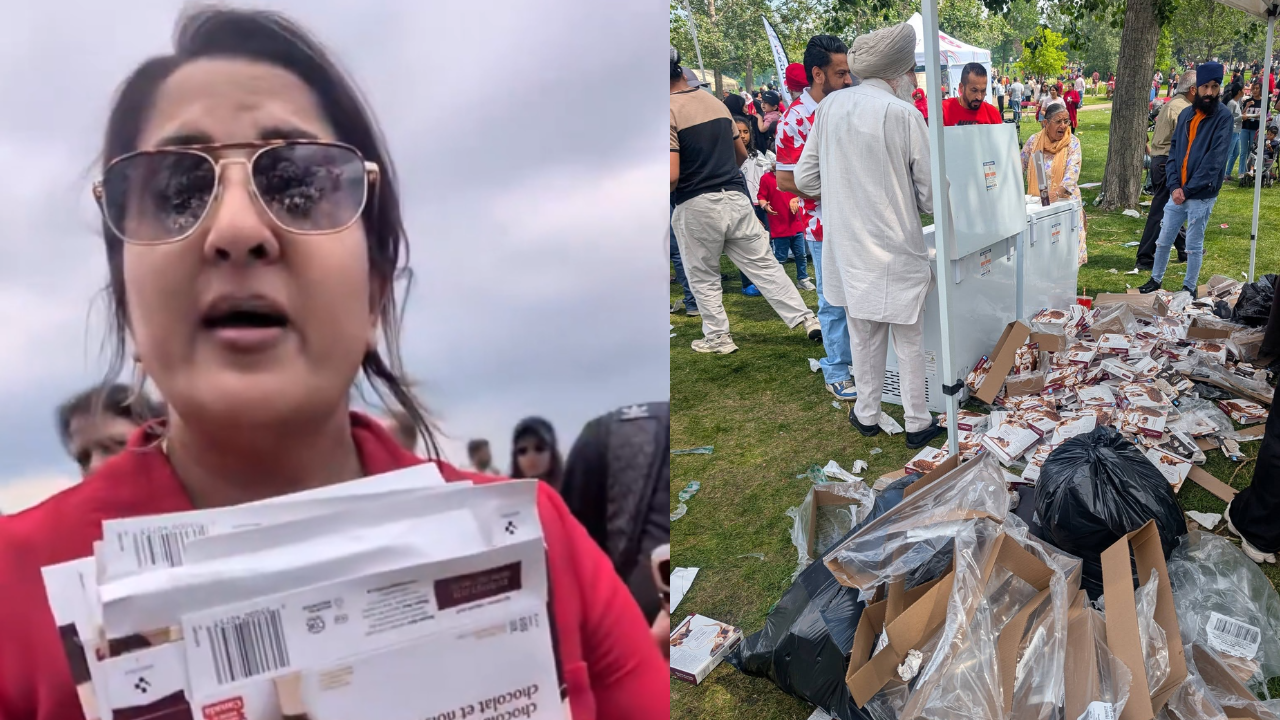
To the casual observer, this is merely the unsightly aftermath of a national holiday. It is the price of a good time. But to those who look closer, the debris left on these beaches is a physical manifestation of a much deeper, quieter friction. It is a friction that finally boiled over into a viral minutes-long video, capturing a raw confrontation between a First Nations woman and a group of South Asian newcomers.
The video itself is deceptively simple. A woman, identifying herself as Indigenous, stands on a crowded beach. Her voice vibrates with a mixture of grief and fury as she points at the litter scattering the sand. She directs her anger at a group of South Asian families celebrating nearby.
"You should be ashamed," she says.
The words hang in the hot summer air, heavy and sharp. In that single, fleeting moment, a local beach became a stage for a complex collision of history, migration, and the unspoken rules of belonging.
The Anatomy of a Viral Flashpoint
We live in an era where complex human tragedies are reduced to fifteen-second clips designed to make us angry. The internet took this video and immediately did what it does best: it sorted people into opposing camps.
On one side, a chorus of voices used the footage to validate growing anti-immigrant sentiments, painting newcomers as reckless opportunists who have no respect for their adopted home. On the other side, defenders accused the woman of xenophobia, arguing that littering is a universal human flaw, not one tied to any specific nationality or skin color.
Both sides missed the point entirely.
To understand the rage in that woman’s voice, you have to understand the relationship between the person and the dirt beneath their fingernails. For Indigenous peoples, the land is not a blank canvas for human recreation. It is not a resource to be consumed, cleaned up by municipal workers, and forgotten. It is an ancestor. It is a living relative.
When you toss a plastic bottle into the brush, you are not just breaking a municipal bylaw. You are disrespecting a home that has been carefully tended to for thousands of years.
Now, place that deep, ancestral responsibility against the backdrop of Canada Day—a holiday that many Indigenous people already view with profound ambivalence, if not outright grief. To watch crowds of people celebrate the birth of a nation that systematically attempted to erase your culture, and to then watch those same crowds leave that nation's shores choked with garbage, is a double betrayal. It is a physical wound on top of an historical one.
But then, look at the other side of the frame.
The Unspoken Burden of the Newcomer
Consider the immigrant family on the beach.
They have likely traveled thousands of miles, leaving behind everything familiar to build a life in a country that promises safety, clean air, and opportunity. For many newcomers, a public beach on Canada Day is the ultimate symbol of that promise. It is free. It is open. It is a place where they can gather in large, multi-generational groups—a cornerstone of social life in many South Asian cultures—to cook, laugh, and feel, if only for an afternoon, like they finally belong.
But belonging in a new country is a fragile, exhausting performance.
You must learn the unwritten rules of a new society on the fly. You must navigate the subtle shifts in tone, the glances from neighbors, the silent expectations of integration. Often, public spaces in Western nations are designed around quiet, individualized use. A large, loud family gathering, even one filled with joy, can easily be misinterpreted as an intrusion.
When the confrontation happened, the reaction from the group was a mix of confusion, defensiveness, and quiet shock.
To be singled out in public, to be told you are the problem, is a terrifying experience for anyone whose status in a country feels conditional. In that moment on the beach, two distinct historical traumas collided. An Indigenous woman, carrying the weight of centuries of land theft and environmental degradation, met a group of immigrants carrying the quiet anxiety of trying to fit into a society that often views them with suspicion.
It was a clash of two groups who have both, in different ways, been marginalized by the very state they were there to celebrate.
The Tragedy of the Commons
The real villain of this story is not the woman who yelled, nor is it the families who left their trash. The villain is the systemic disconnection that modern life breeds between human beings and the spaces they inhabit.
We have turned the act of gathering into an act of consumption.
We buy cheap, disposable goods packaged in materials designed to last for centuries, use them for twenty minutes, and drop them where we stand. We rely on the invisible labor of underpaid park clean-up crews to erase our footprints before the next morning. This is not a South Asian problem. It is not a white problem, or an Indigenous problem. It is a modern consumer problem.
But when that consumer carelessness happens on land that is sacred to others, the stakes rise.
Consider the difference in how we view public space. In many highly urbanized, densely populated parts of the world, public parks are concrete-heavy, heavily managed spaces where garbage collection is constant and aggressive. There is less of an emphasis on "leave no trace" wilderness ethics because the spaces themselves are already deeply artificial.
When people move from those environments to the vast, fragile ecosystems of Canada, the learning curve can be steep. What looks like a durable, infinite beach is actually a delicate habitat for local wildlife, easily disrupted by a single plastic bag floating into the water.
This is where the breakdown occurs. It is a failure of translation.
Beyond the Fifteen-Second Clip
If we only watch the video, we walk away with a sense of hopeless division. We see a country fracturing along racial and cultural lines, fueled by resentment and misunderstanding.
But there is another path.
The path forward requires us to abandon the cheap outrage of the internet and engage in the slow, difficult work of education and empathy. It requires newcomers to understand that when they arrive in Canada, their relationship is not just with the federal government or the immigration office. Their relationship is with the land itself, and with the Indigenous peoples who have kept it alive. Learning the treaties, understanding the history of the territory, and practicing active stewardship of the earth are not optional extras. They are the core duties of citizenship.
Simultaneously, it requires those of us who have been here longer to recognize the immense pressure of the immigrant experience. Anger may be a natural response to disrespect, but education is the only thing that creates lasting change.
The next time the fireworks fade and the crowds disperse, the sand will still be there. The water will still lap against the shore. The plastic we leave behind will not decompose on its own.
We can continue to scream at each other across the debris, clutching our hurts and our histories like weapons. Or we can bend down, pick up the red cup together, and realize that we are all walking on borrowed ground.

