The humidity in Hanoi does not just sit in the air; it clings to your skin like a damp wool blanket. If you walk down the narrow alleys of the Old Quarter at dawn, the first thing that hits you isn't the exhaust from a million motorbikes. It is the scent of simmering beef bones, star anise, and roasted ginger. This is the aroma of Pho, a dish that is less of a breakfast and more of a cultural heartbeat.
Now, change the scene. Step inside a brightly lit convenience store in the heart of Ho Chi Minh City. Air conditioning blasts ice-cold air against your face. On the shelves, rows of neatly packaged, spicy instant tteokbokki and bags of honey butter chips sit side by side with traditional Vietnamese snacks.
This juxtaposition is not an accident. It is a carefully orchestrated, multi-billion-dollar bridge being built between Seoul and Hanoi.
For decades, the global food industry looked at Southeast Asia and saw a manufacturing hub—a place of cheap labor and vast rice paddies. South Korea is betting its culinary future on a different reality. They see Vietnam not as a factory floor, but as the ultimate launchpad to feed an entire continent.
The Counter in the Corner
Consider a hypothetical shop owner named Minh. He is thirty-two, runs a bustling mini-mart in Da Nang, and watches consumer habits shift in real time. A decade ago, his customers bought raw ingredients to cook from scratch. Today, young professionals rush through his doors looking for speed, flavor, and status.
When Minh stocks a new Korean seaweed snack or a ready-to-eat ginseng chicken soup, it sells out by noon. Why? Because to the rising middle class of Vietnam, Korean food represents more than sustenance. It represents a lifestyle they have watched for years on television dramas and TikTok feeds.
South Korea’s domestic market is shrinking. The birth rate in Seoul has cratered, and the domestic food market is saturated to the point of stagnation. Major Korean food conglomerates look at the map and see a ticking clock. They need new mouths to feed.
Vietnam possesses a median age of around thirty-two and a rapidly growing appetite for convenience. It is the perfect match. This explains why corporate giants are pouring capital into massive logistics hubs and food processing plants across Vietnamese provinces. They are not just exporting boxes of crackers; they are embedding themselves into the daily diet of a nation.
Shifting the Culinary Axis
The traditional playbook for international food expansion was simple. You build a factory, you ship your domestic products, and you hope the locals develop a taste for it. That strategy is dead.
The new approach is hyper-localization. Take the Korean staple, Kimchi. Instead of shipping jars of fermented cabbage across the East China Sea—a process that is expensive and alters the fermentation timeline—Korean firms are building state-of-the-art facilities directly on Vietnamese soil. They use local ingredients but apply Korean technological precision.
The numbers tell the real story. South Korea's agricultural and food exports to Vietnam have experienced double-digit growth year over year, recently crossing the billion-dollar threshold. But the true ambition is grander than the Vietnamese border.
Vietnam is a member of the Association of Southeast Asian Nations (ASEAN). This bloc represents a free-trade market of over 660 million people. By establishing a massive food production apparatus in Vietnam, South Korea effectively bypasses steep tariffs and complex regulatory hurdles that usually choke trade across Southeast Asian borders.
Vietnam is the gateway. Once a product is certified and produced within its borders, it can flow relatively seamlessly into Indonesia, Malaysia, Thailand, and the Philippines.
The Chemistry of Flavor
Adapting to a new palate is a delicate science. It is an exercise in corporate humility. Korean food companies quickly realized that what works in the freezing winters of Seoul flops in the tropical heat of Ho Chi Minh City.
Korean instant noodles, famous for their tongue-numbing spice, had to be recalibrated. Vietnamese consumers generally prefer a balance of sweet, sour, and savory over pure, blinding heat. Food scientists spent months tweaking spice ratios, reducing sodium levels, and introducing pork and seafood flavor profiles that mirror traditional Vietnamese broths.
It is an expensive game of trial and error. But the stakes justify the cost. The food processing sector in Vietnam is projected to grow by over eight percent annually. Whoever secures the dominant market share now will dictate the eating habits of the next generation of Southeast Asian consumers.
The Concrete and the Cold Chain
Behind the romance of flavor lies the harsh reality of infrastructure. You cannot build a food empire without a flawless cold chain. A cold chain is the uninterrupted network of temperature-controlled warehouses and refrigerated trucks required to keep food fresh from the factory floor to the consumer's basket.
Historically, this has been Southeast Asia’s Achilles' heel. High humidity and fragmented logistics meant that a significant percentage of perishable food spoiled before it ever reached a retail shelf.
This is where South Korea is making its most significant, invisible bet. They are investing heavily in automated mega-warehouses outside Hanoi and Ho Chi Minh City. These facilities utilize advanced sensors and artificial intelligence to monitor humidity levels down to the decimal point.
When you see a perfectly crisp Korean pear or a fresh carton of strawberry milk in a rural Vietnamese province, you are looking at a logistical miracle. It is a triumph of engineering over climate.
The Human Cost of Taste
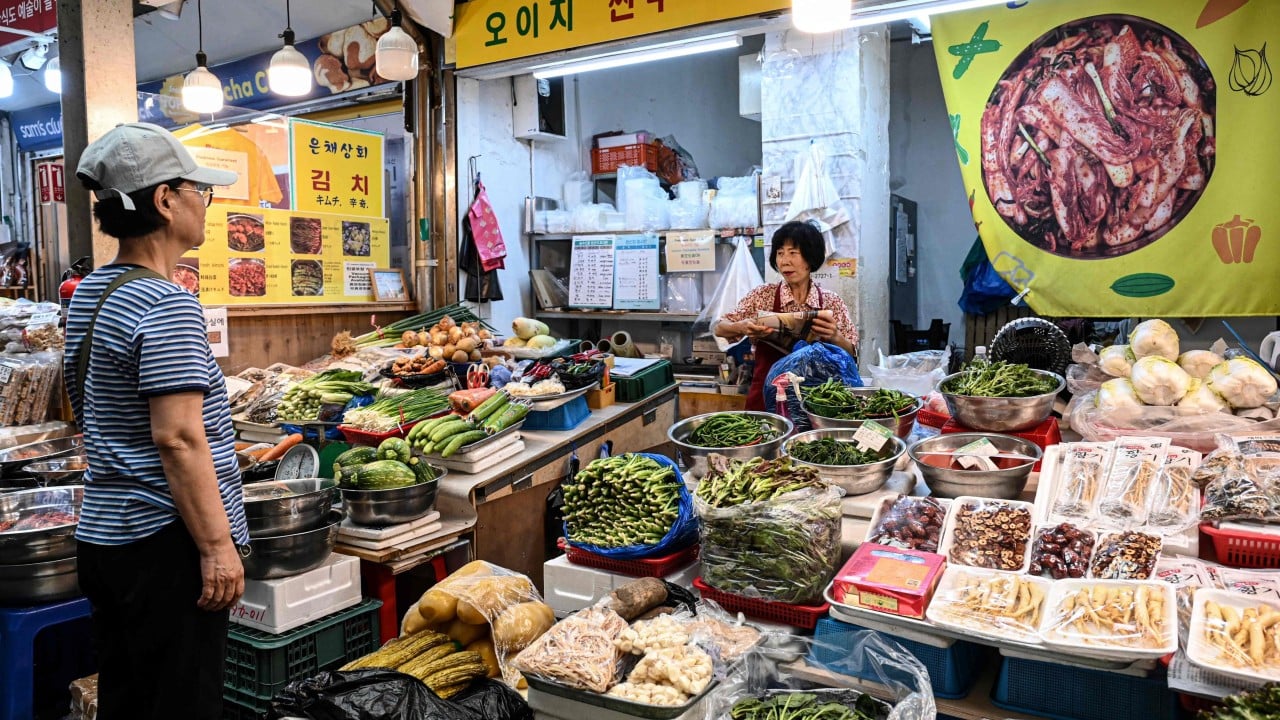
Yet, this corporate romance is not without friction. As massive foreign food complexes rise, local Vietnamese producers face unprecedented pressure. Traditional open-air wet markets, which have formed the social and economic fabric of Vietnamese communities for centuries, are slowly losing ground to modern, foreign-backed convenience stores.
Small-scale farmers who supply local markets find themselves competing with industrialized agricultural models. There is a quiet anxiety among older generations that this culinary influx might dilute Vietnam's rich gastronomic heritage.
But the younger generation views it differently. For them, the introduction of international food standards raises the bar for food safety—a major concern in rapidly developing economies. The competition forces local brands to innovate, upgrade their packaging, and improve their supply chains to survive. It is a painful but necessary evolution.
A Convergence at the Dinner Table
On a rainy Tuesday evening in Hanoi, a family sits down to dinner. The grandmother has prepared a traditional caramelized pork belly in a clay pot. Beside it sits a bowl of freshly opened, locally produced Korean kimchi.
This image is the true destination of South Korea's corporate journey. It is not an invasion; it is a synthesis. The future of food in Asia is not about one culture erasing another. It is about the creation of a new, shared culinary vocabulary.
As corporate executives in Seoul pore over spreadsheets and logistics maps of the Mekong Delta, the reality is already alive on the ground. The bridge is built. The food is flowing. Asia’s dinner table is growing larger, louder, and infinitely more complex.