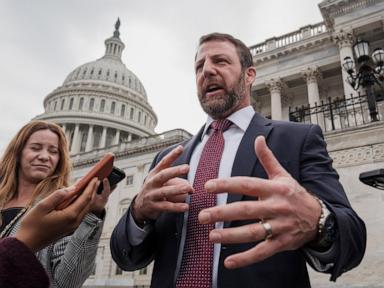
The headlines are bleeding heart narratives of justice. They tell you a story of brave souls who "sounded the alarm" on America’s crumbling disaster infrastructure, got canned for their trouble, and are now being triumphantly ushered back to their desks. We are supposed to cheer. We are supposed to believe the system works because the watchdogs have been returned to their posts.
That is a fairy tale.
In reality, the reinstatement of these FEMA workers is a masterclass in bureaucratic paralysis. By framing this as a moral victory for transparency, the media ignores the structural decay that makes whistleblowing necessary—and ultimately useless—in the first place. Reinstating employees doesn't fix a broken agency; it merely resets the timer on the next inevitable catastrophe.
The Myth of the Effective Whistleblower
The common consensus suggests that if we just listen to the people on the ground, disaster response will magically improve. This assumes FEMA's failures are a result of ignorance. They aren't. They are a result of design.
I’ve spent years watching federal agencies burn through billions while "reformers" claim that more communication is the answer. It isn’t. FEMA is an organization drowning in 4,000-page SOPs and a culture of risk aversion that would make a Victorian actuary blush. When a whistleblower "sounds the alarm" about a lack of preparedness, they aren't revealing a secret. Everyone in the building knows the logistics are a mess. Everyone knows the supply chains are brittle.
The act of whistleblowing in this context is often less about fixing the machine and more about establishing a paper trail of "I told you so" before the inevitable collapse. Reinstating these individuals doesn't change the operational reality; it just ensures that the people who pointed out the flames are now back inside the burning building, still holding their useless fire extinguishers.
Why Reinstatement is a Political Pressure Valve
Why does the government reinstate whistleblowers? It isn't out of a sudden surge of ethics. It’s a cheap way to signal "accountability" without actually changing the leadership or the budget allocation.
- It silences the public outcry: A reinstated employee is a closed news cycle.
- It avoids litigation: It is far cheaper to give someone their back pay and a cubicle than to fight a wrongful termination suit in the discovery phase where actual agency secrets might leak.
- It maintains the status quo: By "fixing" the human element, the agency avoids having to fix the systemic element.
If FEMA were serious about preparedness, they wouldn't just bring back the people who complained. They would dismantle the procurement processes that lead to $100 million in spoiled food and water. They would fire the contractors who fail to deliver trailers to hurricane victims for eighteen months. Reinstating a few middle-managers is the equivalent of putting a fresh coat of paint on a bridge with rusted-through supports.
The Disaster Preparedness Delusion
People ask, "How can we make FEMA more responsive?" The question itself is flawed. You are asking how to make a centralized, top-heavy federal bureaucracy act with the speed of a local first responder. It is physically and mathematically impossible.
The "preparedness" these workers were likely shouting about usually boils down to resource hoarding. The agency fixates on stockpiling—more MREs, more blankets, more tents. But in a true black swan event, the bottleneck isn't the volume of supplies; it’s the "last mile" logistics.
Imagine a scenario where a Category 5 hurricane levels the Gulf Coast. FEMA can have a million gallons of water staged in Atlanta, but if the roads are gone and the local contracts for trucking are tied up in legal disputes over "equitable bidding," that water might as well be on the moon. Whistleblowers complain about the stockpile. They should be complaining about the fact that the entire model of federalized response is a relic of the Cold War that has no place in the 21st century.
The Professionalization of Complaint
We have created a "whistleblower industrial complex." There are lawyers, NGOs, and consultants who specialize in this cycle of termination and reinstatement. While protection for workers is necessary, we must admit that this cycle has become a substitute for actual performance.
In the private sector, if a logistics firm fails to deliver during a crisis, they go bankrupt. In the federal government, if FEMA fails, they get a budget increase. The "alarm-sounders" are part of this ecosystem. Their presence provides a veneer of internal checks and balances that, in practice, produces zero measurable improvement in how fast a family in North Carolina gets power back after a flood.
Stop Trying to Save the Agency
The uncomfortable truth is that national disaster preparedness will not be solved by a "better" FEMA or "happier" FEMA employees. It will be solved by decentralization.
- Localize the Funding: Stop sending tax dollars to D.C. so D.C. can send 30% of it back to the states after a disaster. Keep the capital at the state and county level.
- End the Monopoly: Allow private-sector logistics giants to compete for disaster response contracts with strict "pay-for-performance" clauses. If the water doesn't arrive in 24 hours, the company doesn't get paid. FEMA doesn't have that incentive.
- Transparency over Whistleblowing: Instead of waiting for an employee to risk their career to tell us the truth, we should demand real-time, public-facing dashboards of every asset, every dollar, and every contract FEMA manages.
The High Cost of Moral Victories
When we celebrate the reinstatement of these workers, we are settling for a moral victory while the operational war is being lost. We are prioritizing the feelings of the bureaucracy over the survival of the citizenry.
I’ve seen this play out in corporate boardrooms and government halls alike. The "dissident" is brought back into the fold, the PR team writes a memo about "learning and growing," and three years later, the same mistakes lead to the same body counts.
The reinstated workers are now "protected." They are untouchable. But are they effective? Are they allowed to actually overhaul the procurement disaster that triggered their exit? No. They are back in their chairs, filling out the same forms, navigating the same red tape, and waiting for the next storm to prove that their warnings were right—and that their return changed absolutely nothing.
The system didn't vindicate them. It swallowed them.
Next time a headline tells you the "alarm-sounders" are back, don't cheer. Ask why the alarm is still ringing and why no one is moving toward the exit. FEMA isn't broken because it fires whistleblowers; it fires whistleblowers because its survival depends on maintaining the illusion of competence. By bringing them back, they’ve simply perfected the illusion.
Efficiency is a threat to a bureaucracy. Preparedness is an endpoint that would decrease the need for massive, emergency budget injections. If you want to know why we aren't ready for the next big one, don't look at the people who were fired. Look at the fact that the only thing the agency knows how to do is manage its own reputation.
The return of the whistleblower is the ultimate PR win. It’s the "holistic" solution for a public that wants to feel good without doing the hard work of demanding a total structural demolition. We don't need reinstated employees. We need an agency that is physically capable of doing its job, or we need to stop pretending that D.C. can save you when the water starts rising.
The alarm is still going off. Reinstating the person who pressed the button doesn't put out the fire.