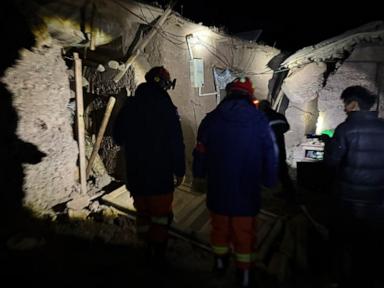
Rescuers search for survivors after a deadly earthquake in China's Tibet region while fighting thin mountain air, freezing night temperatures, and broken roads that slow every single step. When a magnitude 7.0 quake hit near Nagqu on October 22, 2026, at a depth of about 18 kilometers, it didn't just rattle windows. It turned a remote stretch of northern Tibet into a race against hypothermia and collapsing stone.
At least 16 people died, dozens were injured, and hundreds of homes collapsed across sparsely populated high-altitude settlements. Honestly, a lot of headlines treat a tremor like a neat timeline of numbers, yet up on the plateau, numbers don't capture what happens when darkness falls at high elevation. Crews work with flashlights, watch for aftershocks, and move heavy debris while oxygen feels scarce.
Why the Tibet Earthquake Hit So Hard in Remote Terrain
The USGS earthquake summary for the M 7.0 event near Nagqu placed the rupture roughly 189 kilometers east-northeast of Nagqu, with shaking reaching severe levels in spots and affecting more than 110,000 people across a wide area. A shallow-to-mid-depth 18-kilometer rupture on a normal fault plane roughly 50 kilometers long by 20 kilometers wide packs plenty of punch when you're standing right over it.
People often assume a lower fatality count compared with massive urban quakes means the event wasn't serious. That's a mistake. Sparse population density saves lives when a major quake hits open rangeland, yet low population also means hospitals, heavy machinery, and paved routes are spread miles apart. Even a few hundred ruined homes can wipe out a small community's shelter overnight.
Look at that cross-section of how the Indian Plate pushes north into Eurasia. You can see why the crust crumples, lifts, and slips across such a vast zone. While thrust faults dominate the southern Himalayan front, extension and normal faulting tear across parts of the high Tibetan Plateau itself as the crust thickens and spreads.
What Makes High-Altitude Rescue So Different
Have you ever tried jogging up stairs at 13,000 feet? Now picture hauling timber, digging through stone walls, and keeping watch for falling rock while your lungs burn and your fingers go numb.
In reports from northern Tibet, crews and correspondents have dealt with altitude stress, cold snaps, and snow forecasts that turn dirt roads into slick hazards. Some reporters at the scene even relied on nasal oxygen tubes just to keep functioning. That isn't drama—it's basic human physiology. Less available oxygen slows decision-making, drains stamina fast, and makes acute mountain sickness a real threat for responders brought in from lower elevations.
Add in severed road links, rail suspensions, and spotty communications, and the first 24 to 72 hours look messy. Authorities sent thousands of tents, prefabricated housing units, folding beds, winter coats, and flashlights, yet getting gear to scattered villages takes time when rockfalls block mountain passes.
Lessons From Past Tremors Across the Plateau
Anyone who follows Himalayan and Tibetan tectonics knows this wasn't a one-off freak event. Since 1900, dozens of quakes of magnitude 7.0 or larger have struck the Tibetan Plateau and its surrounding margins.
- In January 2025, a magnitude 7.1 earthquake hit southern Tibet near Tingri County on the northern side of Mount Everest, killing at least 126 people.
- In April 2010, a magnitude 6.9 earthquake near Yushu in neighboring Qinghai—less than 300 kilometers east-northeast of the October 2026 epicenter—caused more than 2,500 deaths.
- Farther back, the 2008 Wenchuan earthquake in Sichuan and the 1950 Assam–Tibet quake showed how catastrophic ground shaking and landslides can become across rugged mountain belts.
What stands out when you compare these events? Local building materials and cold weather often decide survival just as much as magnitude. Traditional masonry and earth or stone walls resist cold well, yet heavy roofs and unreinforced walls can fail violently when ground motion spikes. When night temperatures plunge, a family without intact walls or warm bedding faces danger even if nobody was buried under rubble.
Why Independent Verification Is Tricky Here
Let's be straight about information flow. Independent reporting inside Tibet faces strict access limits, so outside outlets frequently rely on state media releases, local broadcasts, and seismological agencies like the USGS.
Early casualty and damage tallies shift in almost every major disaster. First reports might list a few dozen injured or a few hundred collapsed homes before crews reach outlying pastoralist spots. Crossing-checking seismic data from USGS Earthquake Hazards alongside official updates helps separate confirmed ground motion and fault mechanics from shifting preliminary counts.
What Matters Next for Survivors and Families
Once the initial search phase slows, the real grind begins: keeping displaced residents warm through freezing nights, checking weakened buildings before people step back inside, and tracking aftershocks that can bring down already cracked masonry. Residents sleeping in cars or roadside tents after feeling a violent jolt are reacting rationally—nobody wants to be trapped indoors when a strong aftershock hits.
If you're following the response or looking for ways to help constructively, start with concrete steps rather than viral rumors:
- Verify before sharing: Check timestamps and locations on clips circulating online—old footage from past quakes frequently gets recycled during breaking news.
- Vet relief channels carefully: If you plan to donate, look for established humanitarian groups with transparent disaster-response records and clear restrictions on where funds can be deployed.
- Track seismic and shelter updates: Watch official seismological feeds for major aftershock alerts and follow verified relief dispatches on winter shelter, medical supplies, and road reopenings.