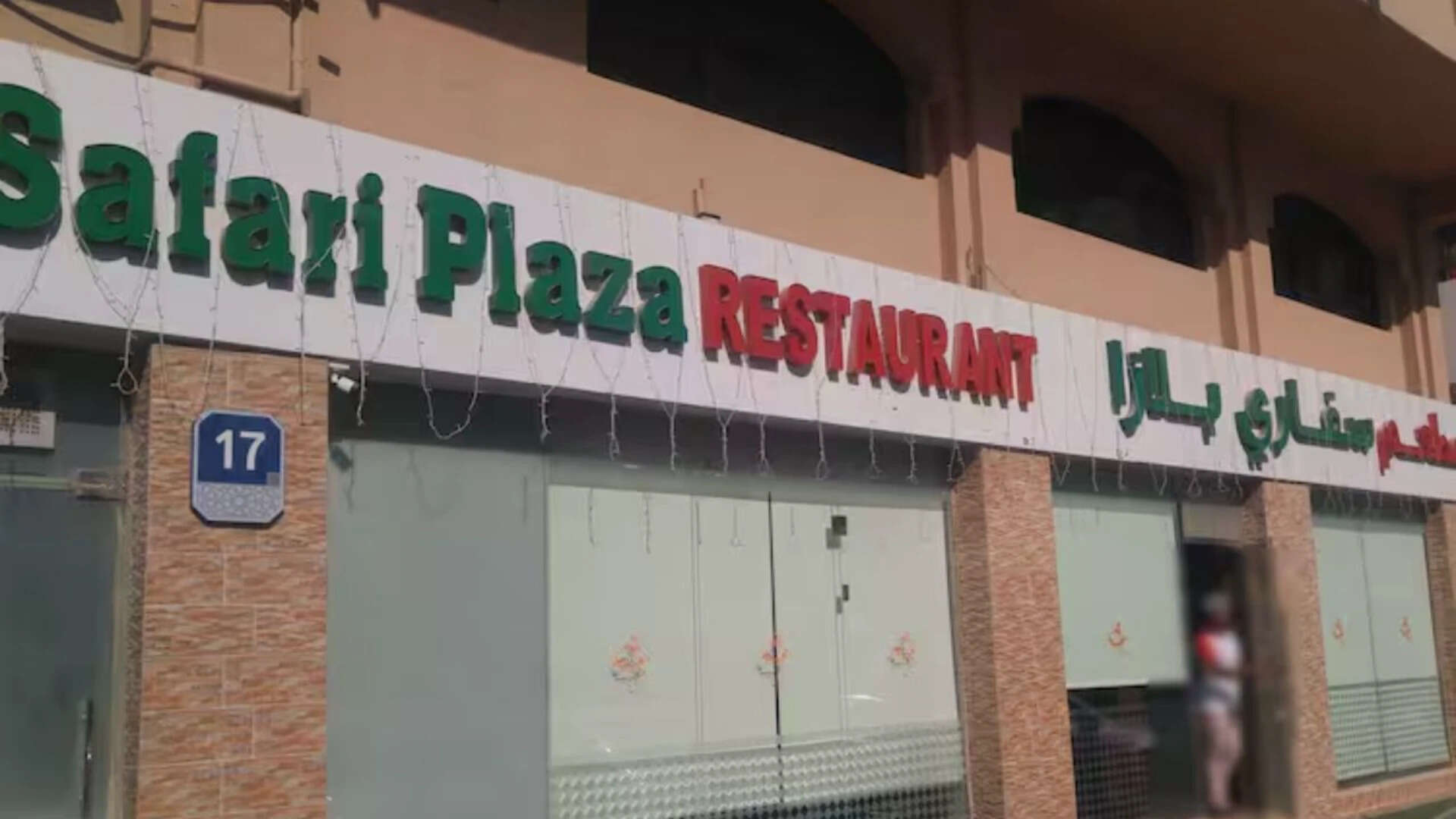
The headlines write themselves, and the public eats them up. "Abu Dhabi shuts down Safari Plaza restaurant over repeated food safety violations." The Abu Dhabi Agriculture and Food Safety Authority (ADAFSA) steps in, locks the doors, issues a stern press release about Law No. 2 of 2008, and everyone sleeps better at night believing the system worked.
It is a comforting illusion. It is also entirely wrong.
When a regulatory body shuts down a restaurant for chronic non-compliance, it is not a victory for public health. It is a post-mortem on a systemic failure. The lazy consensus in the food industry celebrates these high-profile closures as proof of rigorous oversight. In reality, a closure means the hazardous conditions existed long enough, and through enough failed inspections, to pose a documented threat to thousands of diners before anyone finally turned off the lights.
Treating shutdowns as a success metric is like celebrating a car crash because the airbags deployed. The damage was already done.
The Mirage of the Spot Inspection
I have spent years auditing supply chains and dissecting operational workflows in commercial kitchens. Here is the reality that bureaucrats will not tell you: the traditional regulatory framework is fundamentally reactive, hopelessly intermittent, and ill-equipped to handle modern food service realities.
ADAFSA, like almost every municipal health authority worldwide, relies on point-in-time inspections. An inspector walks into a kitchen, checks the internal temperature of a shawarma spit, looks for pest activity, verifies the concentration of the sanitizing solution, and assigns a grade.
This creates a dangerous observer effect. Kitchens are highly dynamic environments. They operate at extreme speeds under intense pressure. A kitchen can be pristine at 10:00 AM during an inspection and degenerate into a cross-contamination nightmare by the 8:00 PM weekend rush.
Relying on occasional, surprise visits to guarantee food safety is an operational joke. It incentivizes a culture of temporary compliance—cleaning up just enough to pass the test, then reverting to habits driven by speed and cost-cutting the moment the inspector leaves the parking lot. When a venue like Safari Plaza receives multiple warnings before a closure, it means the management knew the rules, knew they were being watched, and still failed. The breakdown is not a lack of information; it is a failure of operational culture.
The Fatal Flaw in the Punitive Model
The standard playbook for food safety enforcement is strictly punitive: inspect, fine, warn, repeat, close. This model assumes that the threat of financial ruin or public shaming is enough to force compliance.
It fails because it treats food safety as a legal obligation rather than an operational discipline.
[Traditional Punitive Loop]
Violation Detected -> Fine Issued -> Temporary Fix -> Operational Drift -> Next Violation
When you penalize a struggling restaurant with heavy fines, you often deplete the very capital required to fix the root cause of the problem. Upgrading commercial refrigeration units, replacing degraded stainless steel surfaces, and investing in continuous staff training require significant liquidity. Fining a restaurant into submission frequently accelerates its operational decline, forcing management to cut corners elsewhere—often on labor, which directly degrades sanitation standards.
Furthermore, the public shaming mechanism—publishing closure notices in local media—creates a culture of fear and concealment. Kitchen staff learn to hide mistakes rather than report them. If a line cook drops a raw chicken breast on a poorly sanitized surface during a rush, a culture built on fear ensures that chicken gets cooked and served anyway. The fear of punishment smothers the transparency required to maintain a truly safe kitchen.
What the "Experts" Get Wrong About Hazard Analysis
Ask any food safety consultant how to prevent a Safari Plaza scenario, and they will immediately parrot the industry gospel: implement a stricter Hazard Analysis Critical Control Point (HACCP) system.
HACCP is an excellent theoretical framework. Developed in the 1960s to ensure safe food for space travel, it focuses on identifying critical control points (CCPs)—like the exact internal temperature required to kill pathogens in poultry—and monitoring them continuously.
But in a high-turnover, low-margin retail restaurant environment, traditional HACCP often transforms into a bureaucratic paper-shuffling exercise.
Imagine a scenario where an underpaid, undertrained line cook is tasked with manually logging refrigeration temperatures every two hours on a clipboard hanging by the walk-in cooler. The kitchen is understaffed, tickets are backing up, and customers are angry. What actually happens? The cook "dry-labs" the logbook. They sit down at the end of the shift and write in a string of perfect, fictional temperatures.
The restaurant now has a flawless paper trail. The auditors are happy. The management is satisfied. Yet the actual risk of foodborne illness remains unchanged because the data is a lie. The focus shifts from actually keeping food safe to maintaining the appearance of safety for the next audit.
The Real Cost of Institutional Failure
To understand the true breakdown, look at the numbers that matter, not just the headlines. The World Health Organization estimates that almost 1 in 10 people fall ill globally every year from eating contaminated food. In highly developed urban hubs with aggressive inspection regimes, foodborne outbreaks still occur with alarming regularity.
Why? Because the nature of the supply chain has evolved, while inspection methodologies remain stuck in the mid-20th century. A modern restaurant uses ingredients sourced from dozens of global suppliers, complex preparation techniques, and increasingly relies on third-party delivery applications.
When a delivery driver leaves a meal in an uninsulated thermal bag on the back of a motorcycle in 40°C heat for 45 minutes, the restaurant's impeccable in-house food safety standards become entirely irrelevant. Yet, under the current regulatory framework, the restaurant bears the liability, and the consumer bears the biological cost. The system is blind to the entire last mile of the modern food lifecycle.
Fixing the System Means Killing the Inspection
If the goal is genuinely protecting public health rather than generating revenue through fines and creating political theater via closures, the entire enforcement paradigm must be dismantled.
Stop trying to fix the inspection process. Eliminate it.
Instead of arbitrary, point-in-time human audits, food safety must be integrated directly into the physical infrastructure of the kitchen through automation and continuous, passive monitoring.
- Continuous IoT Logging: Manual logbooks belong in the trash. Refrigeration units, hot-holding stations, and dishwashers should be retrofitted with mandatory, cloud-connected Internet of Things (IoT) sensors that log temperatures every sixty seconds. If a cooler dips into the danger zone ($5^\circ\text{C}$ to $60^\circ\text{C}$) for more than fifteen minutes, an automated alert should go to both management and the regulatory authority instantly. No paper. No human error. No dry-labs.
- Traceability Integration: Food safety enforcement should live at the point of sale and inventory management. If a batch of romaine lettuce is flagged for E. coli contamination at the distribution level, automated inventory systems should instantly lock the restaurant's ability to sell any item containing that ingredient.
- From Fines to Mandatory Managed Restructuring: When a venue repeatedly fails to maintain basic hygiene standards, issuing a fine is administrative negligence. The authority should instead mandate an immediate, third-party operational takeover. If a management team proves incapable of running a clean kitchen, they lose operational control until a certified turnaround specialist restructures their workflows, retrains the staff, and stabilizes the environment.
The downside to this approach is obvious: it requires capital investment, and it strips away the autonomy of restaurant owners who prefer to operate in the dark. It forces a harsh financial reality on the industry—if you cannot afford the technology required to prove your kitchen is safe in real-time, you cannot afford to be in the business of feeding the public.
The Brutal Truth
The closure of Safari Plaza is a symptom of a regulatory body acting as a historian rather than a guardian. They arrived at the scene of the crime long after the laws of sanitation were broken, documented the decay, and put up a yellow tape.
As long as we measure the success of food safety agencies by how many doors they lock, we will continue to consume food prepared in kitchens that are only clean when someone is watching. True food safety does not look like a dramatic padlock on a restaurant door. It looks like an automated, invisible, and unyielding infrastructure that makes non-compliance physically impossible.
Everything else is just theater for the naive.