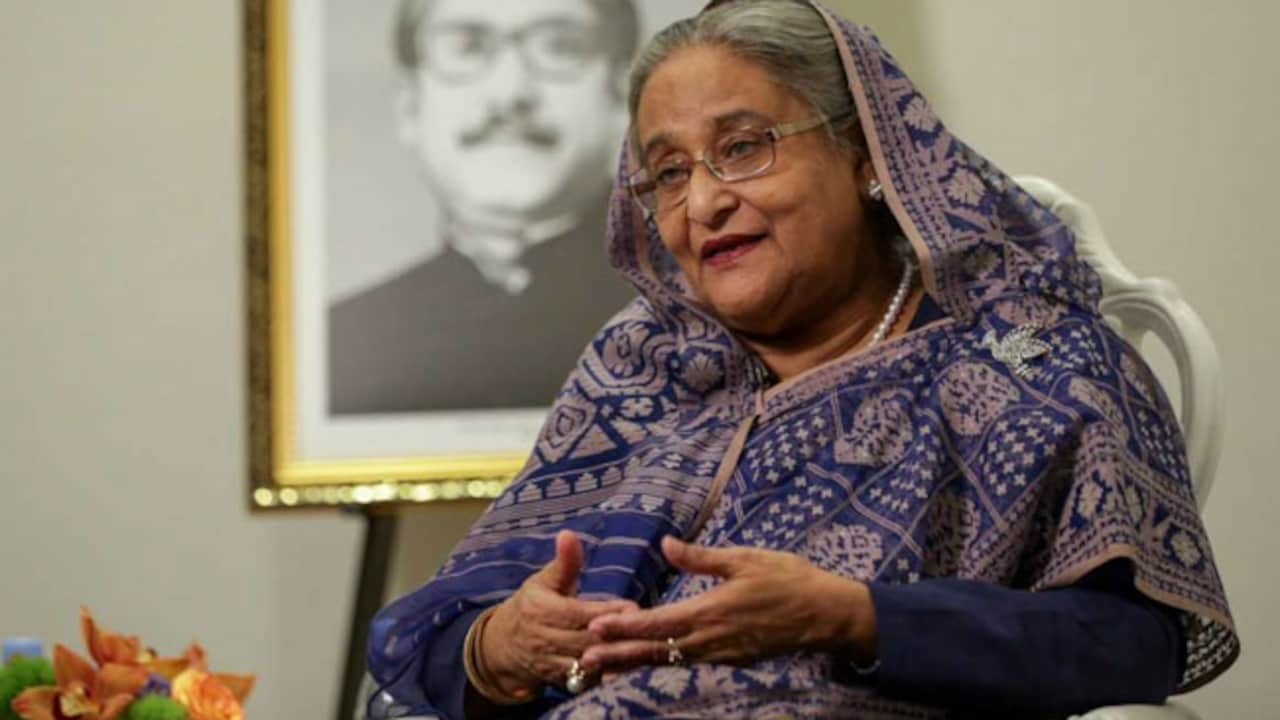
Deposed former Prime Minister Sheikh Hasina faces severe legal, logistical, and political barriers to returning to Bangladesh in December 2026 from exile in India. Her stated plan to fly back around December 16—the anniversary marking the end of Bangladesh's 1971 war of independence—confronts an active death sentence, revoked travel documents, an unsettled extradition posture from New Delhi, and a government led by Prime Minister Tarique Rahman that has ruled out negotiated safe passage.
A standard listicle on this topic typically treats Hasina's return as a simple checklist of obstacles—arrest risk, passport refusal, rival leadership, security fears, and Indian diplomacy. Listing obstacles one by one misses how they interlock. In strategic terms, her return depends on a Four-Gate Feasibility Model: Legal Exposure, Transit and Documentation Control, Bilateral Diplomacy, and Domestic Mobilization Risk. If any single gate remains closed, voluntary arrival without state coercion becomes nearly impossible.
The Four-Gate Feasibility Model
An exiled leader attempting a high-profile return into a hostile political environment faces two distinct pathways: Extradition or Custodial Transfer, where sovereign authorities dictate movement, and Voluntary Sovereign Entry, where the returning figure attempts to travel and appear on their own terms. Because Hasina has called for state-arranged air transport while expressing willingness to face legal proceedings, her plan sits awkwardly between voluntary political theater and custodial capture.
Gate 1: Legal Exposure and Custodial Certainty
The primary constraint on Hasina's return is legal rather than rhetorical. Following her ouster in August 2024 after a student-led mass uprising—a crackdown that the United Nations estimated killed around 1,400 people—Bangladesh's International Crimes Tribunal sentenced her to death in November 2025 for crimes against humanity, following an earlier six-month contempt sentence.
This creates an immediate Asymmetry of Intent:
- Hasina's stated intent: Return to challenge the legitimacy of the tribunal proceedings, rally party loyalists, and encourage Awami League figures in hiding to re-engage.
- Dhaka's stated intent: Arrest her immediately upon arrival, enforce judicial sentences, and deny her a controlled public platform.
In political crises, a returning leader gains symbolic leverage only when they can control the framing of their arrival. Once a binding death sentence and standing arrest orders exist, the state controls the physical custody, communication access, and setting of any appearance. The cause-and-effect chain is direct: higher legal jeopardy increases the likelihood of immediate detention, which compresses the window for public mobilization to near zero.
Gate 2: Travel Documents and Aviation Logistics
Even before touching Bangladeshi soil, movement requires valid documentation and flight clearance. In November 2026, Hasina's legal team requested replacements for her revoked passport and national identity document through the Bangladesh mission in New Delhi, a request Bangladeshi authorities rejected. Her camp has also called on Dhaka to arrange return transport on state carrier Biman Bangladesh Airlines, referencing the aircraft that flew her to India in August 2024.
That demand runs into a structural bottleneck: Dhaka controls both sovereign entry authorization and national carrier scheduling. A government that refuses to issue travel documents and states that her return is tied to extradition processes is unlikely to facilitate a voluntary commercial or state-chartered arrival designed to maximize political visibility. Without valid travel credentials or state-sanctioned transit arrangements, moving from exile in India into Bangladesh carries acute legal and operational friction.
Gate 3: Indian Diplomatic Posture and Extradition Friction
Hasina has been living in India since August 2024. Dhaka has pressed New Delhi for her extradition following the tribunal verdict, while India's foreign ministry has avoided public commitments while stating it is examining the extradition request and working to engage constructively with Bangladesh's elected government under Prime Minister Tarique Rahman.
This places New Delhi inside a Bilateral Trade-Off Matrix:
- Facilitating or permitting an uncoordinated departure risks straining relations with Dhaka at a moment when New Delhi is calibrating ties with a new administration.
- Executing a formal extradition carries domestic political sensitivity and legal review obligations in India.
- Maintaining cautious restraint preserves room for quiet diplomacy while avoiding abrupt escalation.
Because India has not publicly endorsed a December return timeline, external sanctuary remains an active constraint. A return from exile in a neighboring state cannot be treated purely as a domestic Bangladeshi decision; it depends on border, aviation, and diplomatic realities outside Dhaka's sole control.
Gate 4: Domestic Political Alignment and Crowd Dynamics
Bangladesh's domestic political terrain has shifted substantially since August 2024. An interim government led by Chief Adviser Muhammad Yunus banned activities of the Awami League and its student wing during the transition period, and general elections in February 2026 brought Tarique Rahman's Bangladesh Nationalist Party (BNP) to power, with lawmakers voting in April 2026 to maintain the ban on the Awami League.
Selecting December 16 carries clear symbolic weight as Victory Day, marking the end of the 1971 liberation war—a foundational touchstone for the Awami League and the legacy of Hasina's father, Sheikh Mujibur Rahman. Yet symbolic timing cuts both ways:
- Potential upside for Hasina: Associating a return with a national milestone could energize core supporters and frame her legal battle as a broader political struggle.
- Downside risk for Dhaka: Large gatherings or clashes around a high-profile return could trigger street unrest and security deployments.
Analysts often treat crowd mobilization as proof that a return is viable. In practice, high mobilization risk often hardens state security posture rather than forcing concessions, prompting tighter perimeter controls, pre-emptive arrests, and strict restrictions on public assembly.
Facts Versus Educated Hypotheses in December Scenarios
Separating confirmed facts from scenario projections helps avoid overreading political statements:
- Established facts: Hasina fled to India in August 2024; a Bangladeshi tribunal sentenced her to death in November 2025 over the 2024 protest crackdown; her travel documents were revoked and a replacement request in November 2026 was rejected; the Awami League faces an ongoing ban; and Tarique Rahman leads the government following the February 2026 election.
- Educated hypotheses: Whether Hasina actually boards a flight in December or delays due to documentation and diplomatic hurdles; whether any street protests around December 16 remain localized or escalate into wider disorder; and how quickly New Delhi moves on Dhaka's extradition request.
Tactical Framework for Tracking a High-Stakes Return
To evaluate whether a contested political return is shifting from rhetoric to execution, track four observable signals rather than media statements alone:
- Document and flight clearances: Look for verified issuance of valid travel documents or formal flight permissions—not merely public appeals for state transport.
- Diplomatic movement between capitals: Watch for formal official announcements from Indian or Bangladeshi authorities regarding extradition procedures, consular coordination, or border/airport protocols.
- Security posture ahead of the date: Monitor official advisories, transit restrictions, or security deployments in Dhaka and key districts in the days leading up to December 16.
- Legal and custodial preparation: Observe whether prosecution or prison authorities announce specific reception or custody measures, which signal expectation of arrival rather than bluffing.
Key Limitations of This Framework
No analytical model can predict sudden backchannel bargains, health emergencies, or unexpected shifts in regional diplomacy. Political actors also use return announcements as information operations—keeping supporters engaged, testing government messaging, and maintaining visibility from abroad even when physical return remains blocked. High probability of non-occurrence does not mean zero political impact; the announcement itself already shapes narratives and security planning.
Strategic Forecast
The baseline forecast for December 2026 is that Sheikh Hasina is unlikely to complete a voluntary, unencumbered return to Bangladesh, because the legal, documentary, and political gates remain aligned against her. The most probable path is either a non-return accompanied by continued remote messaging around the December 16 anniversary, or a state-controlled custodial transfer if extradition and diplomatic conditions shift—making Hasina's return less a test of personal resolve than a test of whether any external actor is willing to alter the legal and diplomatic equilibrium.